How To Get Your First 1,000 Blog Visitors In 2026 (Step-By-Step Beginner Guide)

Introduction
Starting a blog is one of the most exciting things you can do online. You choose a niche, buy a domain name, set up WordPress, and publish your first few articles. Everything feels new and full of possibilities.
Then reality hits.
Days pass. Maybe even weeks. You open Google Analytics or Site Kit and see almost no visitors. One day you get three visitors. The next day you get none. Suddenly you start wondering whether blogging still works in 2026.
The truth is that most new bloggers face this exact situation. It doesn't mean your blog is bad. It doesn't mean you've failed. It simply means you're at the beginning of the journey.
Many people believe traffic appears automatically after publishing a few articles. Unfortunately, that's not how blogging works. Search engines need time to discover and trust your content. Readers need a reason to find and visit your website. Building traffic is a process, not an overnight event.
The good news is that getting your first 1,000 visitors is completely achievable. In fact, it is one of the most important milestones for every blogger because it proves that real people are finding and reading your content.
In this guide, you'll learn the exact strategies beginners can use to attract their first visitors through SEO, content creation, Pinterest, and simple promotion methods. Nothing complicated. Nothing technical. Just practical steps that actually work.
Before we talk about traffic strategies, let's first understand why so many blogs struggle to get visitors in the first place.
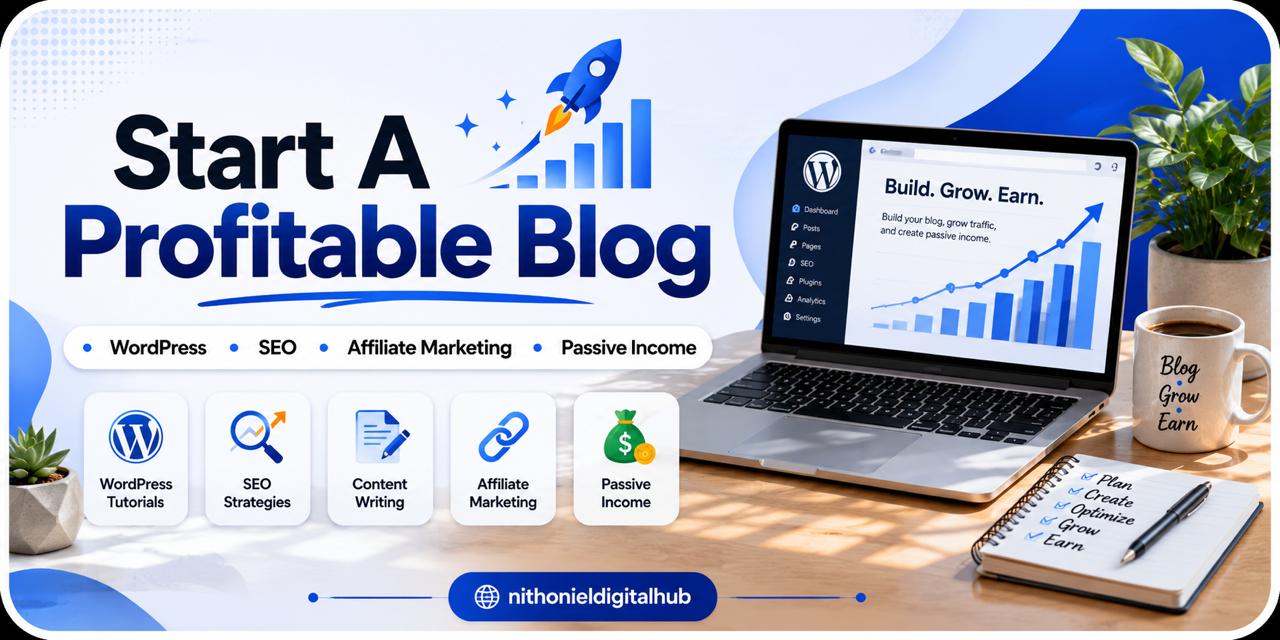
👉 How To Start A Profitable Blog In 2026
Before focusing on traffic, you first need a properly set up blog with the right foundation.
Why Most New Blogs Get No Traffic
One of the biggest mistakes beginners make is expecting results too quickly.
Think about it from Google's perspective. Every day, thousands of new websites are created. Search engines cannot instantly trust every new blog that appears online. They need time to understand what the website is about, how useful the content is, and whether visitors find it valuable.
This is why many bloggers publish three or four articles and then become disappointed when traffic doesn't arrive immediately.
Another common problem is inconsistency. A person starts a blog with lots of enthusiasm, publishes a few posts, and then disappears for several weeks. Search engines and readers both prefer websites that continue publishing useful content regularly.
Many beginners also target highly competitive keywords. For example, trying to rank for a keyword like "SEO" or "Blogging" is extremely difficult because large websites have been publishing content on those topics for years. A new blog simply cannot compete with established websites right away.
Promotion is another area where many bloggers struggle. They spend hours writing an article and then hit the publish button expecting people to magically discover it. In reality, publishing is only half the job. The other half is helping people find your content.
Perhaps the biggest reason blogs fail to gain traffic is that people quit too soon. Most successful bloggers didn't see massive traffic during their first month. They continued publishing, learning, improving, and eventually their efforts started paying off.
Traffic growth is often slow at first and then suddenly accelerates. The bloggers who succeed are usually the ones who stay consistent long enough to experience that growth.
Understanding Blog Traffic
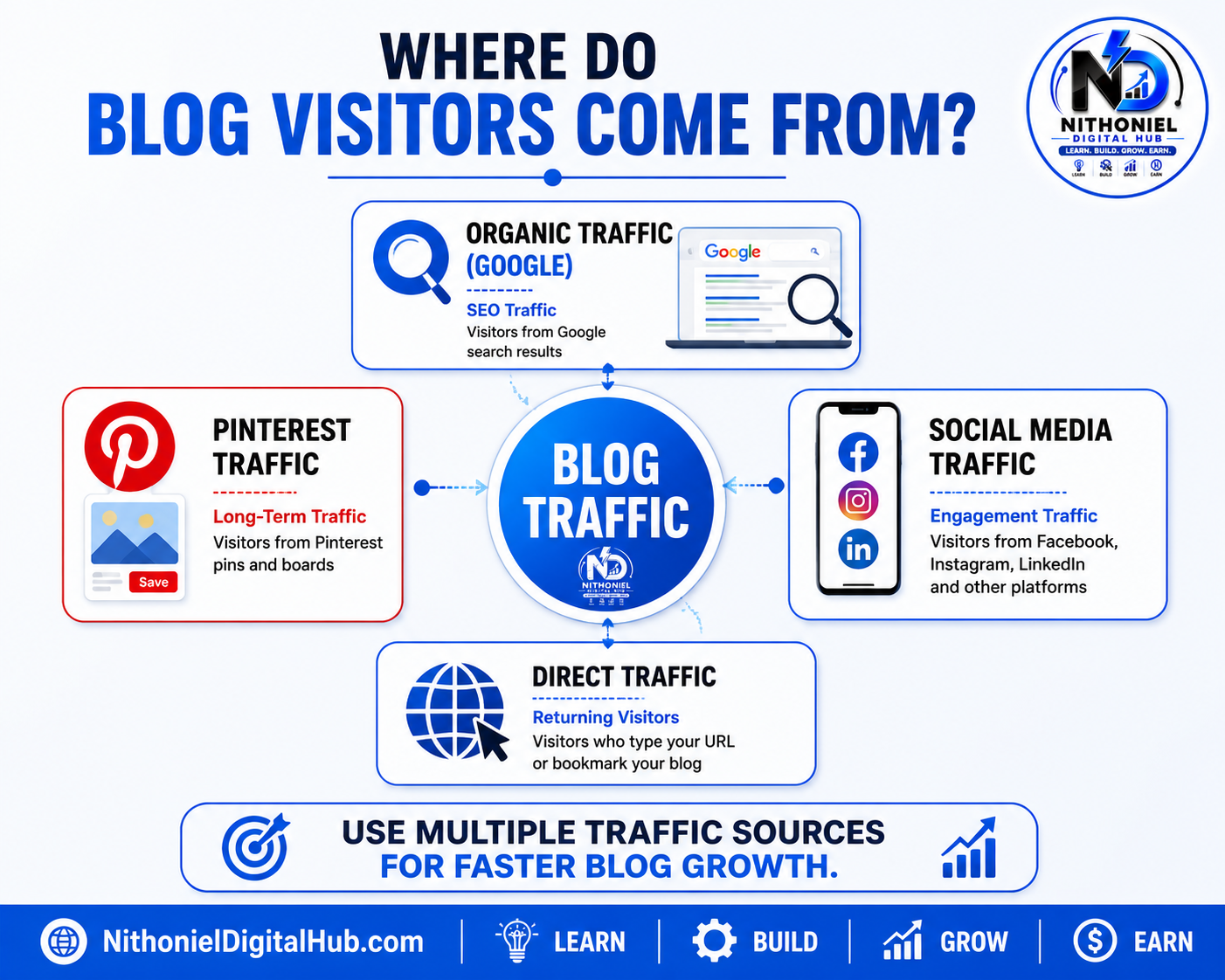
Before you start working on traffic, it's important to understand where blog visitors actually come from. Many beginners think Google is the only source of traffic, but that's not true. In reality, successful blogs receive visitors from several different channels, and each one plays a different role in growth.
The most valuable source is usually organic traffic, which comes from search engines like Google. Imagine someone searches for "how to start a blog in 2026" and your article appears in the search results. When they click your link and visit your website, that is organic traffic. This type of traffic is powerful because people are actively looking for information. They already have a problem and your content is providing the solution.
Another important source is Pinterest traffic. Many people think Pinterest is just a social media platform, but it's actually a visual search engine. Users search for ideas, tutorials, guides, and inspiration every day. If you create helpful pins linked to your blog posts, Pinterest can send visitors to your website for months or even years after a pin is published. This makes it one of the best traffic sources for beginner bloggers.
You can also receive visitors from social media platforms such as Facebook, Instagram, LinkedIn, X, and Threads. While social traffic often moves faster than search traffic, it usually requires more consistent activity. A post may bring visitors today, but the effect often fades quickly unless you continue posting and engaging with people regularly.
The final type is direct traffic. This happens when someone already knows your website and types the URL directly into their browser. Direct traffic usually starts small but grows as your brand becomes more recognizable. It is often a sign that readers trust your content and want to return for more.
The biggest mistake beginners make is focusing on only one traffic source. A smarter approach is to combine several methods together. Let Google bring long-term visitors, use Pinterest to accelerate growth, and share your content on social media to reach new audiences. Over time, these traffic sources begin working together and help your blog grow much faster.
Now that you understand where visitors come from, let's talk about exactly what you should do during your first 30 days to start building traffic.
Your First 30 Days: Building The Foundation For Traffic
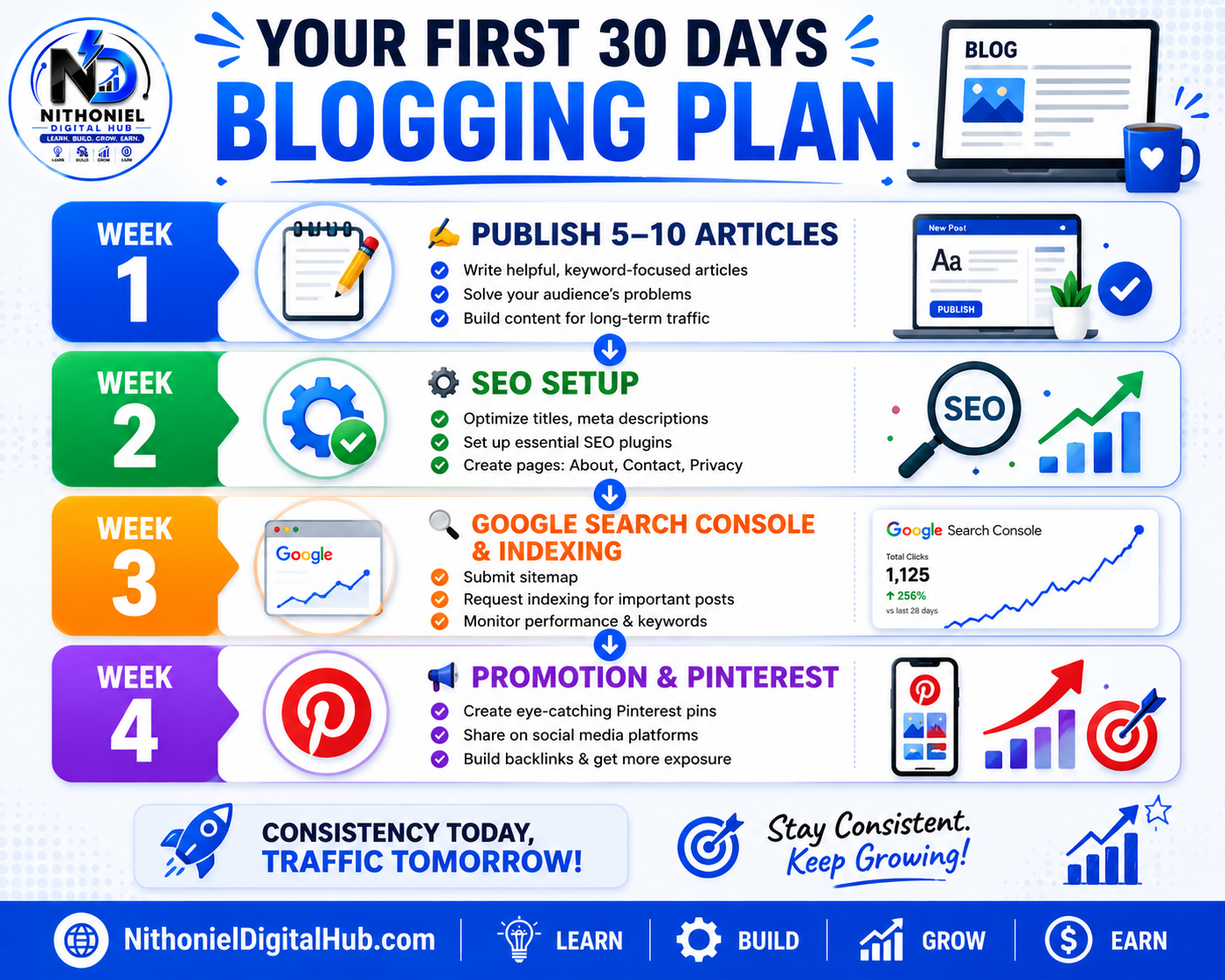
When people hear about getting 1,000 visitors, they often imagine some secret SEO trick or viral marketing strategy. The truth is much simpler. Your first month should focus on building a strong foundation. Without that foundation, even the best traffic strategies will struggle to produce results.
During the first few weeks, your main goal should be creating helpful content. Instead of worrying about traffic every day, focus on publishing valuable articles that solve real problems for your audience. A blog with two articles has very little chance of attracting consistent visitors. A blog with ten well-written articles has a much stronger chance.
During the first few weeks, your main goal should be creating helpful content. Instead of worrying about traffic every day, focus on publishing valuable articles that solve real problems for your audience. A blog with two articles has very little chance of attracting consistent visitors. A blog with ten well-written articles has a much stronger chance.
At the same time, make sure your basic SEO setup is complete. Install an SEO plugin such as Rank Math, connect your website to Google Search Console, and submit your sitemap. These steps help Google discover and understand your content more efficiently.
Many beginners skip Google Search Console because they think it is too technical. In reality, it is one of the most important free tools available to bloggers. It allows you to request indexing, monitor search performance, and identify opportunities to improve your content.
Your first month is also the perfect time to create essential pages such as your About page, Contact page, and Privacy Policy. These pages help build trust with both visitors and search engines.
Most importantly, avoid checking traffic numbers every hour. During the early stages, your focus should be on creating content and building systems. Traffic is usually the result of consistent effort rather than immediate action.
Think of the first 30 days as planting seeds. You may not see much growth right away, but every article you publish increases your chances of attracting future visitors. The bloggers who stay patient during this stage are often the ones who see the biggest rewards later.
👉 How To Start A Profitable Blog In 2026 (part 2)
If you haven't connected your domain, hosting, and WordPress correctly yet, start with our complete beginner setup guide.
Keyword Strategy For New Blogs: How To Find Easy Keywords That Bring Visitors
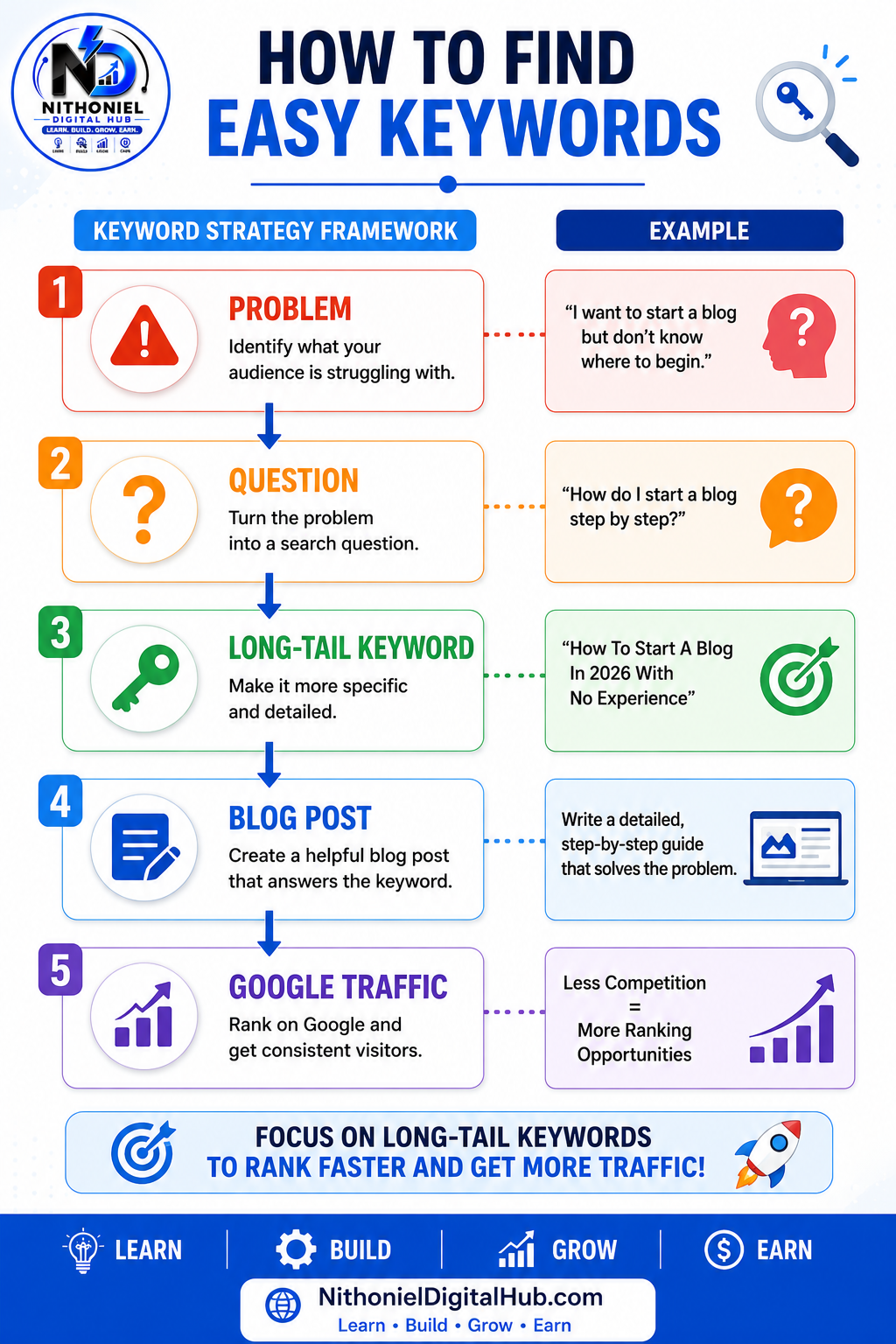
If content is the engine of your blog, keywords are the fuel that helps people find it. Many bloggers spend hours writing articles but never receive traffic because they are targeting the wrong keywords.
One of the biggest mistakes beginners make is choosing keywords that are too competitive. For example, trying to rank for a keyword like "SEO" or "Blogging Tips" is extremely difficult because thousands of established websites are already competing for those terms. A new blog has very little chance of reaching the first page of Google for such broad keywords.
Instead, your goal should be finding specific keywords that solve a particular problem. These are known as long-tail keywords. They may receive fewer searches, but they are often much easier to rank for and usually attract readers who are looking for exactly what you offer.
For example, instead of writing an article targeting "Blogging," you could target "How To Start A Blog With No Experience In 2026." Instead of targeting "SEO," you could write about "SEO Tips For New Bloggers." These keywords are more specific, easier to rank for, and often bring highly interested visitors.
When researching keywords, always think about the person behind the search. What question are they asking? What problem are they trying to solve? The best blog posts are usually the ones that provide clear answers to real questions.
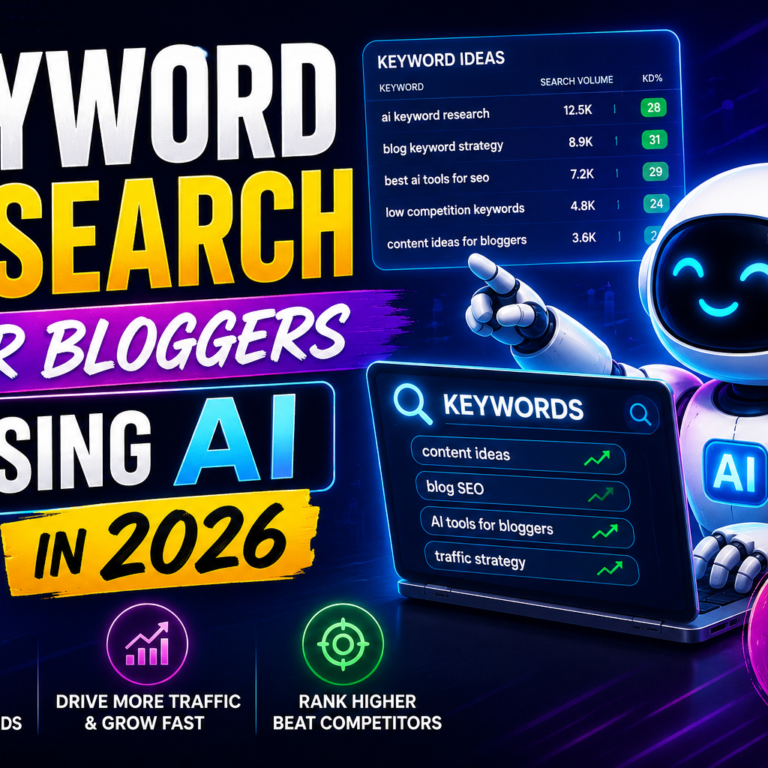
There are several free ways to discover keyword ideas. Google itself is one of the best tools available. Start typing a topic into the search bar and look at the suggestions that appear. These suggestions are based on real searches. You can also explore the "People Also Ask" section and related searches at the bottom of Google's results page.
Another effective strategy is looking at beginner questions in Facebook groups, Reddit communities, Quora, and Pinterest searches. If people are repeatedly asking the same questions, there is a good chance they are searching for those answers on Google as well.
Remember that your goal is not to find the biggest keyword. Your goal is to find the easiest opportunity. Ranking for ten smaller keywords is often far more valuable than struggling to rank for one extremely competitive term.
As a new blogger, focus on helpful, low-competition topics. Over time, as your website gains authority and publishes more content, you'll be able to target larger keywords and attract even more traffic.
Now that you know how to find the right topics, let's look at how AI can help you create content faster without sacrificing quality.
How To Use AI To Create Content Faster Without Losing Quality
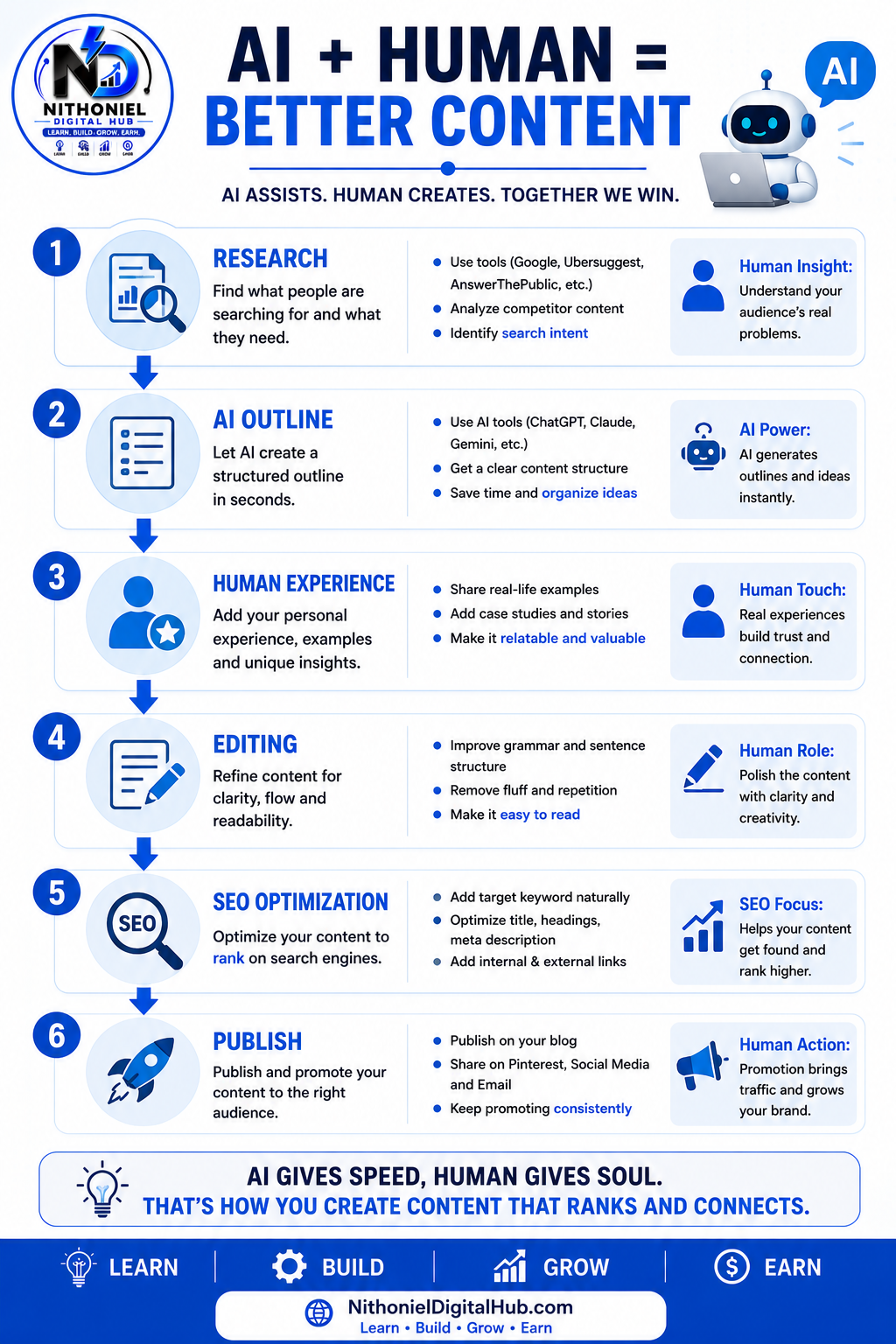
Artificial intelligence has changed the way bloggers create content. In 2026, many successful bloggers use AI tools every day, but not in the way most people think.
A common misconception is that AI can write an entire article and instantly help it rank on Google. While AI can generate text quickly, simply copying and publishing AI-generated content rarely produces the best results. Readers want real experiences, helpful explanations, and content that feels human.
The smartest bloggers use AI as an assistant rather than a replacement.
For example, AI can help generate blog topic ideas when you're feeling stuck. It can create article outlines, suggest headlines, organize sections, and help brainstorm new angles for existing content. These tasks save time and allow you to focus on what matters most: creating value for your audience.
Let's say you're writing an article about Pinterest marketing. Instead of staring at a blank screen, you can use AI to generate a rough structure. From there, you add your own insights, examples, and personal experiences. This combination of AI efficiency and human creativity often produces stronger content than either could create alone.
AI is also useful for improving productivity. It can help write meta descriptions, create FAQ sections, summarize research, and generate social media captions for promoting your articles. Tasks that once required hours can now be completed in minutes.
However, there is one important rule to remember. Always review, edit, and personalize anything generated by AI. Readers can easily recognize generic content. They connect with stories, experiences, and practical advice that feels authentic.
Google's focus remains the same: rewarding helpful content that serves users. Whether AI was involved in the process matters far less than the quality of the final result.
Used correctly, AI can help you publish more consistently, maintain quality, and spend less time staring at a blank page. For new bloggers trying to build traffic, that advantage can make a significant difference.
Creating great content is only part of the equation, though. Once your articles are published, you need a way to get them in front of people. One of the fastest ways to do that is through Pinterest.
Pinterest Traffic Strategy: How Pinterest Can Send Visitors To Your Blog For Months
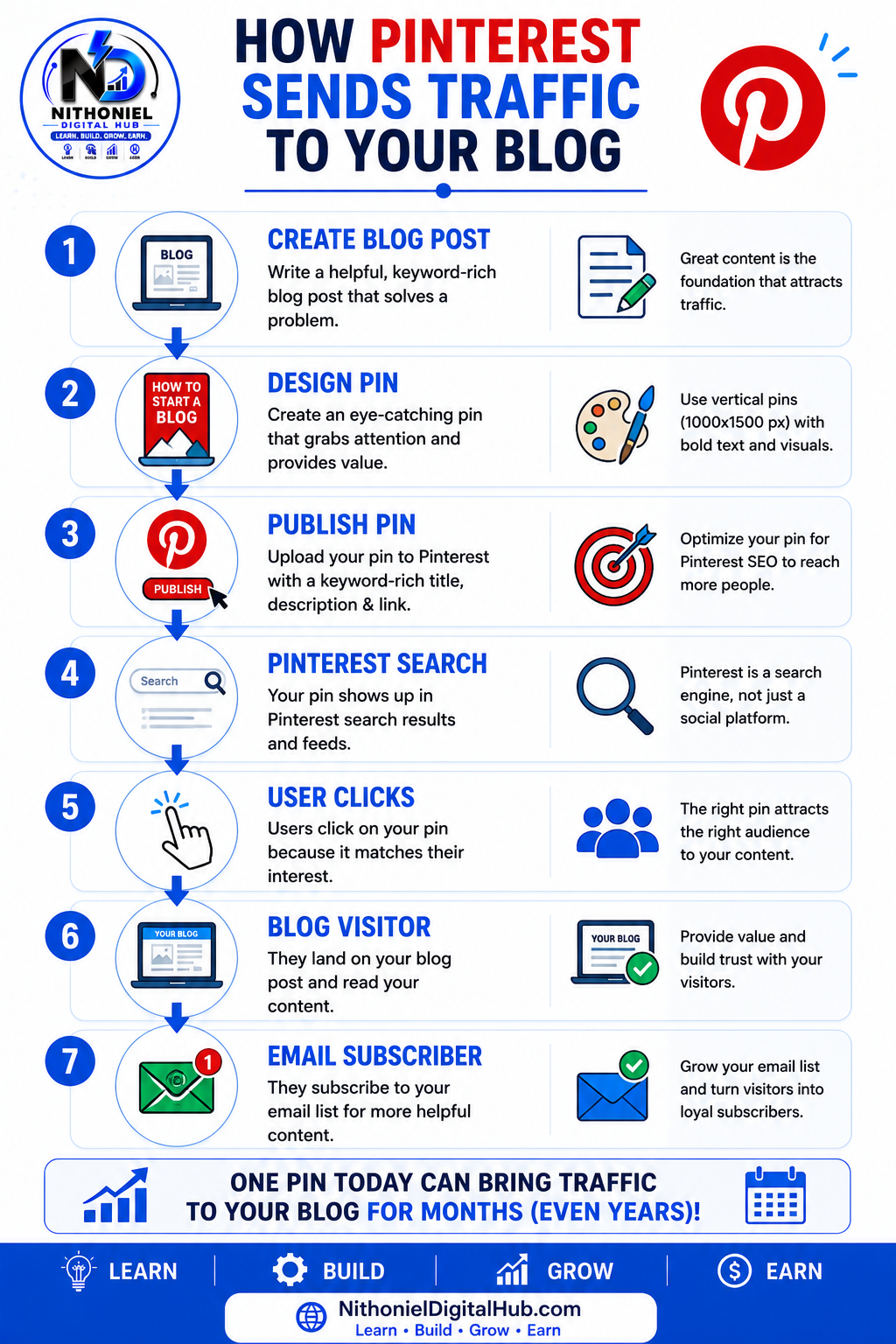
Explore our Pinterest boards for Blogging, AI SEO, and Digital Guides to help you Learn • Build • Grow • Earn.
When most people think about getting blog traffic, they immediately focus on Google. While Google is incredibly important, many beginner bloggers overlook one of the most powerful traffic sources available today: Pinterest.
The reason Pinterest is different from most social media platforms is that content has a much longer lifespan. A Facebook post may disappear from people's feeds within a few hours. An Instagram post may get attention for a few days. But a Pinterest pin can continue generating clicks and traffic for months or even years.
That's why many bloggers use Pinterest as a long-term traffic strategy alongside SEO.
The first step is creating a Pinterest business account. A business account gives you access to analytics and allows you to understand which pins are performing best. Once your account is ready, organize your profile around your niche. If your blog focuses on blogging, SEO, and digital growth, your boards should reflect those topics.
For example, you might create boards such as Blogging Tips, SEO For Beginners, Pinterest Marketing, Content Creation, and Online Business Growth. These boards help Pinterest understand what your content is about and make it easier for users to discover your pins.
Consistency is one of the biggest factors in Pinterest success. Instead of creating dozens of pins in one day and then disappearing for weeks, aim to publish a few pins regularly. Even creating two fresh pins daily can produce excellent results over time.
Your pin design also matters. People scroll quickly on Pinterest, so your design needs to grab attention immediately. Use clear headlines, readable text, and strong visuals. Most successful pins focus on solving a problem or promising a benefit.
For example, a headline like "How To Get Your First 1,000 Blog Visitors" is more likely to attract clicks than a generic title such as "Blog Traffic Tips."
Every pin should link directly to a relevant blog post. The goal is simple: someone discovers your pin, clicks it, reads your article, and hopefully becomes a regular reader of your website.
Pinterest traffic rarely explodes overnight. Like SEO, it rewards consistency. The bloggers who publish helpful content and create fresh pins regularly are usually the ones who see the best results after a few months.
While Pinterest can help people discover your content, keeping those visitors engaged once they arrive is equally important. That's where internal linking becomes a powerful tool.
Internal Linking: The Simple SEO Strategy Most Beginners Ignore
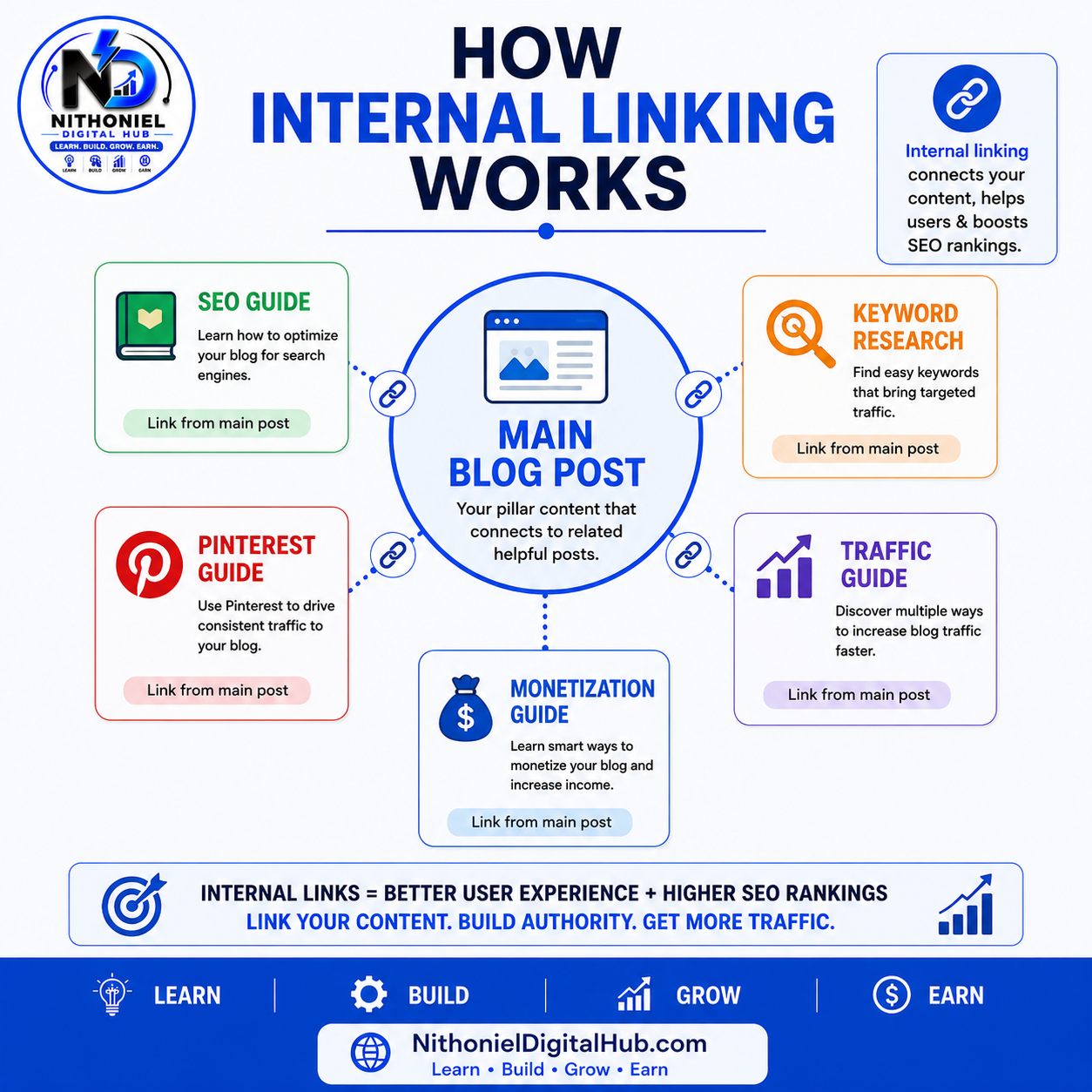
Imagine walking into a large shopping mall with no signs, no directions, and no way to find other stores. You would probably leave quickly.
The same thing happens on blogs.
A visitor reads one article, reaches the end, and leaves because they have no clear path to continue exploring your content.
Internal linking solves this problem.
An internal link is simply a link from one page on your website to another page on the same website. While it sounds simple, it can have a surprisingly large impact on both user experience and SEO.
Let's say someone lands on your article about starting a blog. Within that article, you might naturally link to another post about keyword research. Inside that article, you could link to a guide about SEO. This creates a content journey that encourages visitors to spend more time on your website.
Search engines also benefit from internal linking. When Google crawls your website, internal links help it discover related content and understand the relationship between different articles. This can improve indexing and strengthen the overall authority of your blog.
One mistake beginners often make is publishing articles as isolated pieces of content. Each post exists on its own without connecting to anything else. As a result, visitors leave after reading a single page.
Instead, think of your blog as a network of helpful resources. Every new article should connect naturally to other relevant content whenever possible.
A good rule is to include three to five relevant internal links within each article. However, quality is more important than quantity. Only add links when they genuinely help the reader learn more about the topic.
Over time, strong internal linking creates a better user experience, increases page views, and helps search engines understand your website more effectively. It's one of the easiest traffic-building strategies available, yet many new bloggers completely overlook it.
Now let's look at something equally important: promoting your content after it's published.
Why Promotion Is Just As Important As Publishing
Many bloggers believe their job is finished once they click the publish button.
In reality, publishing is only the beginning.
Even the best article in the world cannot generate traffic if nobody knows it exists. That's why promotion should be part of your content strategy from day one.Think about it this way. If you spend five hours writing an article, it makes sense to spend additional time helping people discover it. Promotion allows your content to reach audiences beyond search engines.
One of the easiest places to start is Pinterest. Create multiple pin designs for each article and schedule them over time. Different designs often attract different audiences, increasing the chances of gaining clicks.
Social media can also help amplify your content. Share valuable insights from your article on Facebook, LinkedIn, Threads, or X and encourage people to visit your website for the full guide.
Another effective strategy is repurposing content. A single blog post can become several Pinterest pins, social media posts, short videos, infographics, or email newsletters. This allows you to reach more people without constantly creating new content from scratch.
If you have an email list, even a small one, send your latest articles to subscribers. These readers have already shown interest in your content, making them more likely to visit and engage with your website.
The most successful bloggers understand that content creation and content promotion work together. Writing great articles attracts visitors over the long term, while promotion helps those articles gain visibility much faster.
Traffic growth becomes much easier when you consistently create helpful content and actively share it with the right audience.
Common Mistakes That Kill Blog Traffic (And How To Avoid Them)
Getting traffic is not only about doing the right things. It's also about avoiding the mistakes that slow down growth. The good news is that most blogging mistakes are completely avoidable once you know what to watch for.
One of the biggest mistakes is publishing content without a clear strategy. Many beginners write whatever comes to mind and hope something eventually works. While creativity is important, random content often creates random results. Successful blogs usually focus on helping a specific audience solve specific problems. The more focused your content is, the easier it becomes for search engines and readers to understand your website.
Another common mistake is targeting highly competitive keywords too early. New bloggers often want to rank for popular terms with thousands of searches. Unfortunately, those keywords are usually dominated by large websites that have been building authority for years. A smarter approach is targeting low-competition, long-tail keywords first. These keywords may attract fewer searches individually, but they often bring faster results and help build momentum.
Many bloggers also underestimate the importance of consistency. Publishing five articles in one week and then disappearing for a month sends mixed signals to both readers and search engines. Consistent publishing creates trust and gives your website more opportunities to attract visitors. Even one quality article each week can make a significant difference over time.
Ignoring SEO is another mistake that limits traffic growth. You don't need to become an SEO expert, but basic optimization matters. Simple things such as writing clear titles, using headings properly, adding internal links, and including relevant keywords can help search engines understand your content more effectively.
Some bloggers become obsessed with traffic numbers and analytics. They check visitor counts multiple times a day and become discouraged when growth is slow. The reality is that traffic is often a delayed result of the work you did weeks or months earlier. Instead of focusing on daily numbers, focus on creating helpful content and improving your website consistently.
Finally, many people quit too soon. Blogging rewards patience. The first few months are often the hardest because you're putting in effort before seeing significant results. The bloggers who succeed are usually the ones who continue publishing even when growth feels slow.
If you can avoid these mistakes and stay consistent, you'll already be ahead of many beginners.
Your Complete 90-Day Roadmap To Reach 1,000 Blog Visitors
One of the reasons people struggle with blogging is that they don't have a clear plan. They know they want traffic, but they aren't sure what actions to take each week. That's why having a simple roadmap can make a huge difference.
Let's break the journey into three manageable phases.
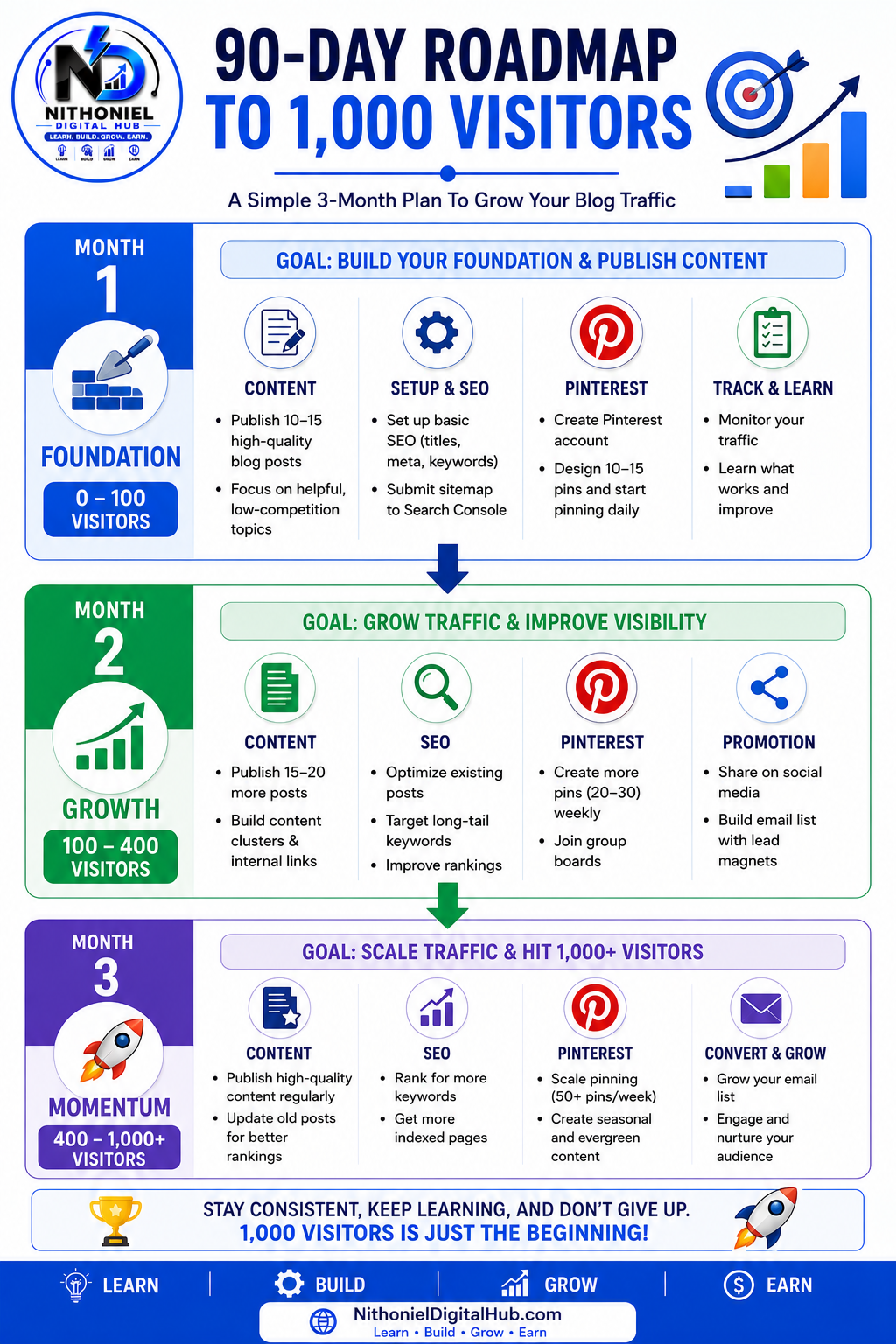
Month 1: Build Your Foundation
The first month is all about creating content and setting up your blog properly. Your goal during this stage is not massive traffic. Your goal is building assets that can attract traffic later.
Focus on publishing at least five to ten high-quality articles related to your niche. Make sure your website is connected to Google Search Console and that your sitemap has been submitted. Create important pages such as About, Contact, and Privacy Policy pages to build trust and professionalism.
At the same time, start creating Pinterest boards and designing a few pins for your published content. Don't worry if traffic is still low. The work you're doing now is preparing your blog for future growth.
By the end of the first month, you may see anywhere between zero and one hundred visitors. That is completely normal.
Month 2: Increase Content And Promotion
Once your foundation is in place, the second month should focus on expanding your content library and improving promotion.
Continue publishing new articles regularly. Aim to cover related topics that strengthen your expertise within your niche. This helps build topical authority, which can improve your visibility in search results over time.
Create fresh Pinterest pins consistently and link them to your articles. Share useful content on social media platforms and begin building relationships with other creators in your niche.
You should also review your existing articles and make improvements where necessary. Add internal links, update information, and optimize titles if needed.
By the end of month two, many blogs begin receiving their first consistent traffic. You may see anywhere between one hundred and four hundred visitors depending on your niche and publishing frequency.
Month 3: Build Momentum
The third month is where many bloggers begin noticing real progress.
At this stage, your website may contain twenty to thirty helpful articles. Search engines have had more time to crawl and understand your content. Pinterest pins have had more time to circulate. Internal links are creating stronger connections between your posts.
Continue following the same process: publish quality content, optimize for SEO, create Pinterest pins, and promote your articles. Consistency becomes your greatest advantage.
Some articles may start ranking in Google. A few Pinterest pins may begin generating regular clicks. Traffic that once seemed impossible starts becoming predictable.
By the end of the third month, reaching your first 1,000 visitors is a realistic goal for many beginner bloggers. Some blogs may reach it sooner, while others may take a little longer. What matters most is that you're building a sustainable system rather than chasing quick wins.
The blogs that eventually reach ten thousand, fifty thousand, or even one hundred thousand visitors often started exactly where you are today.
Final Thoughts
Every successful blog starts with zero visitors.
The bloggers you admire today once stared at empty analytics dashboards and wondered whether anyone would ever read their content. The difference is that they kept going.
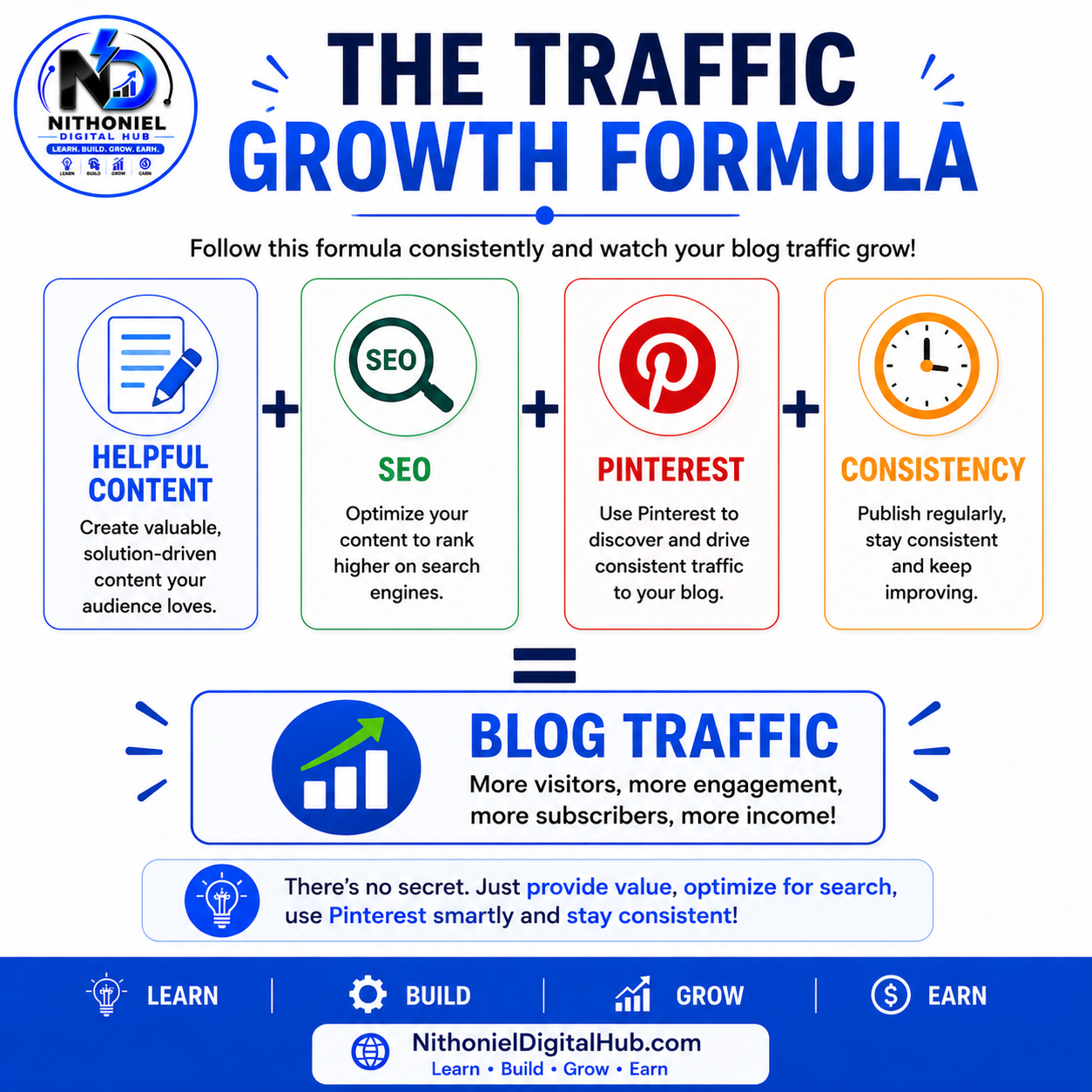
Getting your first 1,000 blog visitors is not about finding a secret shortcut. It's about consistently publishing helpful content, targeting the right keywords, promoting your articles, and giving your efforts enough time to work.
Remember the simple formula:
Create Helpful Content → Optimize For SEO → Promote Consistently → Repeat
Some days growth will feel slow. Some articles may not perform as expected. That's completely normal. Blogging is a long-term game, and every article you publish becomes another opportunity for someone to discover your website.
Focus on helping people. Focus on solving problems. Focus on improving with every article you write.
Six months from now, you'll be glad you started today.
Your first visitor matters.
Your first 100 visitors matter.
And before you know it, you'll be celebrating your first 1,000 blog visitors and preparing for the next milestone in your blogging journey.
The journey starts with a single article. So keep writing, keep learning, and keep growing.
Your first 1,000 visitors are closer than you think. 🚀