How To Start A Profitable Blog In 2026 (Part 1)
Your Blogging Journey Starts Here
Have you ever wanted to build your own website and earn money online?Maybe you have watched YouTube videos or read articles about blogging, but instead of getting clear answers, you ended up feeling even more confused...
Thinking About Starting A Blog?
You have probably heard two completely different opinions about blogging. Some people claim that blogging is dead, while others promise that you can make thousands of dollars within just a few months. The truth is somewhere in between. Blogging is not a magic shortcut to overnight success. It takes patience, consistency, and a willingness to keep learning. However, even in 2026, blogging remains one of the most reliable ways to build a long-term online business and create an income-generating digital asset. A successful blog can help you share your knowledge, build a personal brand, attract an audience, and create multiple streams of income. More importantly, it allows you to help people by solving real problems through useful and trustworthy content. Today, blogging is much more than simply writing articles. It is about creating valuable content that both readers and search engines can trust. When your content genuinely helps people, Google can reward your website with organic traffic, which may eventually turn into subscribers, customers, and revenue. Whether you want to start a side hustle, grow a business, or build passive income online, blogging can be one of the smartest places to begin. The best part is that this guide is written specifically for complete beginners. You do not need coding skills, technical experience, or a huge budget. All you need is the willingness to learn and take the first step.
What You'll Learn
By the end of this guide, you will understand:
✅ What blogging really means in 2026.
✅ The difference between a website and a blog.
✅ How blogging has changed over the years.
✅ Why blogging is still alive and growing.
✅ How successful bloggers build long-term businesses.
✅ The foundation you need before creating your own blog.
This guide will save you hours of confusion and help you start the right way.
Before You Start: One Important Truth
Many beginners believe that blogging is a quick way to make money online. They think the process is simple: create a blog, publish one or two articles, and start earning immediately. Unfortunately, successful blogging does not work that way.
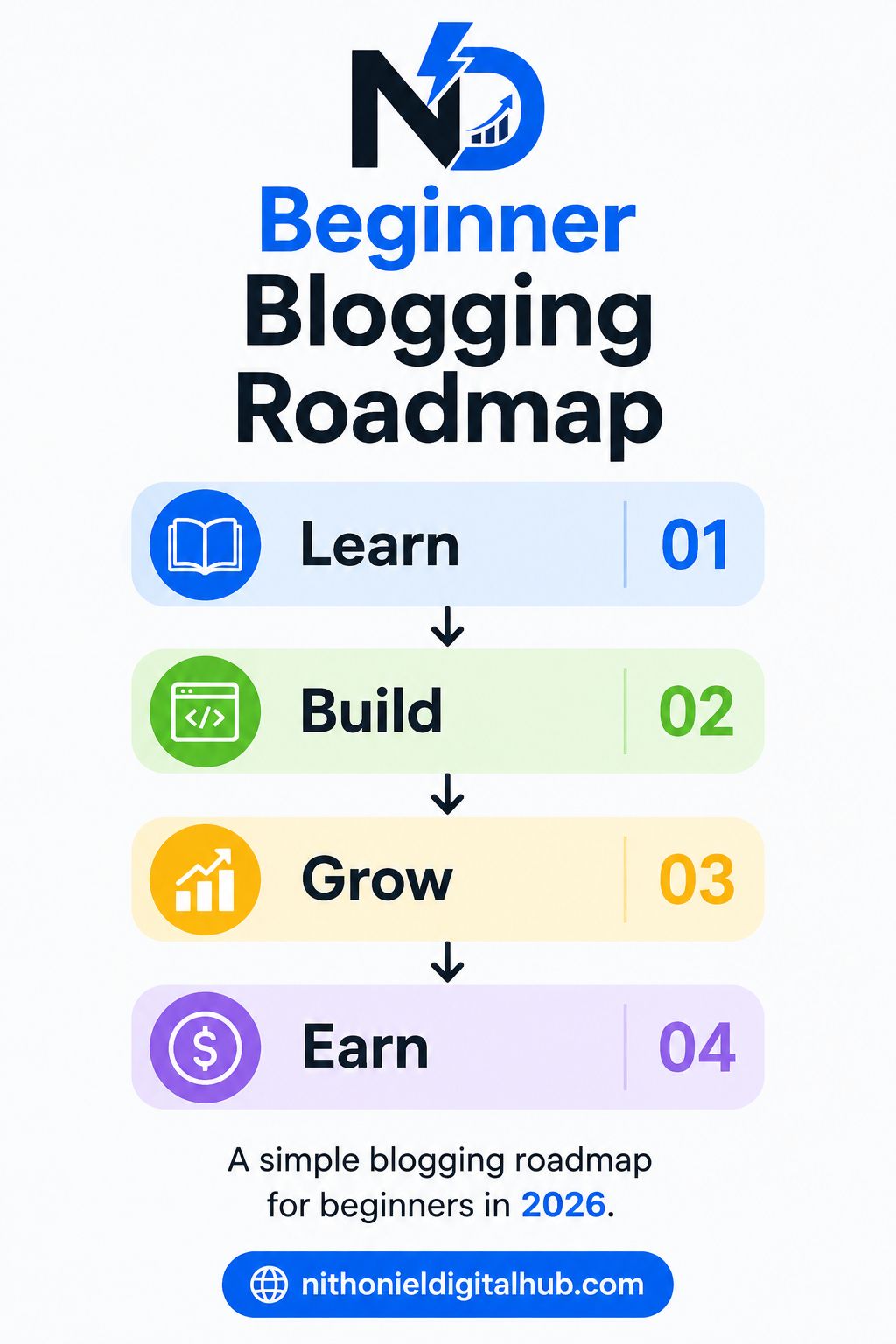
A better way to understand the blogging journey is: Learn → Build → Grow → Earn
First, you learn the basics and understand how blogging really works. Next, you build your website and create a strong foundation. Then, you consistently publish helpful content and slowly grow your audience. Over time, as people begin to trust your advice and recommendations, your blog can start generating income.
This simple mindset is the foundation behind almost every successful blog on the internet.
Instead of focusing only on making money, focus on helping people solve their problems. When you provide real value and build trust with your readers, the income usually follows naturally.
This article is Part 1 of a complete beginner blogging series.
In this part, you will learn the basic foundation of blogging.
In Part 2, you will learn:
1.WordPress setup
2.Essential website pages
3.Best themes and plugins
4.Writing your first blog post
5.Basic SEO setup
6.Publishing your website
Think of this guide as building the foundation of a house.
Once the foundation is strong, everything else becomes much easier.
What Is Blogging In 2026?
Many years ago, blogging was mostly used as a kind of online diary. People shared their daily experiences, personal stories, and thoughts with friends and readers around the world.
Today, blogging has evolved into something much bigger.
A blog is a website where you regularly publish helpful content for a specific audience. Instead of simply writing about your day, modern bloggers focus on solving problems, answering questions, and sharing useful information that people are actively searching for.
For example,
a fitness blog helps people improve their health,
a travel blog shares destination guides and tips,
a finance blog teaches money management,
and a technology blog reviews gadgets, apps, and software.
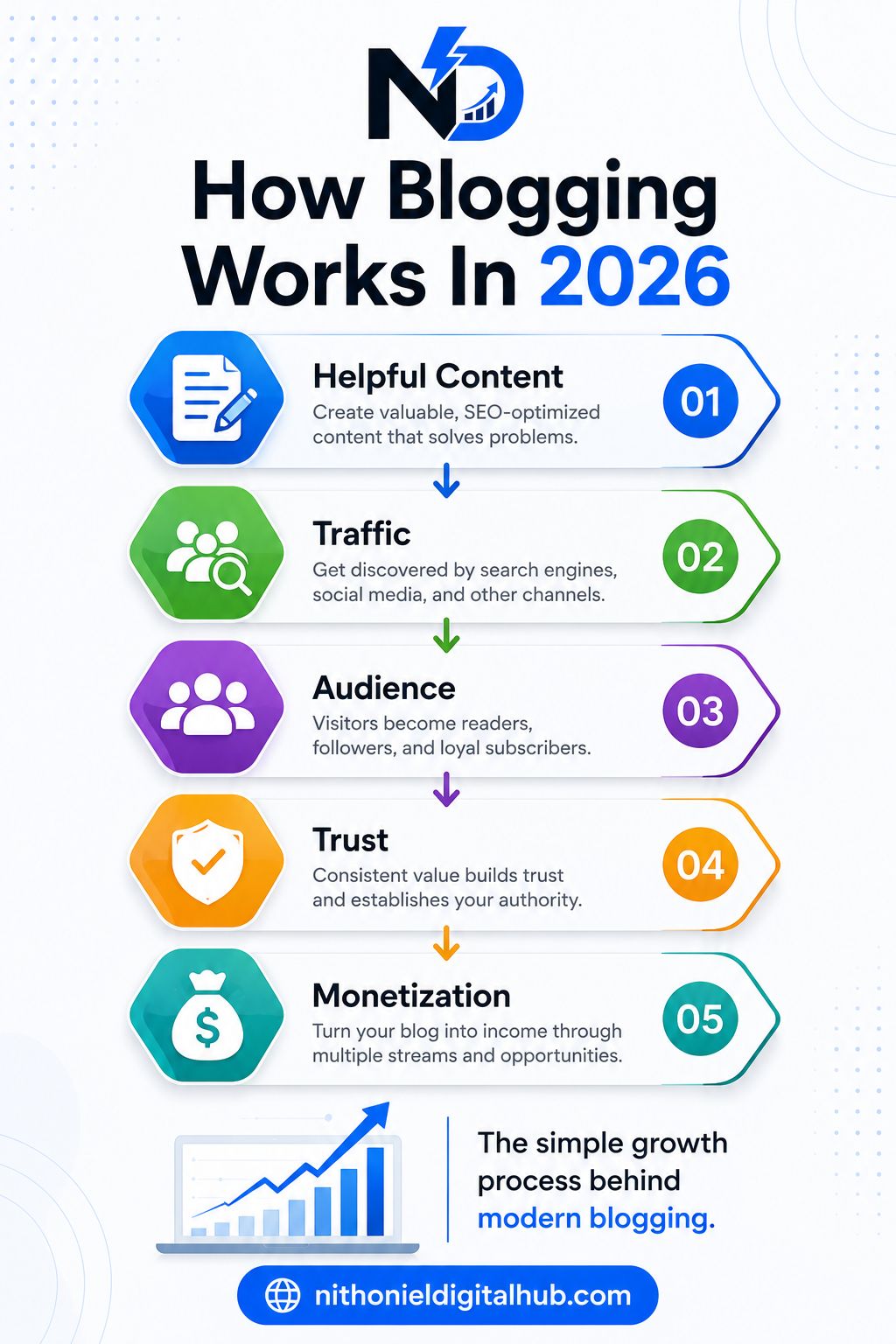
The main purpose of blogging in 2026 is to provide value. Every day, millions of people use search engines like Google to find answers to their questions. If your blog offers clear, helpful, and trustworthy information, those people can discover your content and become regular readers. As your audience grows, so does their trust in you. Over time, that trust can turn into followers, customers, business opportunities, and multiple sources of income. In simple words, blogging is the process of creating and publishing valuable content that helps people and builds an online presence.
Website vs Blog
Many beginners think that a website and a blog are exactly the same. While they are closely related, they actually serve different purposes. A website usually contains important pages that do not change very often. These pages introduce your brand, business, or personal profile and typically include sections like Home, About, Services, and Contact. A blog, on the other hand, is updated regularly with fresh articles. Every new post gives visitors another reason to come back and helps your website reach more people through search engines like Google. One of the biggest advantages of blogging is SEO (Search Engine Optimization). The more helpful and informative articles you publish, the more opportunities you have to appear in search results and attract free organic traffic.
Here is a simple comparison:
In reality, most successful businesses and creators use both. They have a professional website for their main information and a blog that attracts visitors, builds trust, and helps grow their audience over time.
How Blogging Has Changed
Blogging has changed dramatically over the last twenty years. What started as a simple way for people to share their personal thoughts has now become one of the most powerful tools for building an online business and reaching a global audience.
The Early Days
In the beginning, blogs were mostly online diaries. People wrote about their daily lives, hobbies, travel experiences, and personal opinions. Most blogs were created simply for fun and self-expression rather than making money.
The Rise Of Professional Blogging
As the internet grew, businesses realized that blogs could help them attract customers through Google. Instead of relying only on advertisements, companies started publishing useful articles that answered people's questions. This approach became known as content marketing.
The SEO Blogging Era
Over time, bloggers learned that creating content around popular search topics could bring a steady flow of visitors. By writing helpful articles and optimizing them for search engines, a single blog post could attract thousands of readers every month.
The AI And Helpful Content Era
Today, blogging has entered a new phase. AI tools can help writers research topics, organize ideas, and create content more efficiently. However, Google does not reward content simply because it exists. It rewards content that is genuinely useful.
The best blogs in 2026 focus on creating content that is:
1.Helpful
2.Accurate
3.Easy to understand
4.Written for real people
The bloggers who succeed today combine AI tools with their own experience, knowledge, and creativity. Readers trust real stories, practical advice, and honest recommendations, which is why the human touch remains so important.
Is Blogging Dead?
You have probably heard people say, "Blogging is dead."
The truth is that blogging is not dead—bad blogging is.
Years ago, it was possible to publish short articles filled with keywords and rank on Google with very little effort. Those days are gone. Today, both readers and search engines expect high-quality content that provides real value.
Think about your own habits. Whenever you want to learn something, solve a problem, or compare products, you probably search Google. Millions of people do the same thing every single day, and someone has to create the answers they are looking for.
That is exactly where blogging comes in.
Businesses, creators, and brands continue to invest in blogs because they help them attract free traffic, build trust, generate leads, sell products, and grow their audience over time.
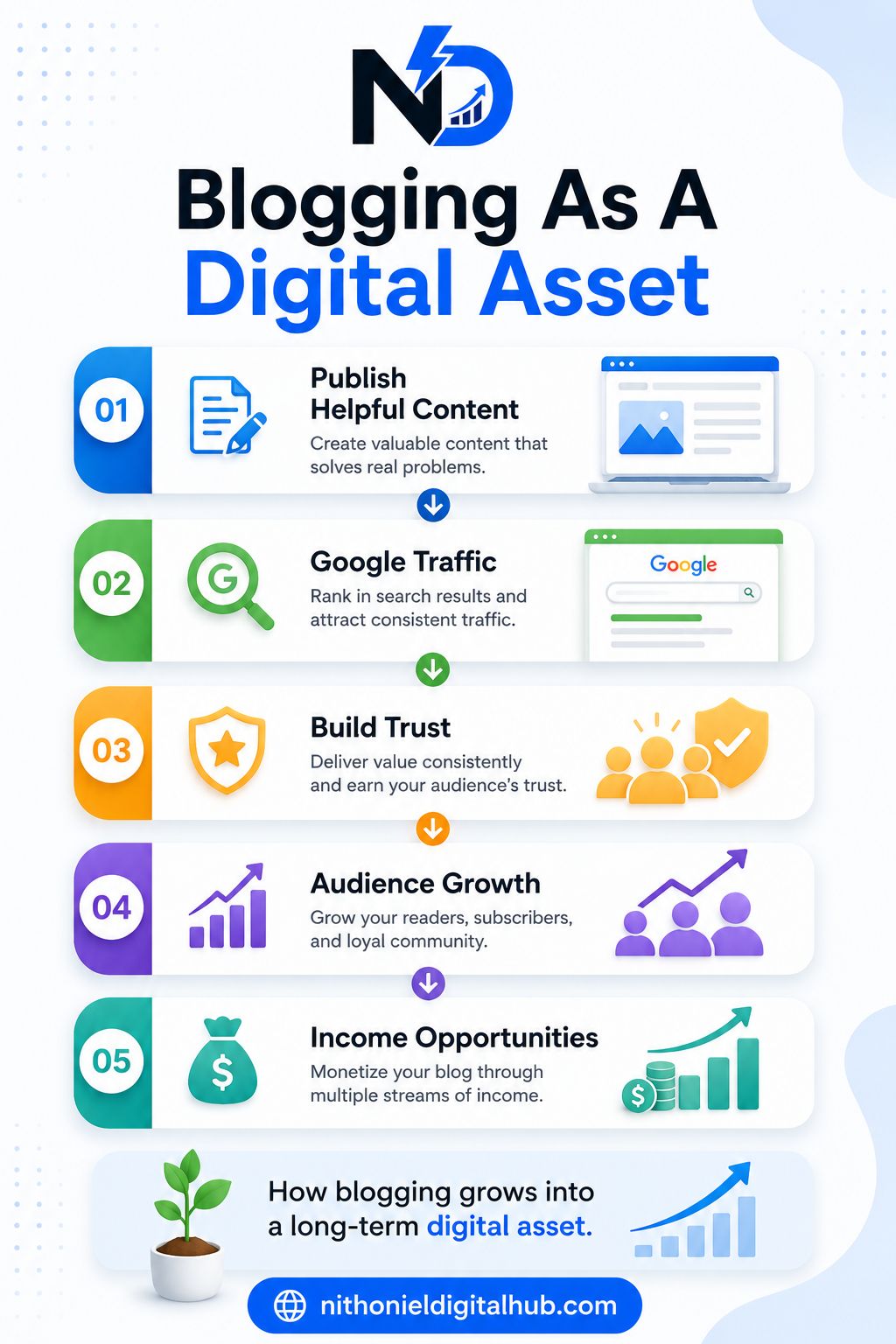
Unlike social media posts that disappear from people's feeds after a few days, a well-written blog article can continue bringing visitors for months or even years. Every quality article you publish becomes a long-term digital asset that keeps working for you.
So, is blogging worth starting in 2026?
Absolutely.
If you are willing to learn, stay consistent, and create content that genuinely helps people, blogging can still become one of the smartest and most rewarding online businesses you can build.
In the next section, you will discover how bloggers actually make money and why the most successful blogs often have multiple income streams.
Can Blogging Make Money?
One of the biggest reasons people start a blog is to earn money online. Naturally, this leads to a very common question:
"Can blogging really make money in 2026?"
The simple answer is yes, it can.
However, it is important to have realistic expectations. Blogging is not a get-rich-quick scheme where you publish a few articles today and become rich tomorrow. Like any real business, it takes time, patience, and consistent effort.
A good way to think about blogging is to compare it to planting a tree. First, you prepare the soil. Then you plant the seed and water it regularly. Slowly, it begins to grow, and after some time, it starts giving fruits.
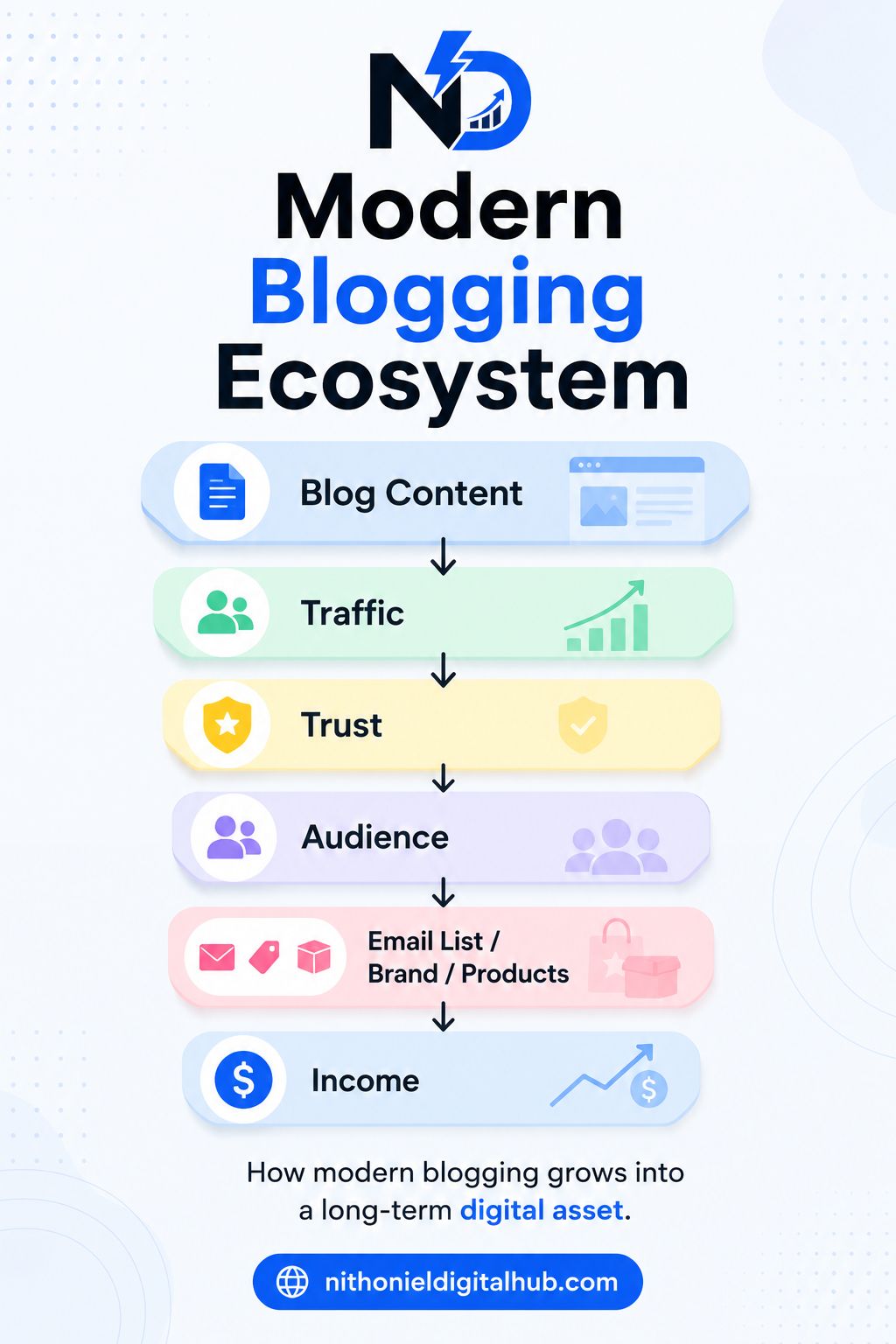
A blog works in exactly the same way. You create valuable content, people discover it through Google, and they begin to trust you. As your audience grows, your opportunities to earn money also increase.
Many full-time bloggers started with absolutely no experience and no visitors. They simply stayed consistent and kept creating useful content. Over time, their blogs became valuable digital assets that generated traffic and income every month.
One of the best things about blogging is that there is no fixed income limit. Some bloggers earn enough to cover their monthly expenses, while others build six-figure online businesses.
Your results depend on your effort, consistency, and the value you provide. Instead of chasing quick money, focus on building a platform that genuinely helps people. When you earn people's trust, making money becomes much easier.
How Bloggers Actually Earn Money
Many beginners believe that bloggers only make money from advertisements. In reality, most successful blogs generate income from multiple sources.
Let's look at the most common ways bloggers earn money.
1. Affiliate Marketing
Affiliate marketing is one of the most popular and beginner-friendly ways to make money from a blog.
The process is simple. You recommend a product or service that you genuinely find useful. When someone clicks your special affiliate link and makes a purchase, you receive a commission.
For example, if you run a blog about WordPress, you might recommend a hosting company. If one of your readers signs up using your link, you earn a percentage of the sale. The biggest advantage is that you do not need to create your own product. You simply help people discover useful solutions. In fact, many successful bloggers earn the majority of their income through affiliate marketing.
2. Display Advertisements
Another common way to monetize a blog is through display advertising. Advertising networks place ads on your website, and you earn money whenever visitors view or sometimes click those advertisements.
Some of the most popular advertising platforms are:
Google AdSense
Ezoic
Mediavine
Raptive
Most beginners start with Google AdSense and later move to premium ad networks as their traffic increases. In general, the more visitors your blog receives, the more advertising revenue you can generate.
3. Sponsored Posts
As your blog grows and gains authority, brands may contact you to promote their products or services.
This type of collaboration is known as a sponsored post.
For example, a software company might pay a technology blogger to review a new application, while a travel company may sponsor a destination guide.
Sponsored content can become a valuable source of income once your blog builds a loyal audience and a strong reputation.
4. Selling Digital Products
Many bloggers eventually create and sell their own digital products.
Some common examples include:
E-books
Online courses
Templates
Checklists
Printable planners
One of the biggest advantages of digital products is that they can be sold repeatedly without additional production costs, making them highly profitable.
5. Freelancing And Services
A blog can also help you attract clients for your professional services.
For example, if you regularly write about SEO, businesses may hire you as an SEO consultant. If your blog focuses on graphic design, readers may become your future design clients.
Many successful freelancers first built their credibility and personal brand through blogging.
6. Building A Personal Brand
Today, a blog can become the foundation of an entire online business.
Your content can help grow:
#YouTube channels
#Email newsletters
#Social media accounts
#Coaching businesses
Consulting services
In many situations, the blog itself is not the final product. Instead, it becomes the central platform that supports and promotes everything else you create.
A Simple Truth About Blogging Income
The most successful bloggers rarely depend on just one source of income. Instead, they combine several methods to build a stable and long-term business.
A simple example looks like this:
Affiliate Marketing + Display Ads + Digital Products + Services = A Strong Blogging Business
This flexibility is one of the main reasons blogging continues to be one of the best online business models in 2026.
In the next section, we'll explore a realistic blogging timeline and understand how long it usually takes before a beginner starts seeing meaningful results.
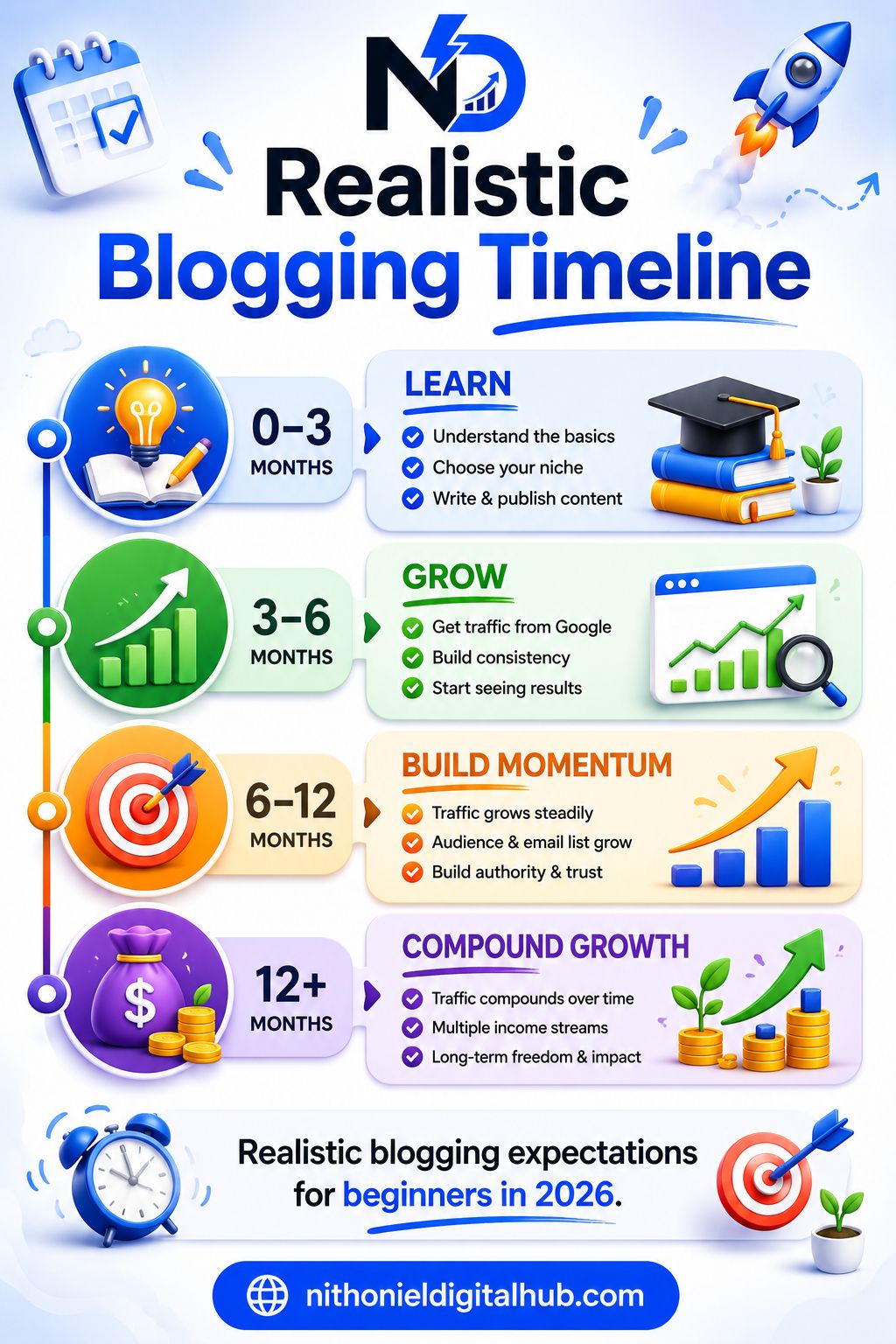
Realistic Blogging Timeline
One of the biggest mistakes beginners make is expecting fast results. Many people start a blog today and hope to make money within a few weeks. When that does not happen, they often lose motivation and give up.
The reality is very different.
Blogging is a long-term business. It takes time for Google to discover your website, index your articles, and build trust in your content. The good news is that once your blog starts growing, it can continue bringing visitors and income for many years.
Let's look at what a realistic blogging journey usually looks like.
Month 1 to 3: Learning and Building
During the first few months, your main goal should be building a strong foundation. This is the stage where you learn the basics and set everything up correctly.
You should focus on:
#Choosing a niche
#Buying a domain and hosting
#Setting up WordPress
#Learning basic SEO
#Writing your first articles
At this stage, you may have very few visitors or even none at all. That is completely normal. Instead of worrying about traffic, focus on learning, improving, and publishing quality content consistently.
Month 3 to 6: Growing Your Content
By this point, you should have several helpful articles published on your blog. Google may start indexing your pages and sending a small amount of traffic.
You might begin to notice:
#A few daily visitors
#Your first comments
#Some social media shares
This stage is all about consistency. Keep publishing useful content, improve your writing skills, and continue learning SEO. Small improvements made regularly can create big results over time.
Month 6 to 12: Building Trust
If you continue working consistently, your blog may start gaining momentum. As you publish more articles, you create more opportunities to appear in Google search results.
Some bloggers even earn their first affiliate commission or advertising income during this period.
However, it is important to remember that every blog grows at a different pace. Do not compare your journey with someone else's success story. Focus on making your content better than it was yesterday.
Year 1 and Beyond: Scaling Your Blog
After one year of steady effort, many bloggers begin to see meaningful progress. Their traffic grows, their audience trusts them, and their income opportunities become stronger.
At this stage, you can expand your online business by:
#Creating digital products
#Building an email list
#Working with brands
#Offering services
#Growing a personal brand
Remember, the successful bloggers you admire today also started with zero visitors. The difference is that they stayed patient and kept going.
Common Beginner Mistakes
Starting a blog is exciting, but many beginners make simple mistakes that slow down their growth. If you can avoid these common problems, you will already be ahead of many new bloggers.
1. Expecting Quick Money
Many people start blogging because they want fast income. When they do not see results within a few months, they become frustrated and quit.
A successful blog takes time to grow. Think of blogging as building a business, not winning a lottery.
2. Choosing the Wrong Niche
Some beginners choose a niche only because someone says it is profitable. Others pick a topic they know very little about.
The best niche usually sits at the intersection of three things:
#Your interest
#Audience demand
#Income potential
We will explore this topic in much more detail in the next section.
3. Publishing Random Articles
Writing about completely unrelated topics can confuse both your readers and search engines.
For example, writing about fitness today, smartphones tomorrow, and cooking next week is not a good long-term strategy. A focused blog builds trust and authority much faster.
4. Ignoring SEO
SEO stands for Search Engine Optimization. It helps search engines understand your content and show it to the right audience.
Many beginners write articles without thinking about keywords or search intent. Learning basic SEO from the beginning can make a huge difference in your blogging journey.
5. Quitting Too Early
This is probably the biggest mistake of all.
Many blogs fail not because the content is bad, but because the owner gives up too soon.
Remember that every successful blogger once had:
#Zero traffic
#Zero subscribers
#Zero income
The only difference is that they kept learning, publishing, and improving.
One Final Piece of Advice
Do not measure your success only by how much money you make during the first few months.
Instead, ask yourself:
#Did I learn something new?
#Did I publish helpful content?
#Did I improve my website?
#Did I stay consistent?
If your answer is yes, then you are moving in the right direction.
A successful blog is built one article at a time. Now that you understand the mindset and realistic timeline behind blogging success, the next step is choosing the right niche—because a great niche can make your blogging journey much easier and much more profitable.
Choosing A Profitable Niche
Before you buy a domain name or install WordPress, there is one very important decision you need to make:
What will your blog be about?
This decision is called choosing your blogging niche.
A niche is simply the main topic or category that your blog focuses on. Instead of writing about everything, you build your website around one specific subject.
For example, a blog about healthy eating belongs to the Health niche, a blog about saving money falls under Finance, a gadget review website belongs to Technology, and a website that shares vacation guides is part of the Travel niche.
Focusing on one clear topic helps both your readers and search engines understand exactly what your website is about.
What Is A Blogging Niche?
Think of your niche as the identity of your blog. When someone visits your website, they should immediately understand what kind of information they can expect to find.
For example, a fitness blog might cover weight loss, home workouts, healthy diets, and exercise routines. A digital marketing blog could focus on SEO, blogging, affiliate marketing, and social media marketing.
When your content stays focused on one area, readers begin to trust your expertise. At the same time, Google starts recognizing your website as an authority on that topic, which can help your articles rank higher in search results.
Why Choosing The Right Niche Is Important
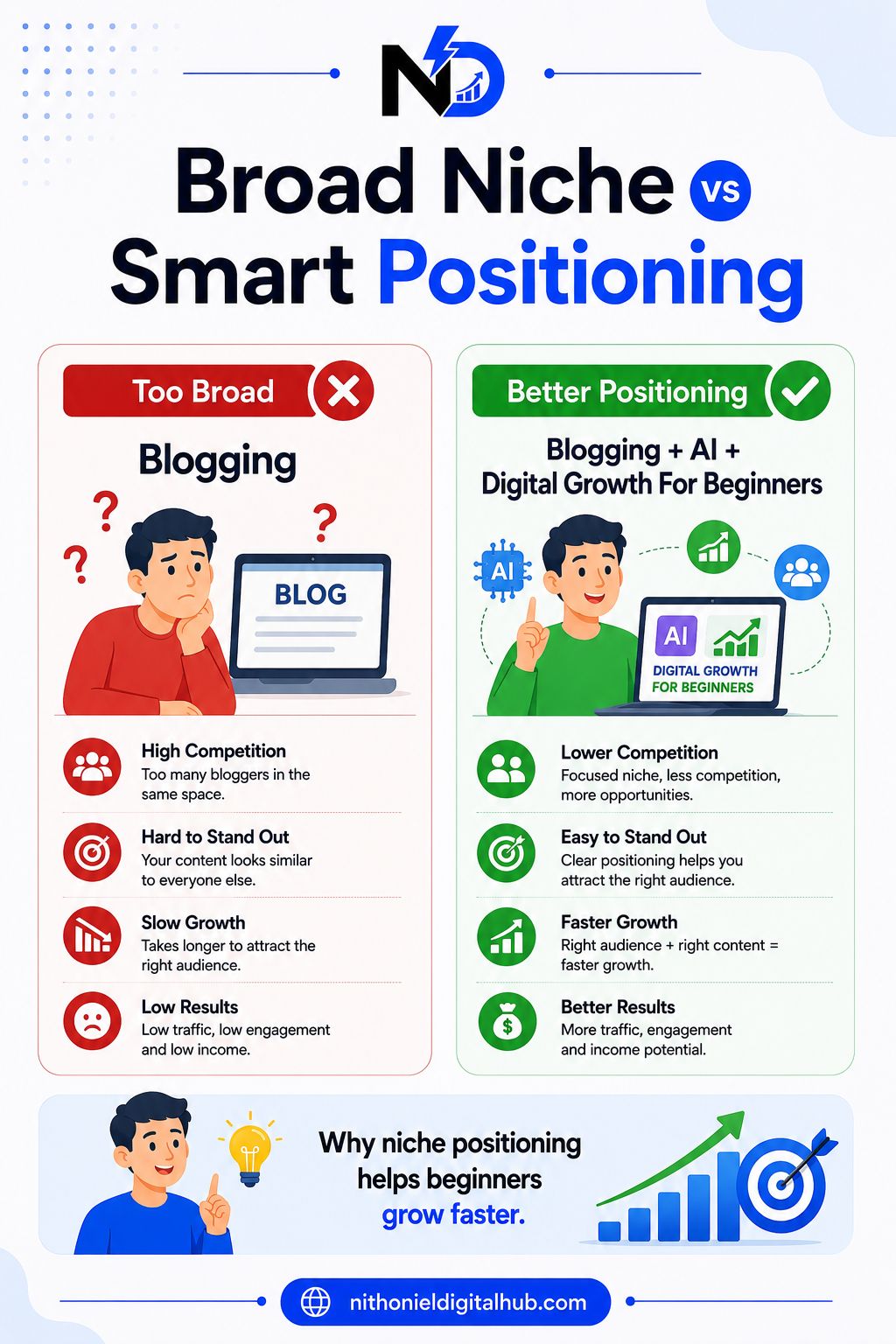
Many beginners skip this step and start writing about random topics without any clear plan.
One day they publish an article about smartphones. The next day they write about cooking recipes. A week later they post a travel guide.
This approach confuses readers, and it also confuses search engines.
A focused blog grows much faster because every article supports the overall theme of the website. Over time, this helps build trust, authority, and better search engine rankings.
Choosing the right niche can help you:
#Build authority.
#Attract the right audience.
#Rank better on Google.
#Generate endless content ideas.
#Create more opportunities to earn money.
For most bloggers, selecting the right niche is one of the most important decisions they will ever make.
Best Evergreen Blogging Niches
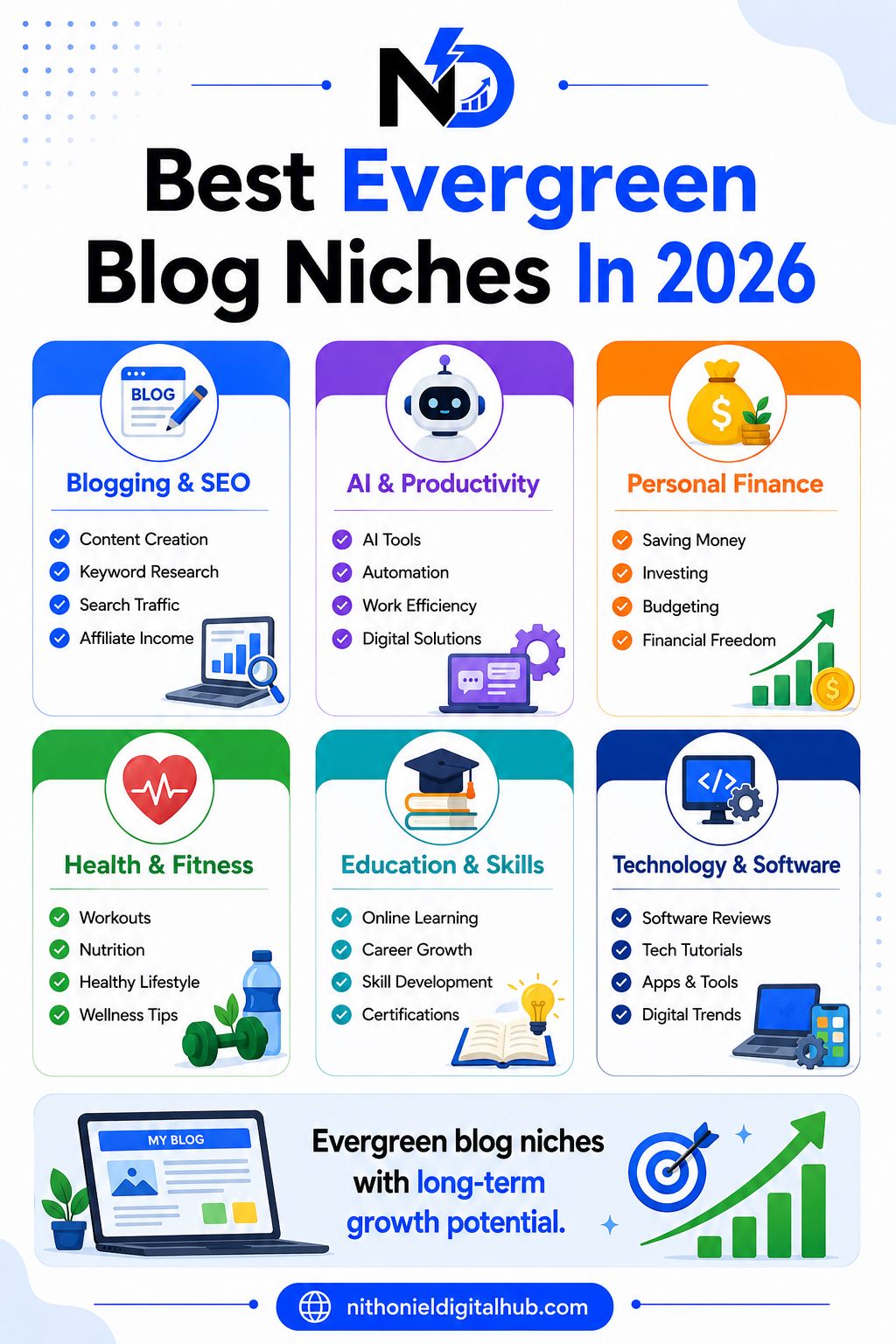
An evergreen niche is a topic that people search for throughout the year. These subjects remain useful and relevant for many years, making them excellent choices for long-term blogging.
1. Personal Finance
People are always looking for ways to improve their financial lives. Popular topics include:
#Saving money
#Investing
#Credit cards
#Budgeting
#Side hustles
This niche also offers excellent opportunities for affiliate marketing and digital products.
2. Health And Fitness
Health-related searches never stop. People constantly want to learn about:
#Weight loss
#Healthy recipes
#Home workouts
#Yoga
#Nutrition advice
A trustworthy health blog can attract a large and loyal audience.
3. Technology
Technology evolves quickly, creating endless opportunities for new content.
Popular topics include:
#Smartphones
#Laptops
#AI tools
#Software reviews
#Tech tutorials
Because new products launch regularly, this niche always has something new to write about.
4. Digital Marketing
As businesses continue moving online, the demand for digital marketing knowledge keeps growing.
This niche covers topics such as:
#Blogging
#SEO
#Affiliate marketing
#Email marketing
#Social media marketing
It is one of the most profitable niches for bloggers who enjoy teaching online business strategies.
5. Education And Online Learning
Millions of people search for educational content every day.
Common topics include:
#Study tips
#Online courses
#Career advice
#Skill development
Educational blogs often build highly engaged and loyal communities.
6. Food And Cooking
Food is one of the most popular blogging categories in the world.
People love discovering:
#Easy recipes
#Healthy meals
#Baking guides
#Kitchen tips
Creative food blogs can attract consistent traffic for many years.
Passion Vs Profit
Many new bloggers ask the same question:
Should I choose my passion or choose a profitable niche?
The best answer is simple:
Choose both, if possible.
Imagine that you love photography. You could create a blog about cameras, editing software, and photography tips. You enjoy writing about the topic, and there are also many products you can recommend through affiliate marketing.
Now imagine choosing a niche only because someone says it makes money. If you have no real interest in the subject, you may lose motivation after a few months.
At the same time, choosing a topic that nobody searches for can make it difficult to grow your blog.
The ideal blogging niche combines three important elements:
#You enjoy learning about it.
#People actively search for it.
#It offers ways to make money.
When these three factors come together, you have a strong foundation for long-term success.
How To Validate Your Niche
Before launching your blog, spend some time checking whether your niche has real potential.
Are People Searching For This Topic?
Go to Google and type in your main topic. If you see many related searches and suggestions, that is usually a good sign that people are interested.
Can You Write 50 To 100 Articles?
A successful blog needs plenty of content. If you can only think of a handful of article ideas, the niche may be too narrow.
Can You Write 50 To 100 Articles?
Look for monetization opportunities such as:
#Affiliate products
#Online courses
#Digital products
#Advertising
#Freelance services
A niche with multiple income options is usually a better long-term choice.
Is There Competition?
Many beginners believe that competition is a bad thing.
In reality, competition often proves that there is demand. If other successful blogs already exist, it means people are actively searching for information on that topic.
Your goal is not to avoid competition.Your goal is to create content that is more helpful, more useful, and easier to understand.
A Simple Formula For Choosing The Right Niche
A profitable blogging niche usually follows one simple formula:
Interest + Audience Demand + Monetization = A Great Blog Idea
If your niche meets these three conditions, you are already building a strong foundation for future success.
Now that you have chosen your blogging niche, the next step is giving your website a name and finding the right place to host it online.
In the next section, we'll learn about domain names and web hosting, and how to choose the right options for your first blog.
What is A Domain Name ?
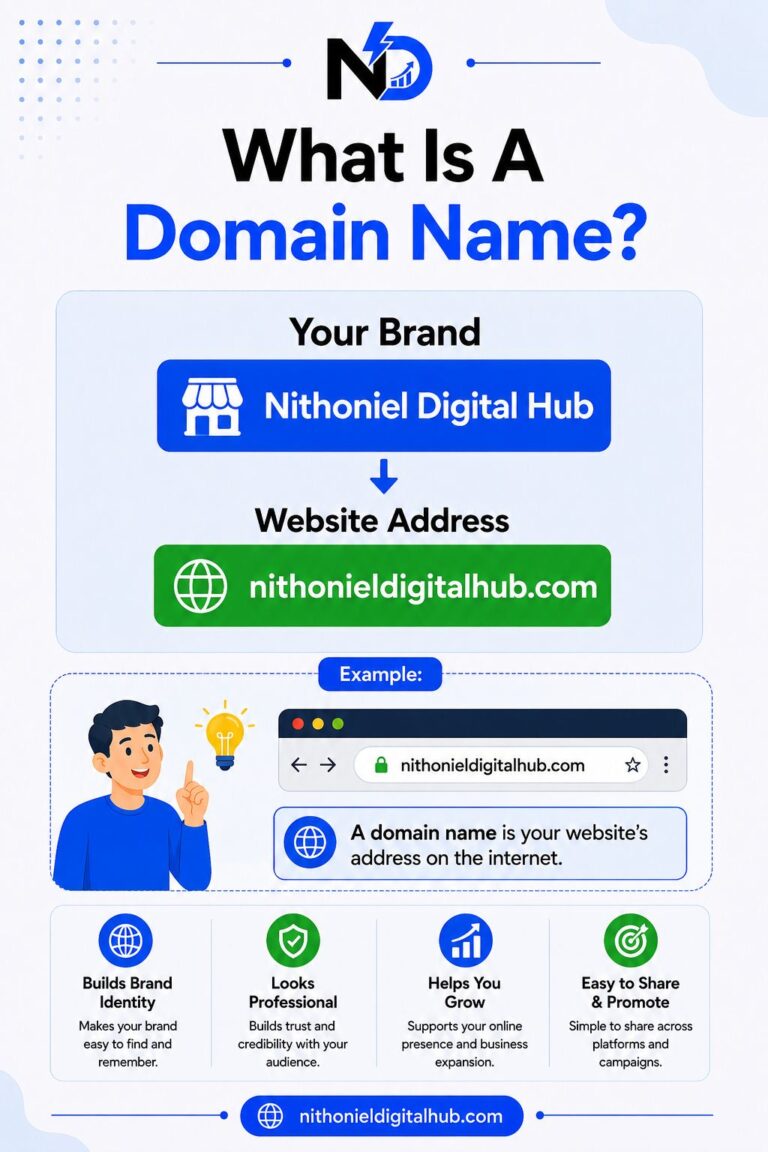
Now that you have chosen your blogging niche, it is time to give your website a name.
This name is called your domain name.
A domain name is the address people type into their browser to visit your website.
For example:
google.com
wikipedia.org
amazon.com
If your blog is your online home, then your domain name is its address.
Without a domain name, people would have to remember a long string of numbers called an IP address, which is almost impossible.
A good domain name makes your website easy to remember and helps build your brand.
How To Choose A Good Domain Name
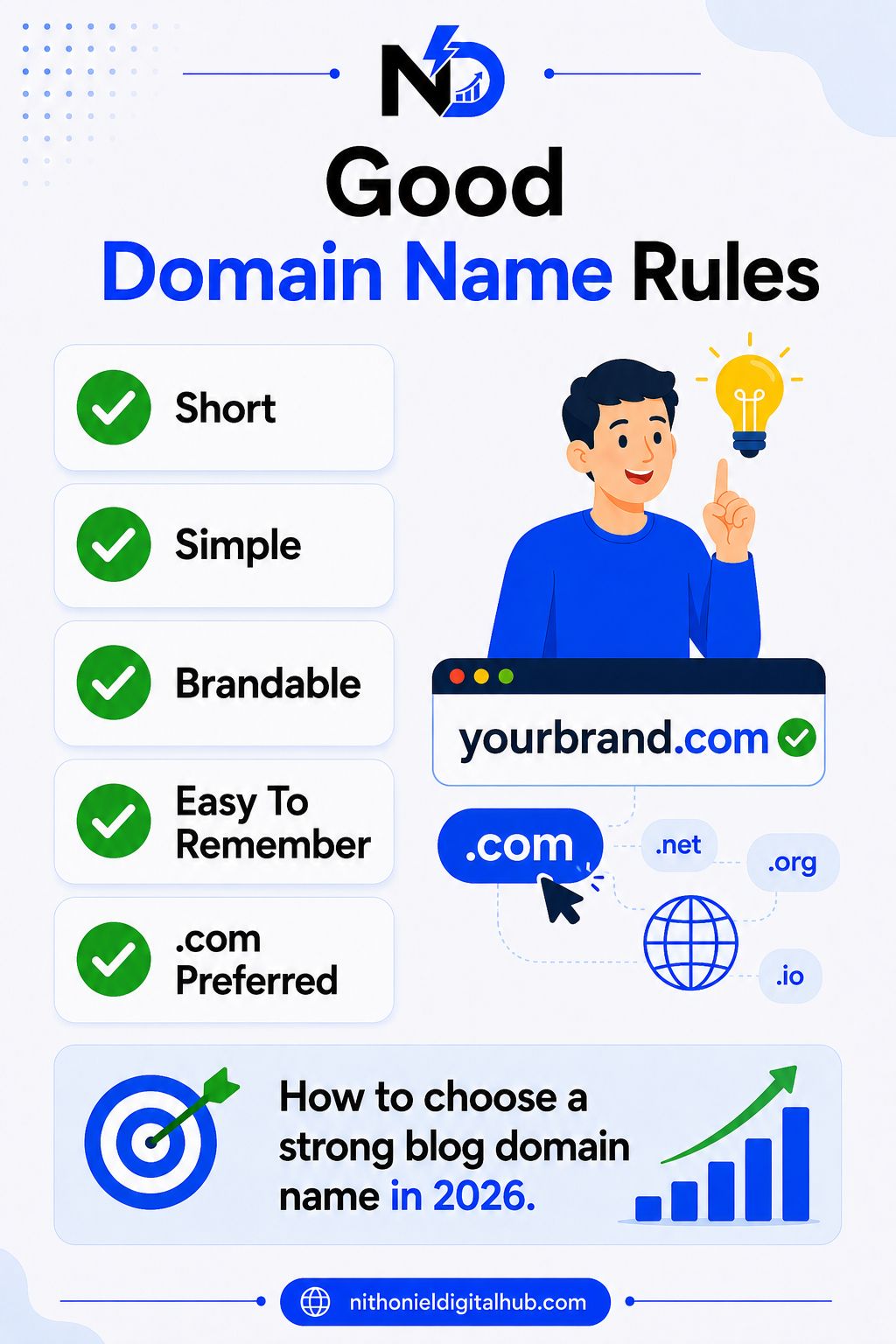
Many beginners spend days trying to find the perfect domain name. The truth is that it does not have to be perfect—it simply needs to be simple, easy to remember, and connected to your blog's topic.
A good domain name should be:
#Simple
#Easy to spell
#Easy to remember
#Related to your niche
A clear and memorable name makes it easier for visitors to find your website and come back later.
Keep It Short
Short domain names are usually easier to type, remember, and share with others.
For example, a name like SmartMoneyHub.com is much easier to remember than something long like TheBestPersonalFinanceAdviceForEveryone.com.
Try to keep your domain name clean and simple.
Avoid Numbers And Hyphens
Numbers and special characters often confuse people.
For example, if your domain is best-blog-123.com, visitors may not know whether they should type "123" or write the words "one two three."
Simple names without unnecessary symbols almost always work better.
Choose The Right Extension
The most popular and trusted domain extension is .com. It is recognized around the world and is usually the first extension people type.
Other good options include:
.net
.org
.co
If possible, try to secure the .com version of your domain name.
Think Long Term
Choose a name that can grow along with your blog.
For example, a domain like BestAndroidPhones2026.com may become outdated after a few years. A broader name such as TechGrowthHub.com gives you much more flexibility as your website expands.
Remember, your domain name should still make sense five or even ten years from now.
What Is Web Hosting?
Buying a domain name is only the first step. You also need a place where all your website files are stored. That place is called web hosting.
A simple way to understand it is this:
#Your domain name is your home's address.
#Your hosting account is the house where everything is stored.
Your blog posts, images, themes, plugins, and WordPress files all live on your hosting server. Whenever someone visits your website, the server sends those files to their browser.
Without web hosting, your website cannot exist on the internet.
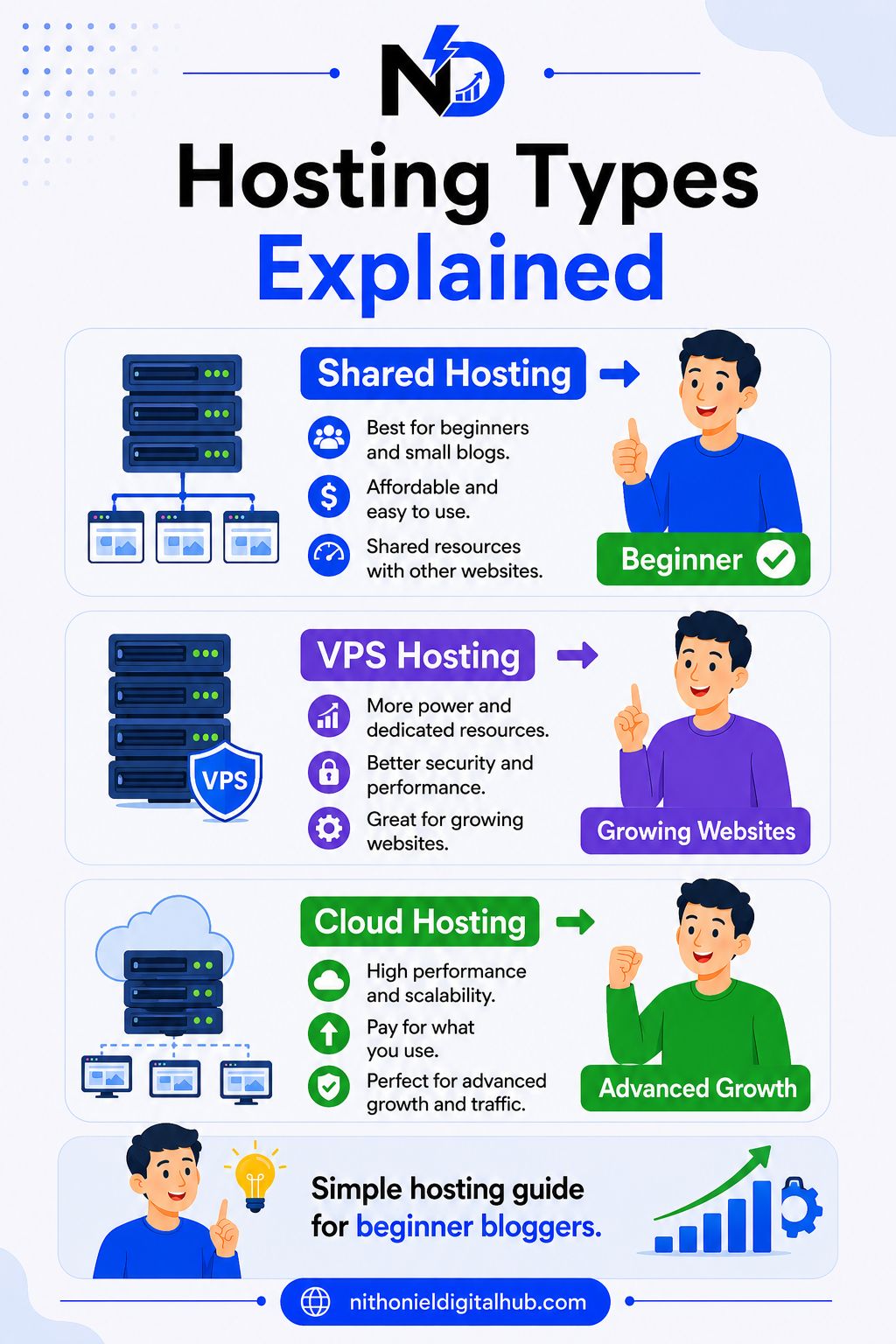
Types Of Web Hosting
There are many types of hosting, but beginners only need to know the three most common options.
1. Shared Hosting
2. VPS Hosting
3. Cloud Hosting
Choosing The Right Hosting
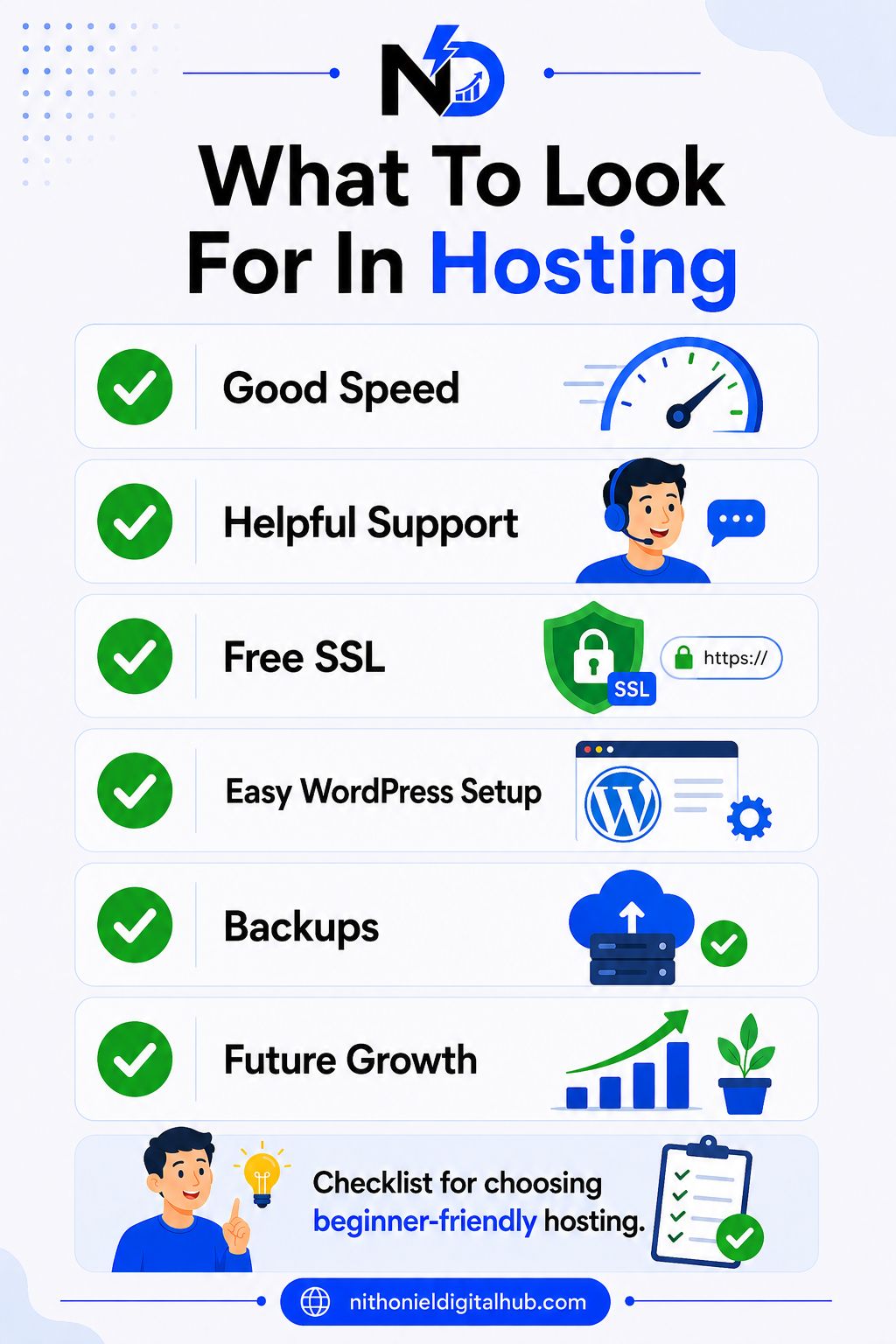
As a beginner, keep things simple. Look for a hosting provider that offers:
#Good speed
#Strong security
#One-click WordPress installation
#Free SSL certificate
#Reliable customer support
#Affordable pricing
Remember, you can always upgrade your hosting later as your blog grows.
Common Hosting Mistakes
Many beginners make these simple mistakes:
Buying The Most Expensive Plan
A basic starter plan is usually enough for your first blog.
Choosing Only Based On Price
Very cheap hosting can mean poor performance and weak support.
Waiting For The Perfect Choice
Some people spend weeks comparing hosting companies but never actually start.
Remember, your first hosting provider does not have to be your forever hosting provider. The important thing is to get started.
One Simple Analogy
Think of your blog like building a house:
#Your niche is the idea.
#Your domain name is the address.
#Your hosting is the land where the house stands.
#WordPress is the tool that helps you build it.
Once your domain and hosting are ready, you are prepared for the next exciting step—installing WordPress and creating your very first blog.
What is WordPress ?
Congratulations!
By now, you have learned about blogging, choosing a niche, buying a domain name, and understanding web hosting. Now it is time to build your actual website.
This is where WordPress comes in.
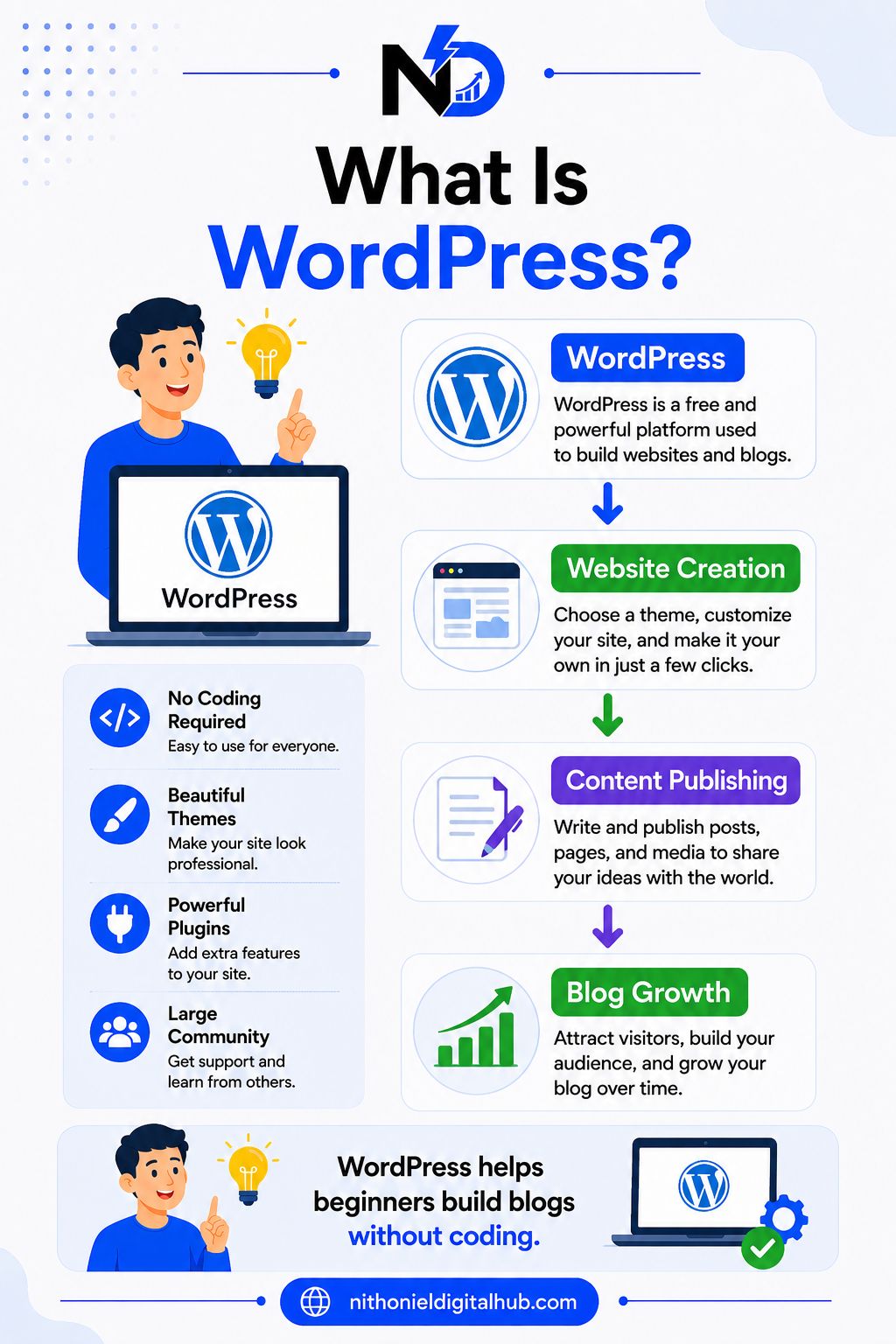
WordPress is a website-building platform that allows you to create and manage a professional website without writing a single line of code. With just a few clicks, you can write blog posts, upload images, customize your website, install new features, and manage everything from one dashboard.
That is one of the biggest reasons why WordPress has become the world's most popular website platform. Millions of blogs, business websites, and online stores are powered by WordPress today.
WordPress.org vs WordPress.com
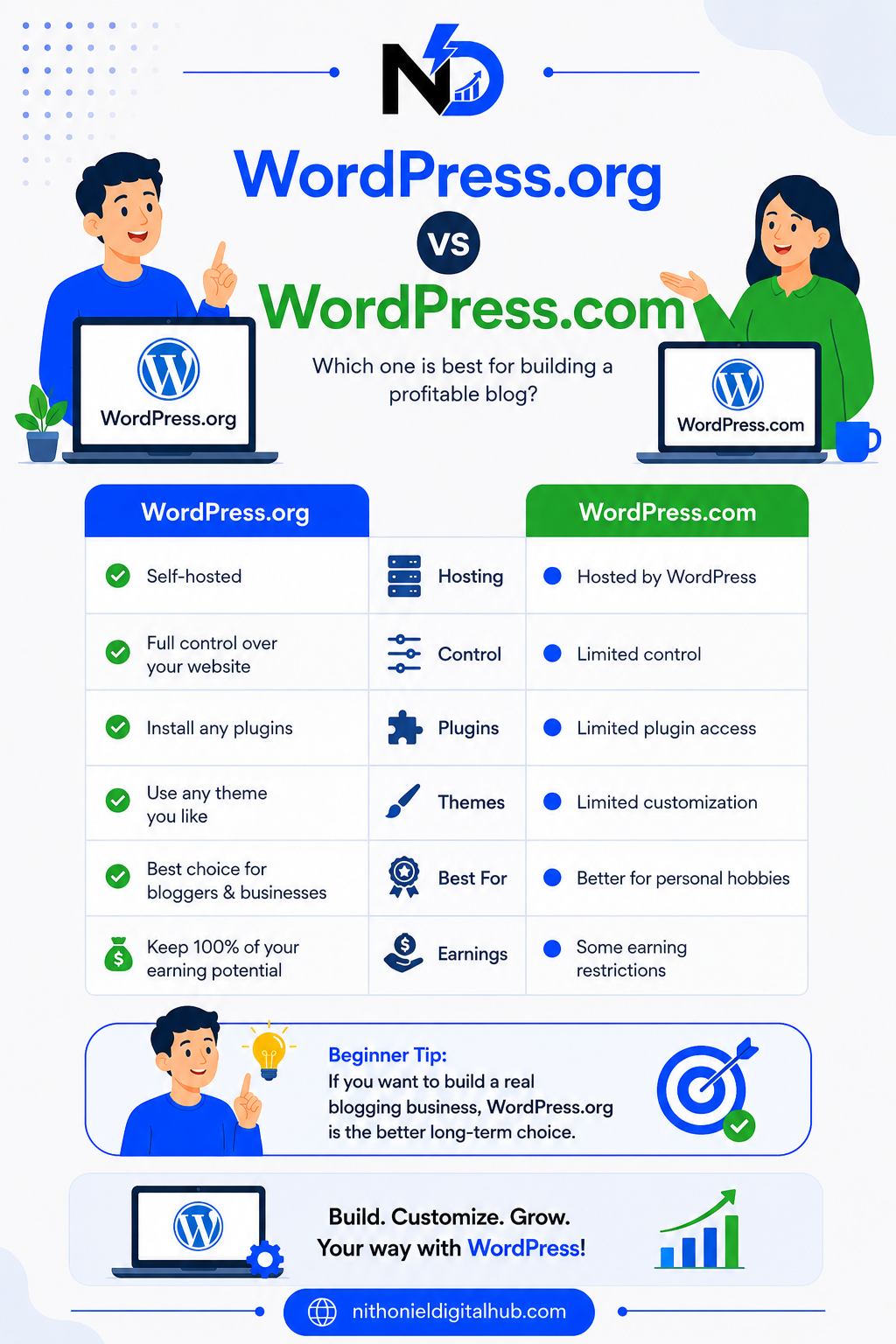
Many beginners get confused because there are two versions of WordPress: WordPress.org and WordPress.com.
Although their names sound similar, they work very differently.
If your goal is to build a profitable blog, WordPress.org is the better choice. It gives you complete ownership of your website and allows you to install any theme, plugin, or monetization method you want.
Installing WordPress
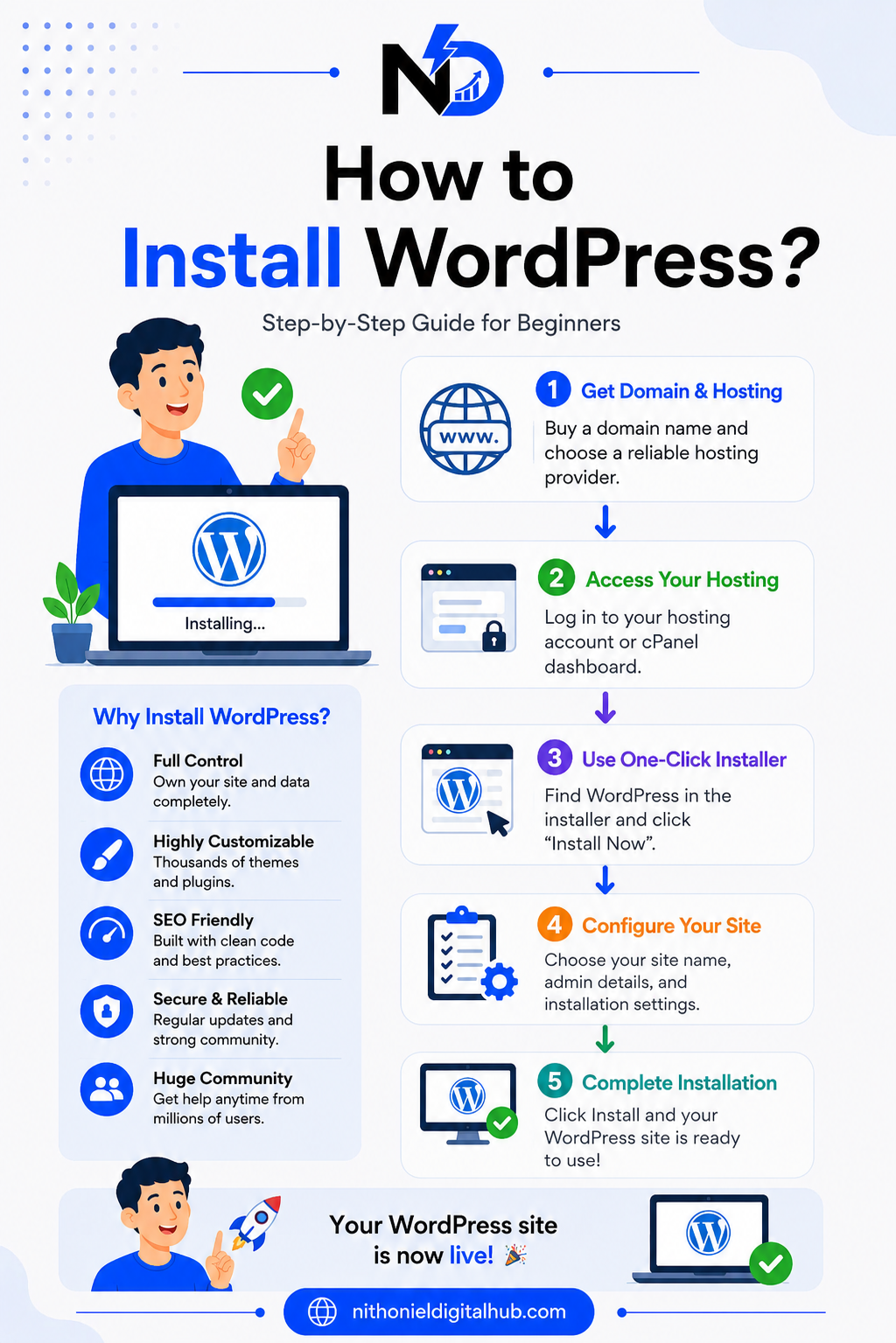
Years ago, installing WordPress required technical knowledge. Today, most hosting companies offer a simple One-Click WordPress Installation feature.
The process is usually very simple:
1. Log in to your hosting account.
2. Open your hosting control panel.
3. Find the WordPress installer.
4. Click Install.
5. Select your domain name.
6. Create your admin username and password.
7. Click Finish.
Within a few minutes, your website will be live, and you will officially own your first blog.
Understanding The WordPress Dashboard
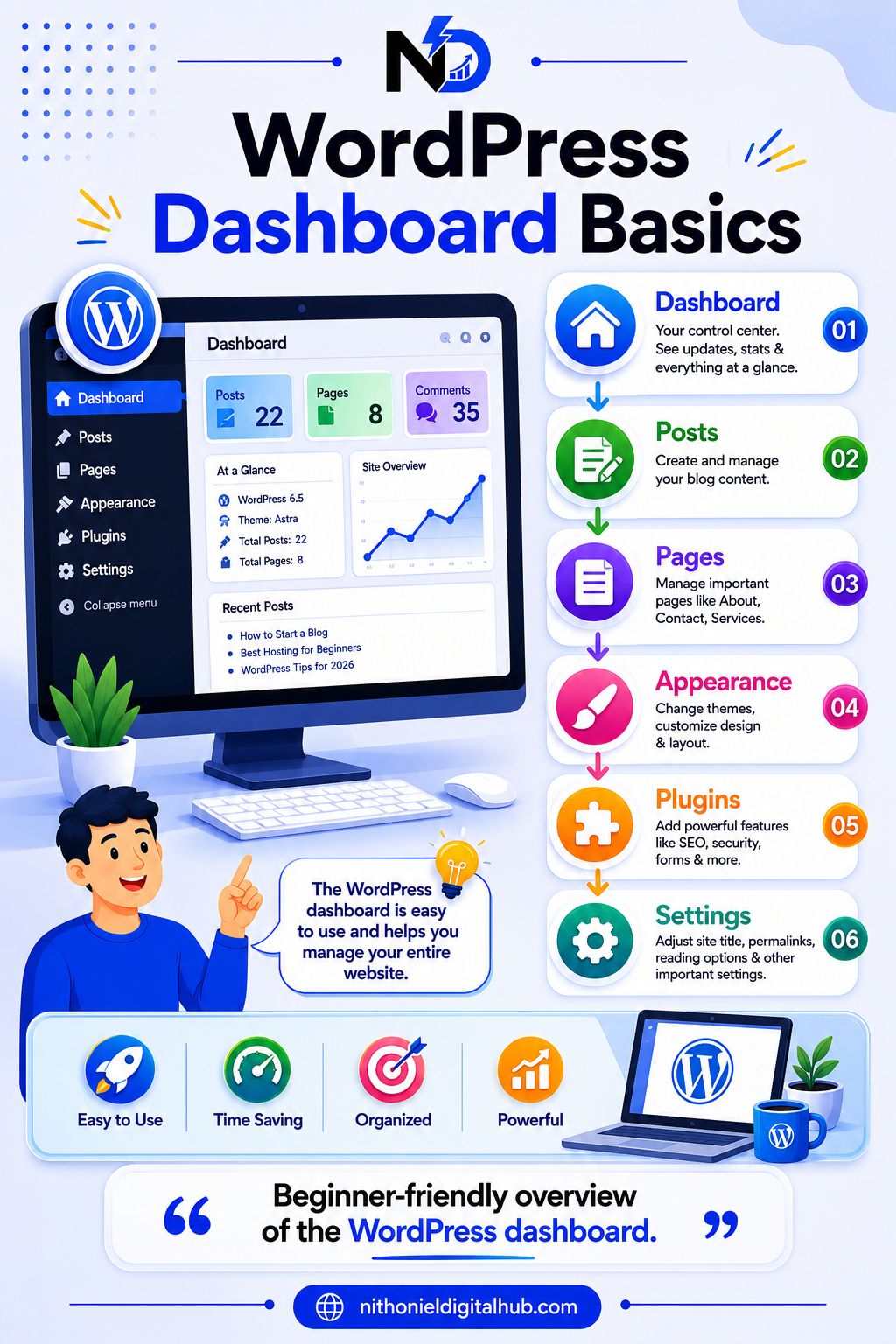
After installation, you can log in by visiting:
yourdomain.com/wp-admin
This opens the WordPress Dashboard, which works as the control room for your entire website.
At first, the dashboard may look confusing because there are many menus and settings. But the good news is that beginners only need to understand a few basic sections.
1.Posts
The Posts section is where all your blog articles are created and managed. You can write new articles, edit existing ones, and update or delete content whenever you want.
2.Pages
Pages are different from blog posts because they contain information that rarely changes.
Common pages include:
Home
About Us
Contact
Privacy Policy
3.Media
The Media Library stores all your uploaded files, including images and videos. Whenever you add a featured image or upload a picture for a blog post, it appears here.
4.Appearance
The Appearance section controls the overall design of your website.
From here, you can install themes, customize colors, edit menus, and adjust your website layout.
5.Plugins
Plugins work like apps for your WordPress website. They add extra features without requiring coding.
Popular plugin categories include:
SEO
Security
Backups
Contact forms
Website speed optimization
You can install or remove plugins whenever you need them.
6.Settings
The Settings section controls the basic configuration of your website.
Here you can change your site title, tagline, time zone, reading settings, and permalink structure.
As a beginner, you do not need to change many settings immediately because the default options work perfectly well.
Congratulations!
If you have reached this point, you already understand concepts that many beginners never take the time to learn.
You now know what blogging really is, why it is still growing in 2026, how bloggers make money, how to choose a profitable niche, how domains and hosting work, and why WordPress is the best platform for beginners.
Remember that every successful blogger once started with zero visitors, zero articles, and zero experience. The only difference is that they took action and never gave up.You do not need to know everything before launching your blog. You simply need to take the first step, keep learning, and publish consistently.
Over time, your blog can become a valuable digital asset that helps people and creates opportunities for you.
And now, it is your turn.