
Why Most Beginner Bloggers Fail In 2026 (And How To Avoid It)

Welcome to my world, dreamers, creators, and future successful bloggers. If you are starting your blogging journey today, I want you to know something important you are not alone.
Every successful blogger once sat exactly where you are right now: confused, excited, nervous, hopeful, and wondering…
“Can I really make this work?”
The answer is yes.
But only if you understand the reality of blogging before giving up too early.
Why Most Beginner Bloggers Fail in 2026 (And How To Avoid It)

why most beginner bloggers fail in 2026 and learn simple step-by-step solutions to avoid common blogging mistakes, grow traffic, and succeed faster.
The Truth About Blogging in 2026
Blogging looks exciting when you first start. Many beginners dream about building a successful blog, earning money online, working from home, and creating a better future for themselves. Some people start blogging because they love writing, while others begin because they want financial freedom. In 2026, blogging still offers amazing opportunities, but there is one truth many beginners do not understand in the beginning: blogging is not as easy as it looks.
Many new bloggers start with high excitement. They buy a domain name, create a website, publish a few articles, and imagine visitors coming quickly. They think that after publishing some blog posts, traffic will automatically grow and money will start coming in. However, after a few weeks or months, reality feels very different. Their website gets little or no traffic. Nobody comments on their posts. Google does not rank their articles quickly. Earnings do not appear. Slowly, disappointment starts growing.
At this point, many beginners begin asking difficult questions. “Why is my blog not growing?” “Did I choose the wrong niche?” “Maybe blogging is too hard for me.” “Why are others succeeding while I am struggling?” These questions are normal because almost every successful blogger once felt the same fear and confusion.
The truth is that most beginner bloggers fail in 2026 not because they are bad or untalented. They fail because they make common mistakes without realizing it.

Blogging is not as easy as it looks online.
Why Do Most Beginner Bloggers Fail?
Before understanding the mistakes, there is one important truth every beginner needs to accept. Blogging is not a quick money shortcut. Many people on the internet make blogging look easy. You may see videos or social media posts saying things like, “Start a blog and earn money in 30 days.” These statements sound exciting, especially for beginners who want fast success. Unfortunately, blogging rarely works like that.
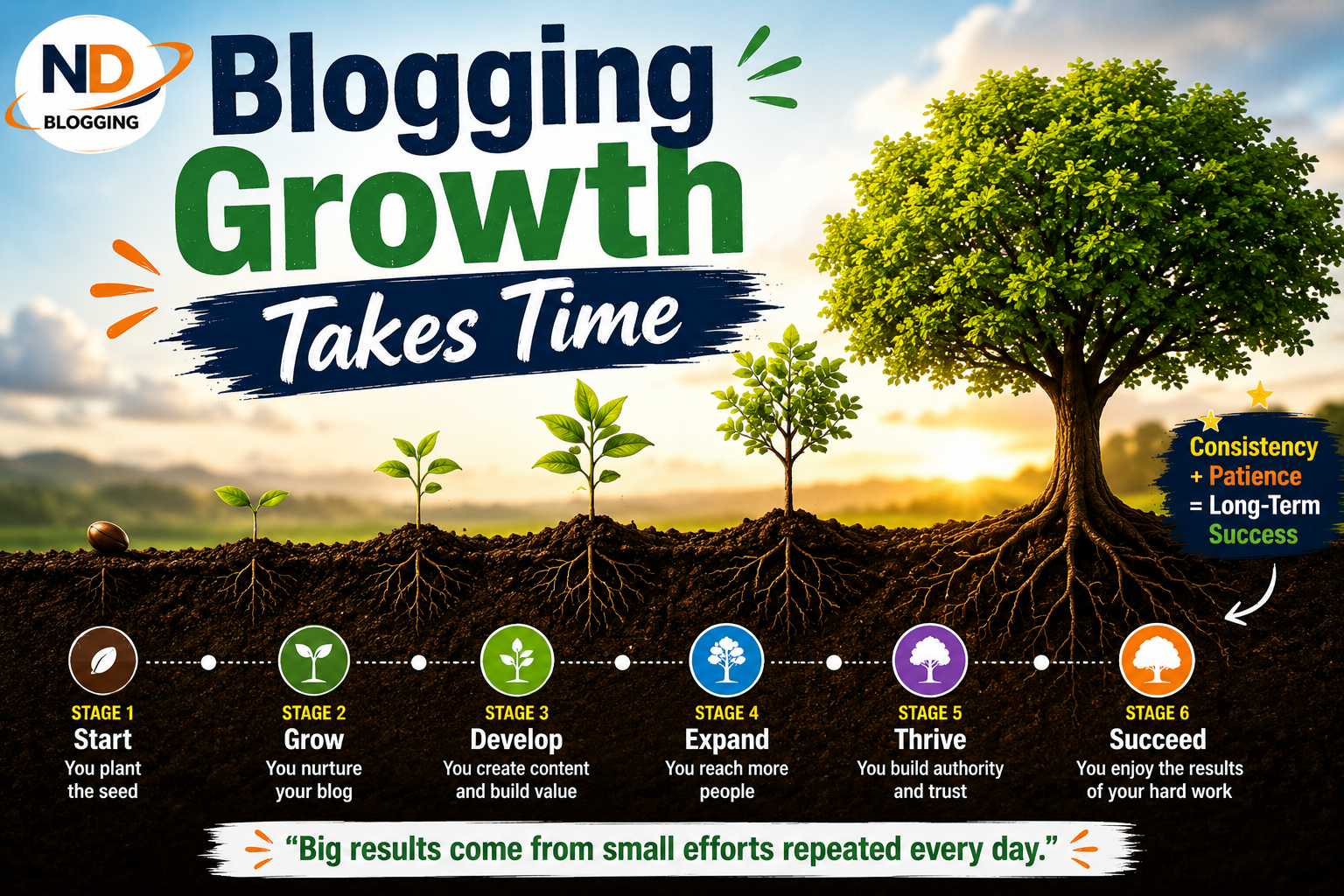
Blogging is more like planting a tree. Imagine planting a small seed in the ground. You water it regularly and take care of it. After one week, the tree does not suddenly become huge. Growth takes time. First, the roots grow under the soil where nobody can see them. Slowly, a tiny plant appears. After months or years of care, it becomes a strong tree.
Blogging works in the same way. In the beginning, you may not see much progress. Your traffic may stay low. Google may not trust your website immediately. Your content may not rank quickly. However, behind the scenes, growth is happening.
🚀 “Keep Going. Your Blog Will Grow.”
⏳ “Success Takes Time.”
🌱 “Consistency Creates Growth.”
📈 “Start Small. Grow Big.”
✍️ “Every Post Matters.”
💪 “Don’t Quit Too Soon.”
🪴 “Small Steps Build Big Blogs.”
🔥 “Growth Begins With Consistency.”
⭐ “Your Hard Work Will Pay Off.”
🛤️ “Blogging Is a Long-Term Journey.”
Reason #1: Wrong Expectations About Blogging
One of the biggest reasons beginners fail in 2026 is having unrealistic expectations. Many people start blogging believing they will earn money quickly. They imagine thousands of visitors coming to their website within weeks. They expect blogging success to happen fast because social media often shows success stories but rarely shows the difficult journey behind them.
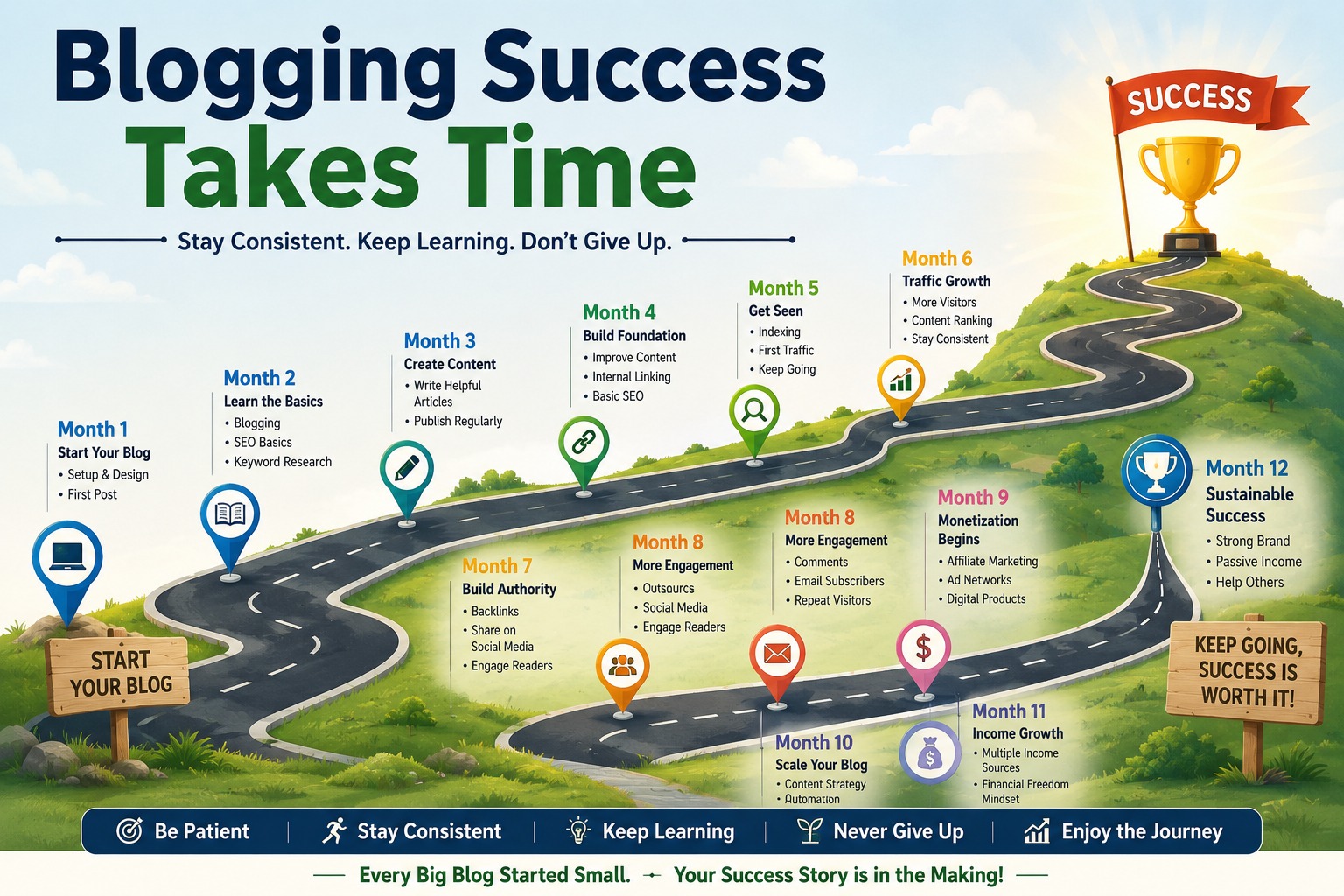
In reality, blogging growth is usually slow at first. During the first few months, most bloggers spend time learning. They learn how to write better articles, understand keywords, improve website design, and study SEO basics. Traffic during this stage is often low, and this is completely normal.
The problem begins when beginners compare themselves with experienced bloggers. They see successful websites getting huge traffic and think they are failing. What they forget is that many successful bloggers spent years building their websites.
A realistic blogging timeline helps reduce frustration. During the first three months, most bloggers are still learning. Between four to six months, small growth often begins. After six to twelve months, blogs become stronger if content quality remains consistent.
The biggest mistake is expecting results too early. Slow growth does not mean failure. It simply means your blog is still growing.
Solution
Instead of asking: “How fast can I make money?”
Ask yourself: “How can I improve every month?”
That small mindset shift can completely change your blogging journey.
Reason #2: Choosing the Wrong Blogging Niche
Another major reason beginners fail is choosing the wrong niche. Many beginners choose a topic only because they think it will make money. However, blogging requires consistency, and consistency becomes difficult when you do not enjoy your niche.
Imagine someone starting a fitness blog without liking fitness. At first, motivation feels strong because of money expectations. But after a few weeks, writing feels boring, ideas disappear, and consistency becomes difficult.
Many beginners also make the mistake of choosing broad topics like technology, health, or finance. These niches are highly competitive. Instead of broad topics, beginners should choose focused sub-niches.
For example:
Instead of Technology → AI Tools for Bloggers
Instead of Health → Weight Loss for Beginners
Instead of Finance → Saving Money Tips for Families
A good niche should include three important things: interest, audience demand, and future earning opportunities.

Solution
Before choosing your niche, ask yourself three questions:
• Do I enjoy this topic?
• Do people search for this topic?
• Can I make money from it later?
If the answer is yes to all three, you are likely choosing the right niche.
Reason #3: Quitting Too Early
One of the biggest reasons beginner bloggers fail in 2026 is quitting too early. This mistake happens much more often than people realize. Many beginners start blogging with excitement, motivation, and big dreams. In the beginning, everything feels exciting. They create a website, publish a few blog posts, and imagine traffic and money coming quickly. However, after a few weeks or months, reality feels different. Traffic stays low, visitors do not come regularly, and earnings may still be zero. Because of this, many beginners become frustrated and slowly lose confidence.
They start asking themselves questions like, “Why is nobody reading my blog?”, “Am I wasting my time?”, or “Maybe blogging is not for me.” These feelings are very common, especially in the beginning. The problem is that many people expect blogging success too fast. They think publishing five or ten articles should automatically bring huge traffic. Unfortunately, blogging does not usually work like that.
The truth is that blogging takes time, patience, and consistency. Search engines like Google usually do not trust new websites immediately. Even if your article is helpful and high quality, it may still take weeks or months before Google starts ranking it. This can feel discouraging, especially when you are working hard but cannot see visible results.
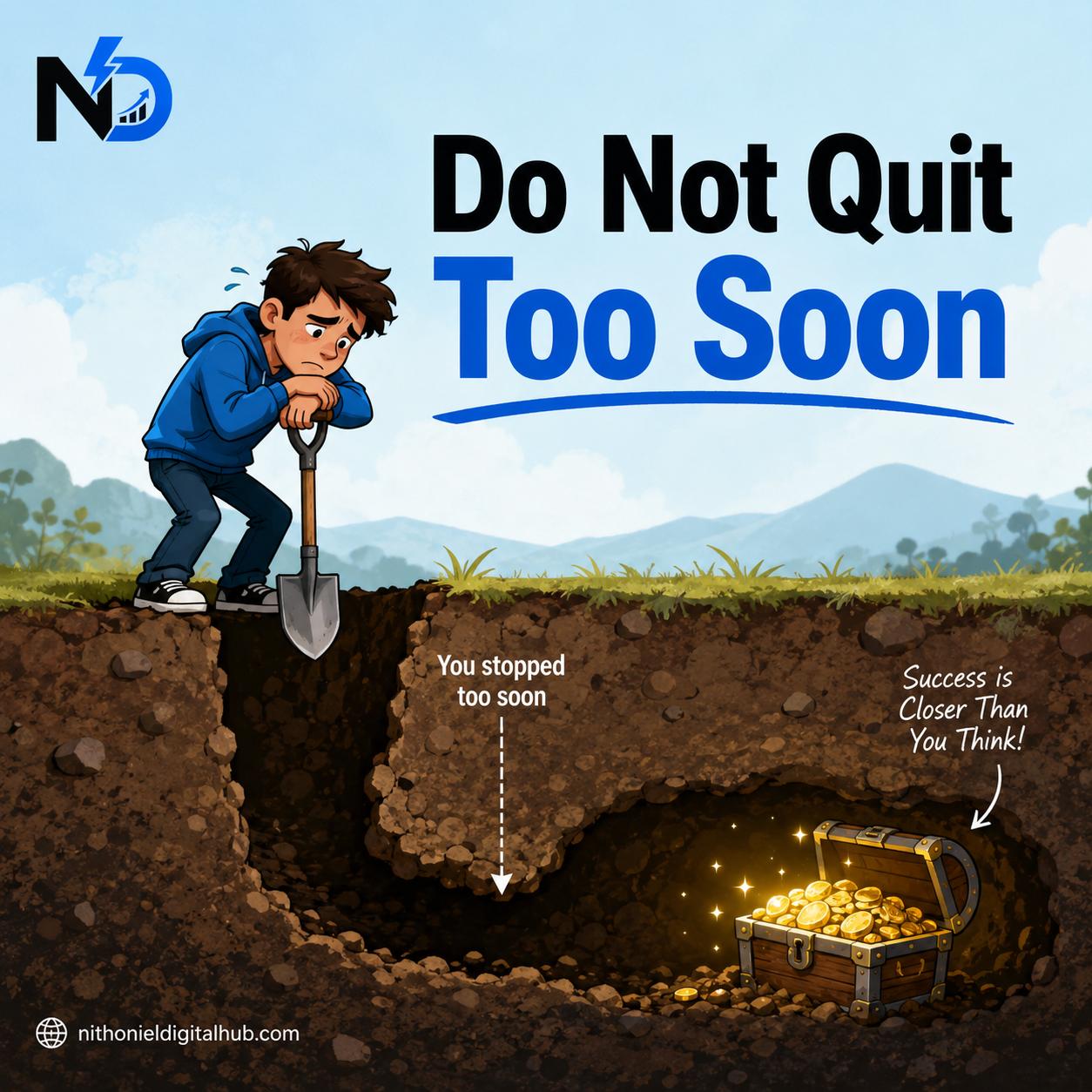
Think about blogging like planting a seed in the ground. After planting, you do not see a huge tree growing the next day. Does that mean the seed failed? Of course not. Growth is happening quietly underground. The roots are becoming stronger before the tree finally becomes visible. Blogging works in a very similar way. Even if results are invisible today, your hard work may still be helping your blog grow slowly behind the scenes.
Many successful bloggers also struggled in the beginning. They experienced low traffic, slow growth, and moments of self-doubt. However, the reason they eventually succeeded is simple: they did not quit. Instead of giving up, they continued learning, improving their writing, understanding SEO, and creating helpful content consistently.
Solution
The best solution is to stop judging your blogging journey too early. Instead of focusing only on traffic numbers or money, focus on improvement. Ask yourself simple questions like, “Am I learning something new?”, “Is my writing better than last month?”, or “Am I helping readers more clearly?” These small improvements matter more than you think.
Maybe your blog design looks cleaner today than before. Maybe your content feels easier to understand. Maybe your SEO knowledge has improved slightly. Even small progress is still progress. Blogging success often happens slowly and quietly before becoming visible.
Create realistic expectations and understand that blogging is a long-term journey, not a quick shortcut to success. Stay patient, continue publishing helpful content, and keep learning step by step. Sometimes, success comes right after the stage where most beginners give up. This is why consistency matters much more than speed.
Reason #4: Ignoring SEO (Search Engine Optimization)
Another major reason beginner bloggers fail in 2026 is ignoring SEO. Many beginners believe blogging only means writing articles and publishing them online. They spend hours creating content, choosing headings, and designing their blog posts. However, they forget one very important thing: if people cannot find your content, growth becomes very difficult.
Imagine spending three or four hours writing a helpful article. You explain everything clearly, add useful tips, and publish it proudly on your website. You expect readers to arrive and appreciate your hard work. But after days or weeks, almost nobody visits the article. This feels disappointing and confusing.
The reason often comes down to SEO.

“AI-Powered SEO In 2026: From Beginner To Pro”
1.Learn AI SEO step-by-step
2.Beginner AI SEO guide
3.How AI SEO works in 2026
SEO stands for Search Engine Optimization. In simple words, SEO helps Google understand your content better so it can show your article to people searching online. Think of SEO like giving directions to Google. Without proper direction, Google may struggle to understand what your blog post is really about
Many beginners make the mistake of writing random topics without checking whether people are actually searching for them. For example, someone may write a blog post called “My Thoughts About Productivity” because it sounds interesting. However, maybe very few people search for this phrase online. Instead, an SEO-friendly topic like “10 Productivity Tips for Beginners Working From Home” has a much higher chance of getting traffic because people are actively searching for productivity tips.
This is why keyword research matters. Keywords are simply the words and phrases people type into Google when looking for answers. Understanding these search habits helps bloggers create content people actually want to read.
Some beginners become scared when hearing the word SEO because it sounds technical and complicated. They imagine coding, difficult settings, or expert-level skills. But beginner SEO is much simpler than most people think. You do not need to become an expert immediately. You only need to understand a few basics.
For example, writing clear titles, using proper headings, adding keywords naturally, improving readability, and solving real problems are all beginner-friendly SEO habits. Google wants to recommend content that genuinely helps readers. This means helpful, easy-to-understand content usually performs better than confusing articles written only for rankings.
Another common mistake beginners make is writing content only for themselves instead of their audience. Before writing, ask yourself a simple question: “What problem is someone trying to solve?” When your content answers real questions, Google is more likely to trust and recommend it.
SEO also includes improving user experience. If your website is too slow, messy, difficult to read, or filled with confusing layouts, visitors may leave quickly. A clean website design, readable fonts, proper spacing, and fast loading speed all help improve user experience.
Remember, SEO is not magic. It is also not something you master overnight.
Blogging success often comes from learning slowly and improving consistently.

Solution
The best solution is to start learning SEO step by step without feeling overwhelmed. Do not try learning everything at once because that often creates confusion. Instead, begin with small improvements.
First, learn simple keyword research and understand what people are searching for online. Before writing an article, ask yourself: “Would someone actually search for this topic?” Choose topics people genuinely want help with.
Second, focus on writing helpful content. Google prefers articles that solve real problems and explain things clearly. Avoid confusing explanations or rushed content. Imagine teaching a beginner friend who knows nothing about the topic.
Third, organize content properly using headings and simple structure. Clear sections make articles easier to read and help Google understand your content better.
Finally, improve readability and user experience. Use short paragraphs, simple language, clear formatting, and a clean website design. Remember, small SEO improvements made consistently can create big results over time.
Instead of feeling scared of SEO, think of it as a skill you slowly improve. Every successful blogger was once a beginner too.
Reason #5: Writing Low-Quality Content
Another major reason beginner bloggers fail in 2026 is writing low-quality content. Many beginners believe success comes from publishing as many articles as possible. They think, “If I post twenty articles quickly, traffic will grow faster.” Unfortunately, this mindset often creates the opposite result.
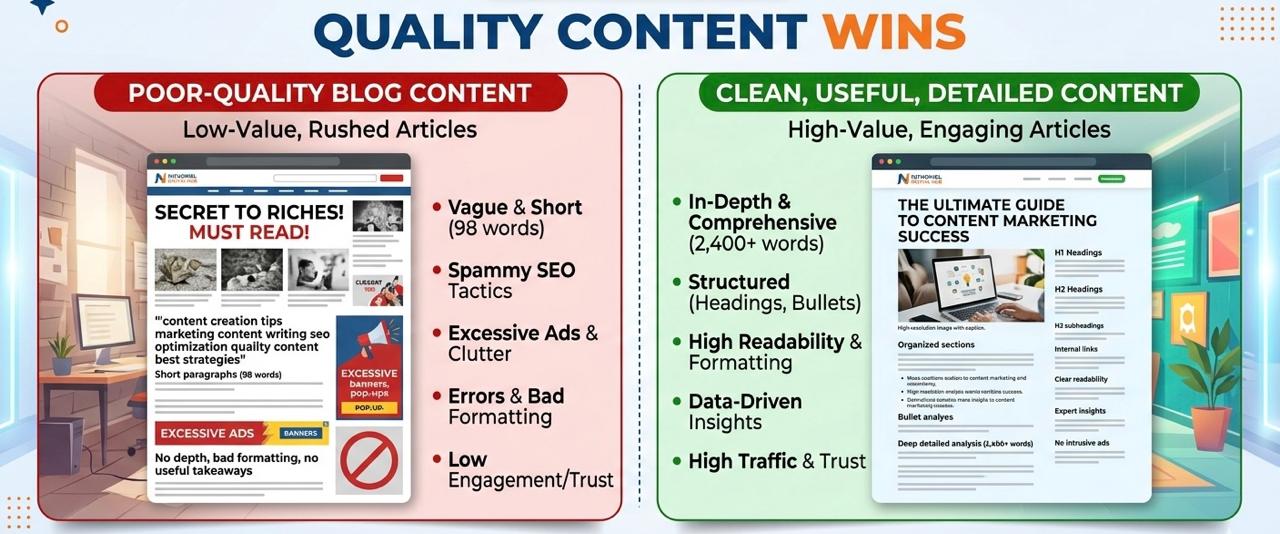
Today, both Google and readers are smarter than before. Low-quality content is easier to recognize. Articles that feel rushed, confusing, copied, or unhelpful usually struggle to rank and fail to build trust with readers.
Imagine searching on Google for an important answer. You click a blog post hoping to solve your problem. But after opening the article, the explanation feels weak, incomplete, or difficult to understand. Maybe the content feels copied from somewhere else or contains too much confusing information. What happens next? Most people leave the website quickly and search for a better answer somewhere else.
This is exactly what happens when blog content lacks quality. Good blogging is not about filling pages with words. It is about helping real people solve real problems. Before writing anything, think about the reader sitting on the other side of the screen. Ask yourself: “What problem is this person facing?” and “How can I explain this clearly?” Many beginners also make the mistake of writing complicated explanations to sound professional. However, simple language usually works much better. Readers enjoy content that feels easy, helpful, and human.
For example:
instead of saying: “SEO optimization improves ranking opportunities.”
You can simply say: “SEO helps Google understand your content so more people can find your blog.”
This feels easier to understand, especially for beginners.
High-quality content also means being detailed and useful. Readers appreciate articles that answer questions properly instead of giving half information. Examples, step-by-step explanations, and beginner-friendly language help readers stay longer on your blog and trust your advice.
Solution
The best solution is to focus on quality instead of quantity. Do not rush to publish many articles just to look active. Instead, spend time creating content that genuinely helps people.
Before publishing any article,
ask yourself: “Will this article actually help someone?”
If the answer feels weak, improve the content before publishing.
Use simple language, explain things clearly, add practical examples, and solve real problems. Think about teaching a beginner friend who knows nothing about the topic. It is always better to publish two helpful articles per week than twenty rushed articles nobody enjoys reading. In blogging, quality almost always wins in the long run.
Reason #6: Copying Other Bloggers
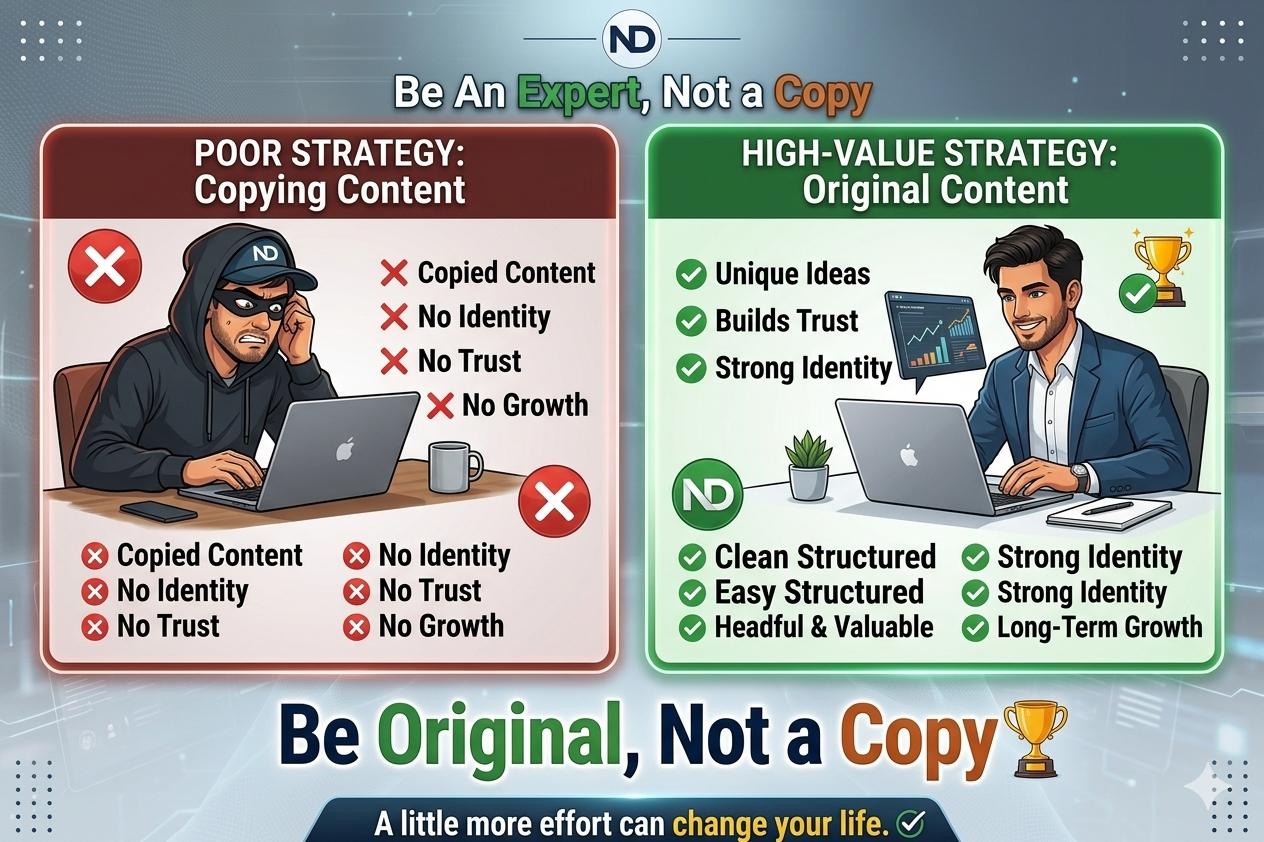
Another major reason beginner bloggers fail in 2026 is copying other bloggers too much. This mistake is very common, especially among beginners who are trying to grow quickly. Many new bloggers see successful websites getting huge traffic and think, “If I do exactly what they are doing, I will also become successful.” At first, this idea may sound smart, but in reality, it often creates problems.
Many beginners start copying writing styles, blog designs, article formats, headlines, or even content ideas too closely. Instead of building their own identity, they try to become a copy of someone else. The problem is that readers quickly notice when content feels repetitive or unoriginal. People enjoy blogs that feel real, personal, and different.
Think about it this way: if ten blogs are saying exactly the same thing in the same style, why would readers remember one specific blog? Most likely, they will forget it quickly.
In 2026, originality matters more than ever before. The internet is already filled with millions of blog posts, and AI-generated content is growing rapidly. Because of this, readers are becoming more attracted to blogs that feel human, honest, and authentic. They want real experiences, practical examples, personal stories, and genuine advice.
For example,
imagine two blogging articles.
The first article - only gives generic advice like: “Work hard and stay motivated.”
The second article - explains real beginner struggles, common mistakes, practical lessons, and honest experiences.
Which article feels more helpful?
Most people naturally connect with the second one because it feels more real and relatable.
This does not mean you should never learn from successful bloggers. Learning is important. In fact, studying successful websites can help you understand content structure, SEO, writing techniques, and audience engagement. However, there is a big difference between learning and copying.
You should take inspiration, not duplicate everything.
Your personality, ideas, experiences, and writing style are what make your blog unique. Even if you are a beginner, your perspective still matters because someone out there may connect with your way of explaining things.
Remember,
people often follow bloggers they trust and relate to—not bloggers who sound exactly like everyone else.
Solution
The best solution is to focus on quality instead of quantity. Do not rush to publish many articles just to look active. Instead, spend time creating content that genuinely helps people.
Before publishing any article,
ask yourself: “Will this article actually help someone?”
If the answer feels weak, improve the content before publishing.
Use simple language, explain things clearly, add practical examples, and solve real problems. Think about teaching a beginner friend who knows nothing about the topic. It is always better to publish two helpful articles per week than twenty rushed articles nobody enjoys reading. In blogging, quality almost always wins in the long run.
Reason #7: Not Posting Consistently
Another important reason beginner bloggers fail in 2026 is not posting consistently. Many beginners start their blogging journey with excitement and motivation. In the beginning, they feel highly inspired and publish several articles quickly. Everything feels exciting because they imagine fast success, growing traffic, and future income.
However, after some time, motivation slowly starts decreasing. Life becomes busy, blogging feels difficult, or results feel too slow. Because of this, many bloggers suddenly stop posting for weeks or even months.
This creates a major problem.
Readers begin losing trust in inactive blogs. Imagine visiting a website where the latest article was published six months ago. Most people may assume the blog is inactive or outdated.
Search engines like Google also prefer websites that stay active and regularly publish useful content. This does not mean Google punishes bloggers for taking breaks, but consistency often helps websites build trust and momentum over time.
Many beginners also make the mistake of posting too much too quickly. For example, they publish ten articles in one week, become exhausted, and then disappear for one month. This creates an unhealthy blogging cycle.The truth is that blogging success is not about working extremely hard for a short time. It is about showing up consistently for a long time.
Think about fitness for a moment. Going to the gym for ten hours in one day will not suddenly make someone healthy. However, exercising regularly every week creates long-term improvement. Blogging works the same way.
Small, consistent effort is much more powerful than random bursts of motivation.
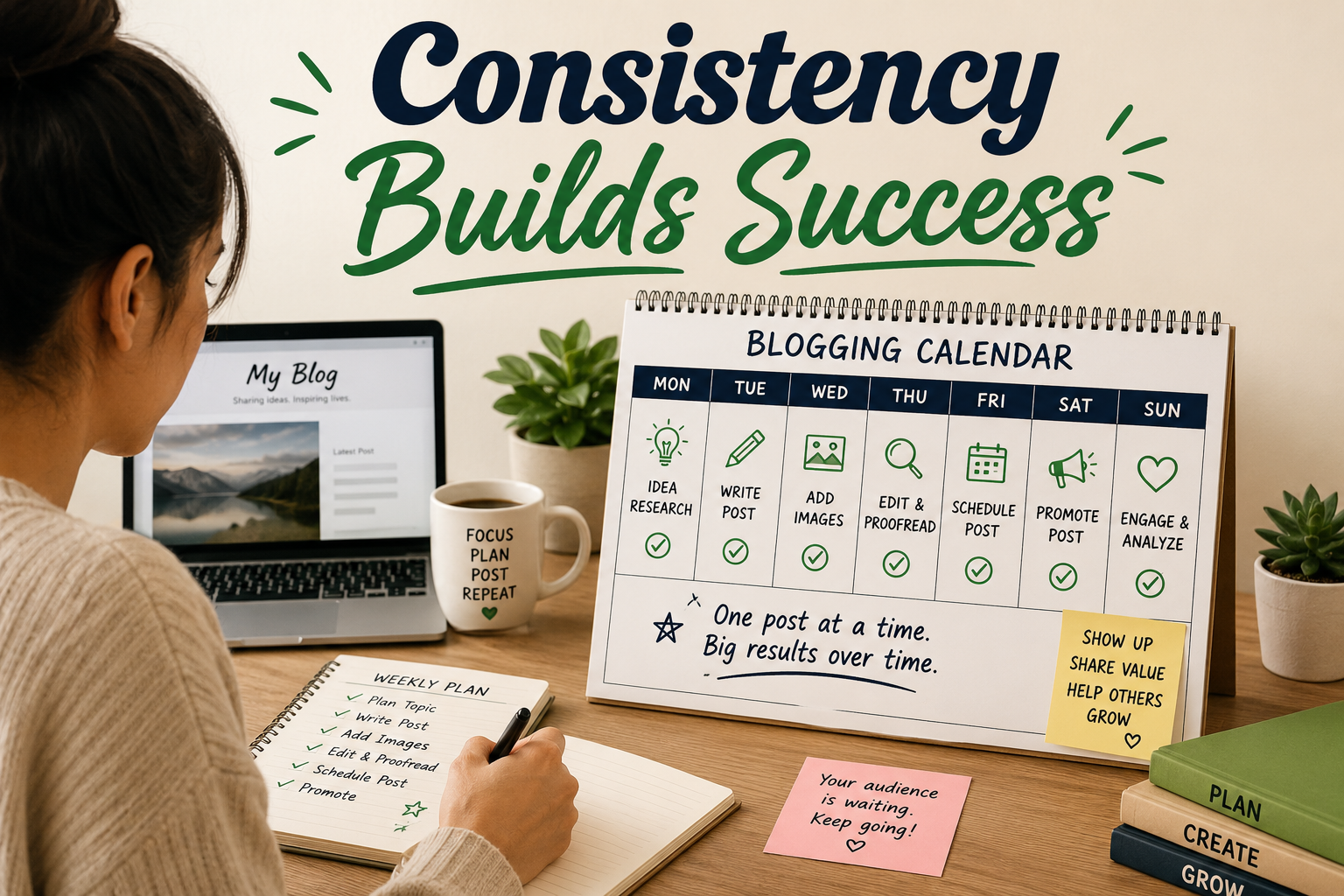
The good news is that consistency does not mean publishing every single day. Many successful bloggers grow by posting only two or three quality articles each week. What matters most is choosing a schedule you can realistically follow.
Even slow progress still counts.
One helpful article every week is better than posting ten articles and quitting afterward.
Solution
The best solution is to create a realistic blogging schedule that matches your lifestyle. Do not pressure yourself to publish daily if it feels stressful or unrealistic. Instead, choose a simple routine that feels manageable.
For example:
Monday: Research content ideas
Wednesday: Write article
Friday: Publish content
Simple systems often reduce stress and make blogging easier to maintain. You can also create a content calendar to stay organized and avoid confusion about what to write next. Planning topics in advance saves time and helps maintain consistency.
Most importantly, stop chasing perfection. Some articles may not feel perfect, and that is okay. Consistency matters more than perfection in the beginning.
Remember, blogging is not a race. It is a long-term journey. Small efforts repeated consistently often create bigger success than short moments of extreme motivation.
Reason #8: Choosing the Wrong Blogging Niche
Another important reason beginner bloggers fail in 2026 is choosing the wrong niche. Many beginners make this mistake without even realizing it. They start a blog simply because they see someone else making money in a certain topic. For example, they may hear that finance blogs, tech blogs, or health blogs make good income, so they quickly decide to copy the same niche without thinking carefully.
At first, this may feel exciting. However, after a few weeks or months, problems begin to appear. Writing content starts feeling boring, difficult, or stressful. They run out of ideas quickly and lose motivation because they are blogging about something they are not truly interested in.
This happens because blogging is a long-term journey. You cannot depend only on excitement in the beginning. Motivation changes over time. Some days, blogging feels exciting, and other days, it feels difficult. If you choose a niche you dislike, continuing becomes much harder.
Imagine someone starting a fitness blog without enjoying health or exercise. At first, they may write a few articles by researching online. But eventually, writing about workouts every week may start feeling frustrating. Slowly, consistency disappears.On the other hand, imagine choosing a topic you genuinely enjoy or feel curious about. Even when traffic feels slow, you still enjoy learning and sharing ideas. This makes consistency much easier.
Another common mistake is choosing a niche that is too broad. For example, some beginners want to write about technology, travel, finance, motivation, gaming, fitness, and food all on one blog. This creates confusion for both readers and Google.When visitors come to your website, they want clarity. They want to understand what your blog is mainly about. Google also prefers websites with clear topic focus because it helps understand expertise and relevance.
For example:
Instead of a very broad niche like: “Everything About Life”
Try something more focused like: “Beginner Blogging Tips” Or “Easy Fitness Tips for Busy Beginners”
A focused niche often grows faster because readers clearly understand what they can expect from your content.
Remember, you do not need to choose a perfect niche immediately. Many successful bloggers adjust their niche over time as they gain experience.

Solution
The best solution is choosing a niche that matches interest + knowledge + audience demand.
Ask yourself a few simple questions before starting:
What topic do I enjoy learning about ?
Can I write about this topic for the next few years?
Are people searching for help in this topic?
Try finding the balance between passion and usefulness. You do not need to be an expert. Even beginners can build successful blogs by learning and sharing knowledge step by step.
Also, avoid choosing a niche only because someone else is earning money from it. What works for someone else may not feel enjoyable for you.
Start focused, stay consistent, and allow your blog to grow naturally over time.
Reason #9: Expecting Fast Money
One of the biggest misconceptions beginner bloggers have in 2026 is expecting fast money. Many people start blogging after watching YouTube videos or social media posts showing huge income screenshots. They see headlines like:
“I Made ₹1,00,000 Blogging in One Month”
or
“Passive Income From Blogging”
Because of this, many beginners believe blogging is a quick way to earn money online.
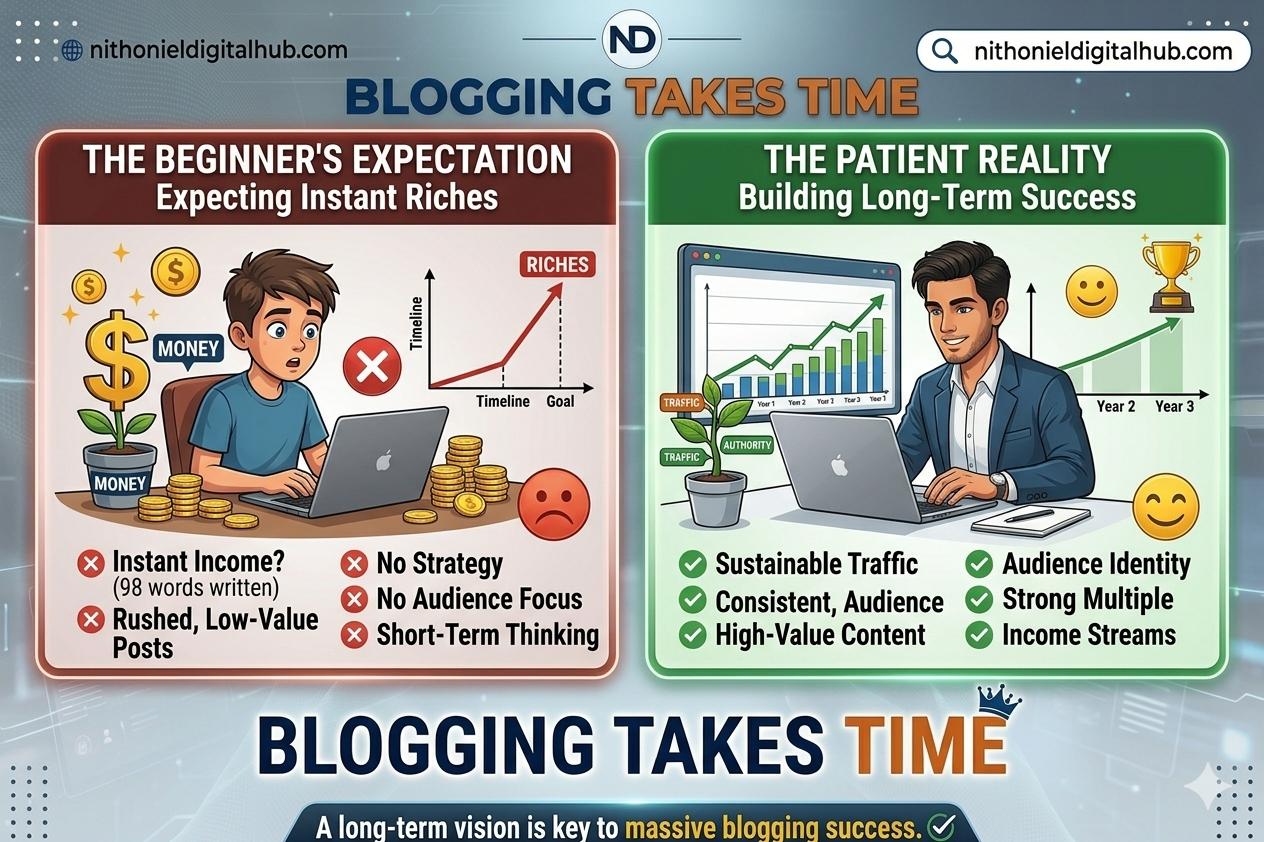
Unfortunately, this expectation often creates disappointment. The truth is that blogging usually takes time before earning money. In the beginning, most blogs earn little or nothing. Traffic needs time to grow. Trust takes time to build. Search rankings take time to improve. Many beginners become frustrated when they do not earn money after one or two months.
They start thinking: “Blogging does not work.” But often, the real issue is unrealistic expectations. Think of blogging like building a business. Most businesses do not become successful immediately. They require patience, learning, improvement, and consistent effort.
Many successful bloggers spent months—or even years—before earning stable income. However, because they stayed patient and continued improving, blogging eventually became profitable.
There are many ways blogs can earn money, such as:
• Advertising
• Affiliate marketing
• Sponsored posts
• Digital products
• Online services
However, before money comes, value usually comes first. If readers trust your content and find it helpful, income opportunities slowly increase.
Solution
The best solution is changing your mindset. Instead of starting blogging only for quick money, focus on learning, helping readers, and building trust first.
Set realistic expectations.
For example:
First few months: Learning and creating content
Later months: Growing traffic and improving SEO
Long-term: Building income opportunities
Celebrate small progress instead of only focusing on money. Maybe traffic improved. Maybe an article ranked higher. Maybe readers spent more time on your blog.
These small wins matter.
Remember, blogging is not a “get rich quick” system. It is a long-term investment that rewards patience and consistency.
Reason #10: Not Understanding Your Audience
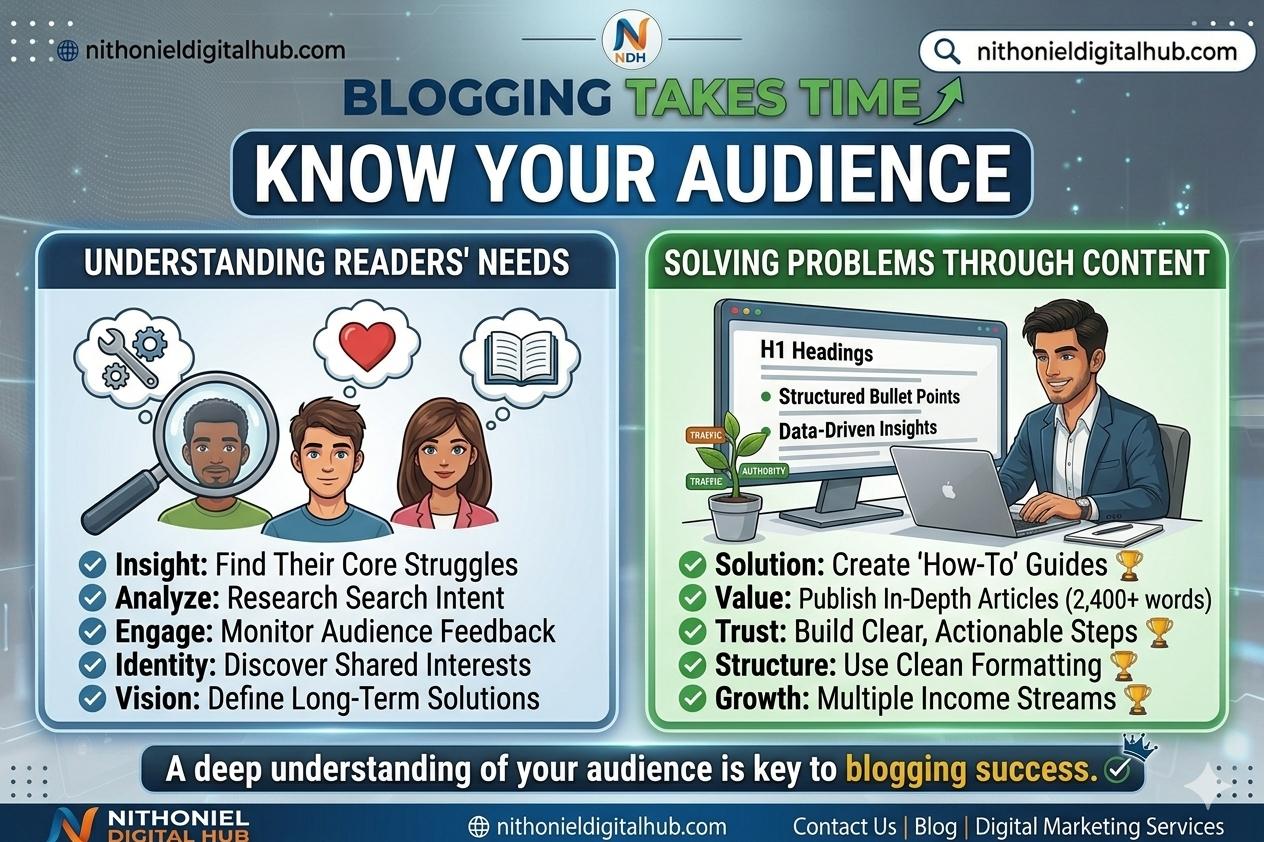
Another major reason beginner bloggers fail in 2026 is not understanding their audience. Many beginners focus too much on what they want to write instead of what readers actually need help with. Because of this, they create content that feels random, confusing, or unhelpful.
Imagine someone starting a beginner blogging website. Instead of writing helpful content like “How to Start a Blog in 2026” or “Best Free Blogging Tools for Beginners,” they only write personal opinions without solving real problems. Even if the writing is good, readers may leave because the content does not answer their questions.
This is where many beginners struggle.
Successful blogging is not only about writing articles. It is about helping real people solve real problems. Readers usually come to blogs for answers, guidance, ideas, or solutions. If your content feels useful, they stay longer and may return again. Think about your own online behavior. When you search something on Google, you probably want a quick, clear, and helpful answer. You do not want confusing information that wastes time. Your readers feel the same way.
Many beginners also make the mistake of writing for everyone. They think: “My content should help everybody.”
But when content tries to help everyone, it often helps nobody clearly.
For example:
Instead of writing for everyone interested in fitness,
focus on: “Fitness tips for busy beginners” Instead of helping all bloggers,
focus on: “Beginner blogging tips for people starting in 2026”
The more clearly you understand your audience, the easier content creation becomes.
Ask yourself:
Who am I writing for?
What problems are they facing?
What questions are they searching online?
When you understand these things, creating useful content becomes much easier.
Remember, readers stay loyal to blogs that consistently solve their problems.
Solution
The best solution is learning more about your audience before writing content. Try understanding what beginners struggle with, what questions they ask, and what problems they want solved.
A simple trick is imagining one specific reader while writing.
For example:
Imagine you are helping a beginner friend who feels confused and needs simple guidance. This mindset often makes writing more natural and helpful. You can also search Google, read comments, join communities, or check beginner questions online to understand what people are struggling with.
Before publishing an article,
ask yourself: “Will this article genuinely help my reader?”
If the answer feels weak, improve the content. Helpful content builds trust, and trust helps blogs grow faster.
Reason #11: Giving Up on Learning
Another important reason beginner bloggers fail in 2026 is stopping the learning process too early. Many beginners think blogging is simple. They create a website, publish articles, and expect success to happen automatically. However, when results feel slow, they become frustrated and stop learning new skills.
The truth is that blogging constantly changes.
Google updates happen.
SEO strategies change.
Reader preferences change.
Content trends evolve.
Because of this, bloggers who stop learning often struggle to grow. Imagine someone who learned blogging in 2020 but never updated their knowledge. By 2026, many strategies may already feel outdated. Blogging success often comes from adapting and improving continuously. The good news is that you do not need to learn everything at once. In fact, trying to learn too much quickly often creates confusion. Instead, successful bloggers improve little by little.
One week they learn SEO basics.
Another week they improve writing skills.
Later, they learn website speed optimization or content marketing.
Small learning habits create long-term improvement. Another mistake beginners make is becoming afraid of mistakes. They think: “What if I do something wrong?”
But mistakes are part of growth. Every successful blogger has published weak articles, made SEO mistakes, or struggled with slow growth at some point.
The difference is simple: They learned instead of quitting.
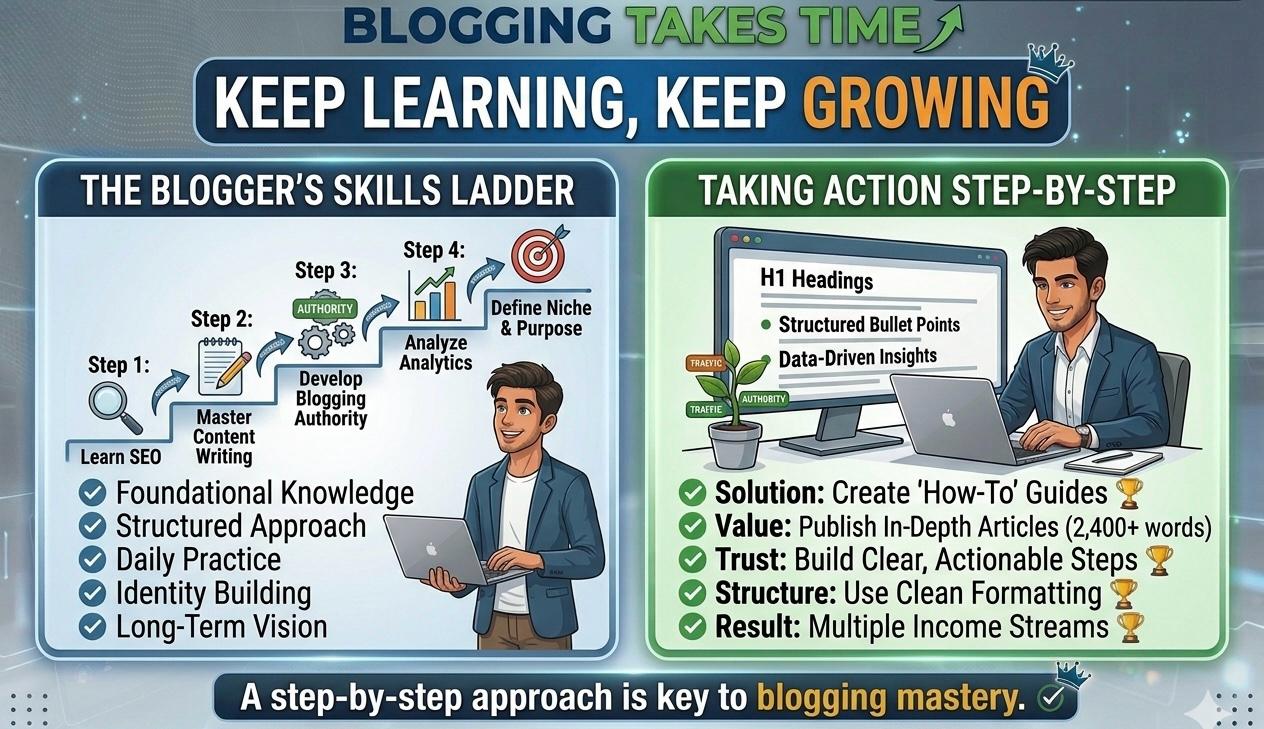
Solution
The best solution is building a mindset of continuous learning. Instead of trying to become perfect immediately, focus on small improvements every month.
You can learn through:
• Blogging videos
• SEO tutorials
• Helpful articles
• Blogging communities
• Real blogging experience
Remember, practical learning matters too. Sometimes, writing and publishing articles teaches more than watching endless tutorials.
Do not compare yourself to bloggers who have years of experience. Focus on becoming slightly better than yesterday.
Even learning one useful thing every week creates huge progress over time.
Growth happens when learning never stops.
If you are a beginner blogger struggling in 2026, remember one important thing: failing in the beginning does not mean you are bad at blogging. In fact, most successful bloggers were once beginners too. They also experienced confusion, slow traffic, low confidence, and moments where they questioned whether blogging was worth the effort. The difference is that they did not allow temporary struggles to stop them permanently.
Blogging is not a quick success journey where results appear overnight. It is a process that takes patience, learning, consistency, and improvement. Some days may feel exciting, while other days may feel frustrating. You may spend hours writing an article and still see very few visitors. Sometimes, traffic may grow slowly, and results may feel invisible. During these moments, many beginners start doubting themselves and think about quitting. However, this is often the stage where patience matters most.
The truth is that blogging growth usually happens slowly before becoming visible. Every helpful article you publish, every SEO skill you learn, every writing improvement you make, and every mistake you overcome is helping your blog grow step by step. Even if results feel small today, progress is still happening in the background. Success in blogging often comes from many small actions repeated consistently over time.
Instead of comparing yourself to big bloggers who already have years of experience, focus on your own journey.
Ask yourself simple questions like:
“Am I learning something new?”, “Is my content becoming better?”, or “Am I helping readers more clearly than before?”
These small improvements matter more than chasing instant success.
Always remember that blogging is not only about traffic or money. It is about building trust, helping people, solving problems, and slowly creating something valuable. Readers return to blogs that feel useful, honest, and human.
If you continue learning, stay patient, and genuinely try to help people, growth will slowly begin to happen.
Most importantly, do not quit too soon. Many beginner bloggers fail not because they lacked talent, but because they stopped too early. Sometimes, success arrives just after the difficult stage where most people give up. Stay consistent, trust the process, and keep moving forward one step at a time. Your blog may feel small today, but with patience and effort, it can grow into something meaningful in the future. Remember this simple truth: small progress is still progress, and consistency often beats perfection. Your blogging success story may take time, but that does not mean it is impossible.
Keep learning,
keep improving,
and most importantly, keep going.