
Keyword Research For Bloggers Using AI In 2026
AI Keyword Research For Beginners In 2026
Welcome, bloggers!
Have you ever wondered why some blog posts get thousands of visitors from Google while others receive almost no traffic?
The answer often starts with keyword research.
If you're completely new to blogging, start with our How to Start a Profitable Blog in 2026 (Part 1/2) guide before learning keyword research.

Keyword research helps you discover what people are searching for online. Instead of guessing what to write, you create content based on real searches and real questions. This gives your blog a much better chance of ranking on Google and attracting the right audience.
The good news is that keyword research is easier than ever in 2026. With the help of AI, beginners can quickly discover keyword ideas, understand search intent, find low-competition topics, and plan content in just a few minutes. You no longer need expensive SEO tools or years of experience to get started.
Whether you are just starting your blogging journey or already have a website, learning keyword research is one of the most valuable skills you can develop. It helps you create helpful content that answers real questions, attracts steady organic traffic, and supports the long-term growth of your blog.
In this beginner-friendly guide, you will learn what keywords are, why keyword research is important, how AI can make the process faster, free methods to find keywords, how to understand search intent, and the common mistakes to avoid. By the end of this guide, you will have a simple step-by-step process to find better keywords and create content that people are actually searching for.
What You Will Learn
In this guide, you will learn:
Let's get started and learn how to find the right keywords that can help your blog attract more visitors and grow steadily in 2026.
What Are Keywords ?
Before learning about different types of keywords, it is important to understand what a keyword is.
A keyword is a word or phrase that people type into search engines like Google when they are looking for information, answers, products, or services. Keywords help Google understand what users want and match them with the most relevant web pages.
For example, if someone wants to learn blogging, they might search for:
These search phrases are keywords.
Think of keywords as a bridge between your content and your audience. When you use the right keywords in your blog posts, Google can better understand your content and show it to people who are searching for that topic.
However, not all keywords are the same. Some keywords are very broad, while others are more specific. Understanding these different types of keywords is an important part of keyword research because it helps you choose topics that are easier to rank for.
The two most common types of keywords are Short-Tail Keywords and Long-Tail Keywords. Both have their own purpose, but they are used in different ways depending on your blogging goals and the competition in your niche.
Let's understand each type in detail.
Short-Tail Keywords
Short-tail keywords are broad search terms that usually contain one or two words.
Examples include:
These keywords usually receive a large number of searches every month because they cover a wide topic. However, they are also very competitive. Many established websites with years of experience and strong authority already rank for these keywords, making it difficult for new bloggers to compete.
Short-tail keywords can bring a lot of traffic, but the search intent is often unclear. For example, someone searching for "Blogging" could be looking for blogging tips, blogging platforms, ways to make money, or simply the meaning of blogging.
Because of this broad intent and high competition, short-tail keywords are usually not the best choice for beginners.
Long-Tail Keywords
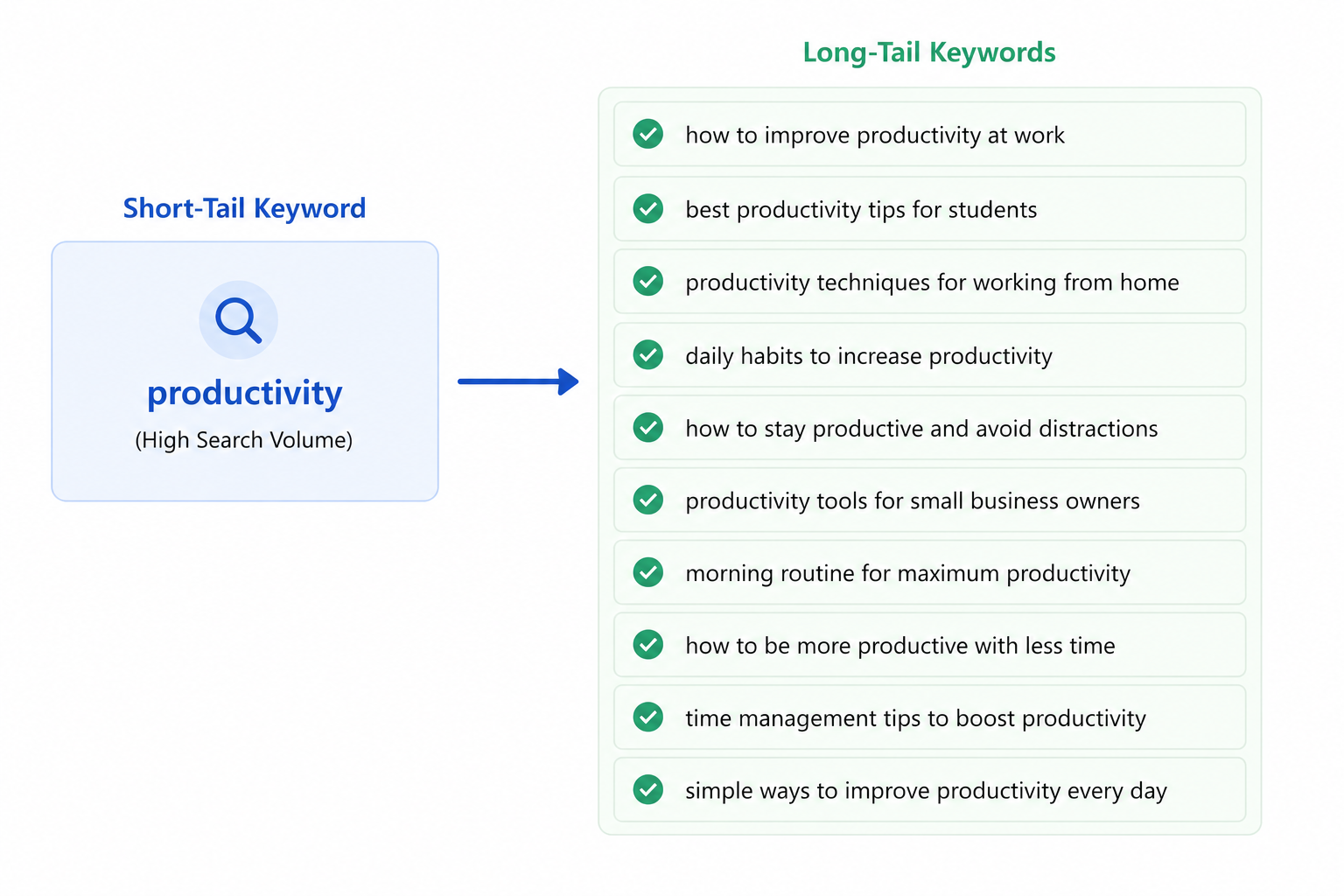
Long-tail keywords are longer and more specific search phrases, usually containing three or more words.
Examples include:
These keywords usually have lower search volume than short-tail keywords, but they are much easier to rank for because there is less competition.
People searching with long-tail keywords often know exactly what they are looking for. This means they are more likely to read your article, stay on your website, and take action.
For new bloggers, long-tail keywords are one of the best ways to build organic traffic because they help you reach a more targeted audience.
Keywords are one part of SEO. If you want to understand how SEO works from start to finish, read our complete AI-Powered SEO in 2026: From Beginner to Pro guide.

Which Type of Keyword Should Beginners Choose?
If you are starting a new blog, focus mainly on long-tail keywords. They are easier to rank for, attract readers with specific questions, and give your website a better chance of appearing in Google search results.
As your blog grows and gains authority, you can gradually target more competitive short-tail keywords.
Key Takeaway
Both short-tail and long-tail keywords are important, but they serve different purposes. Short-tail keywords can bring large amounts of traffic, while long-tail keywords help beginners rank faster and attract the right audience.
A smart keyword strategy is to start with long-tail keywords, build your website's authority, and then gradually expand to broader keywords as your blog grows.
How AI Helps With Keyword Research
A few years ago, keyword research was a slow and sometimes frustrating process. Bloggers had to use different SEO tools, search Google for hours, and study competitor websites before finding good keyword ideas. For beginners, this often felt overwhelming, especially when many popular SEO tools required expensive subscriptions.
Today, things are very different. AI has made keyword research faster, easier, and more beginner-friendly. Instead of spending hours looking for ideas, you can simply describe your niche or topic to an AI tool and receive dozens of useful keyword suggestions within seconds. While AI cannot replace your experience or creativity, it can save a lot of time and help you start with a clear direction.
1.Generate Better Keyword Ideas
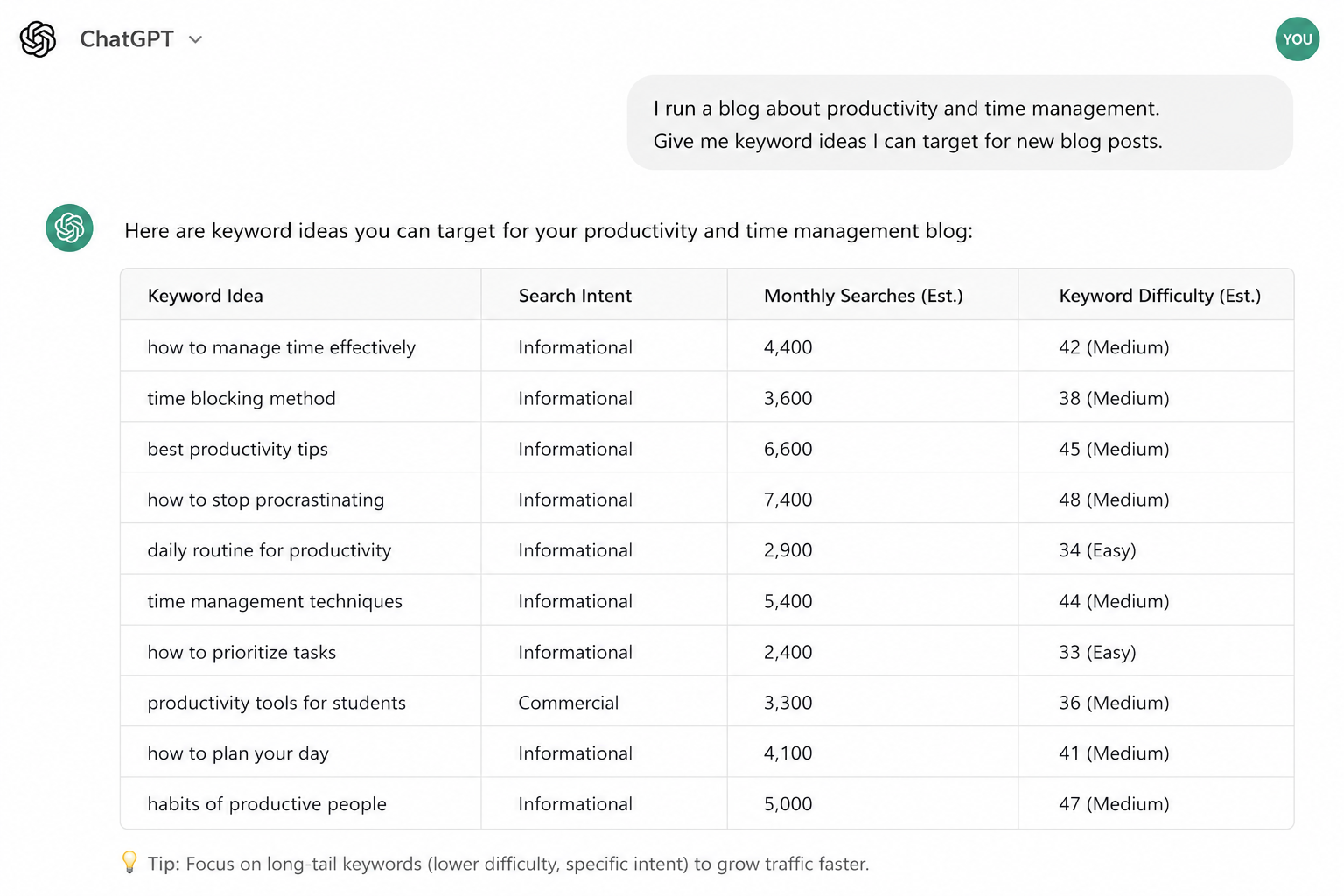
One of the hardest parts of blogging is deciding what to write next. This is where AI can be incredibly helpful. Instead of waiting for inspiration, you can ask AI to suggest blog topics based on your niche. For example, if your blog is about blogging, you can ask for beginner blog ideas, SEO topics, or content related to making money online. Within a few seconds, AI can generate a long list of ideas that you can use for future articles.
Today, things are very different. AI has made keyword research faster, easier, and more beginner-friendly. Instead of spending hours looking for ideas, you can simply describe your niche or topic to an AI tool and receive dozens of useful keyword suggestions within seconds. While AI cannot replace your experience or creativity, it can save a lot of time and help you start with a clear direction.
2.Find Long-Tail Keywords
After choosing a topic, the next step is finding the right keyword. AI can turn broad topics into more specific search phrases that are usually easier to rank for. Instead of targeting a competitive keyword like Blogging, AI may suggest phrases such as How to Start a Blog in 2026, Blogging Tips for Beginners, or Best Blogging Tools for New Bloggers. These longer keywords attract readers who know exactly what they are looking for, making them a great choice for new websites.
3.Understand Search Intent
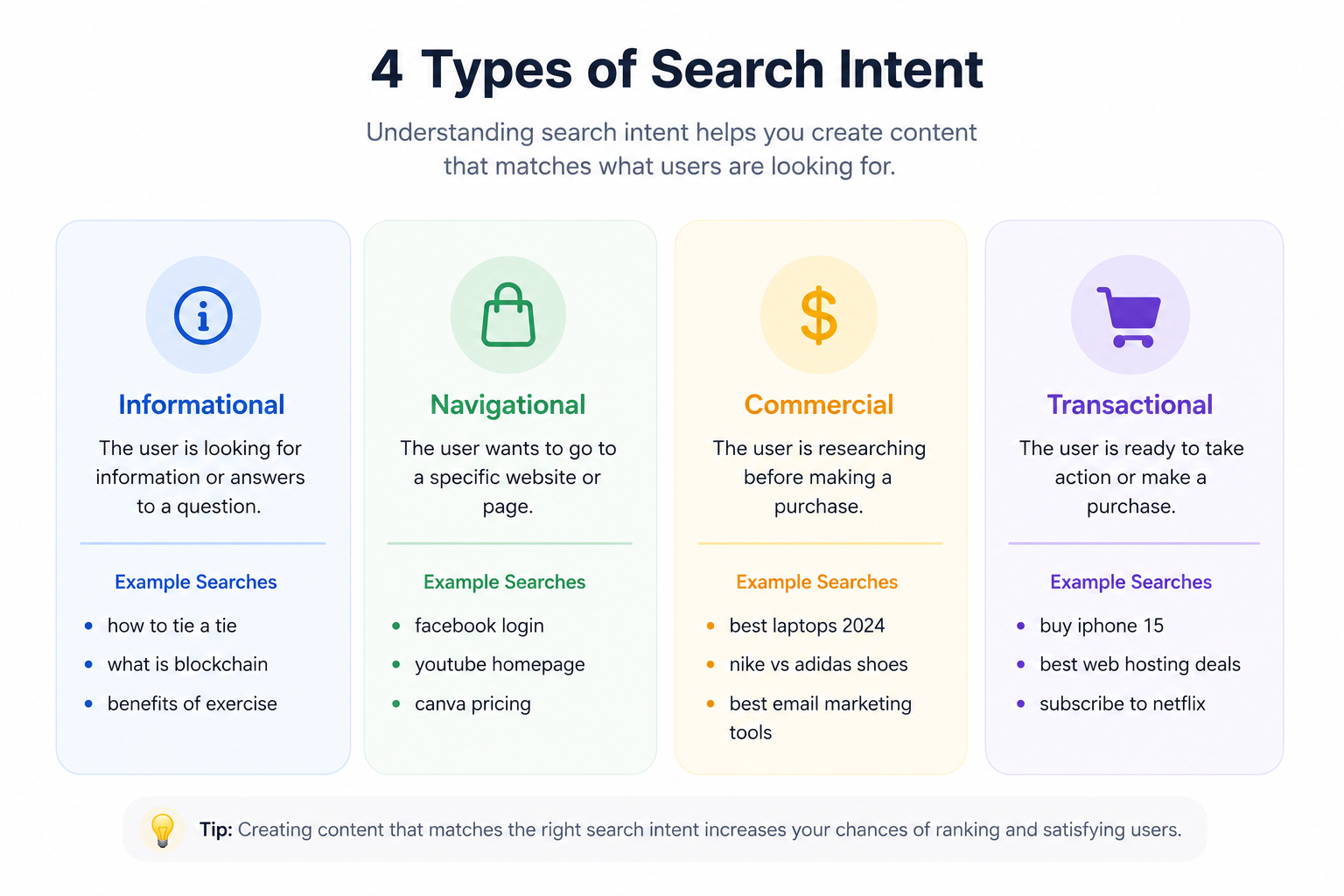
Finding a keyword is only half of the job. You also need to understand why someone is searching for that keyword. For example, a person searching for What is SEO? wants to learn the basics, while someone searching for Best SEO Tools is comparing products before making a decision. AI can help you understand this search intent, making it easier to create content that answers the reader's question. When your article matches what people are looking for, they are more likely to stay on your website and Google is more likely to trust your content.
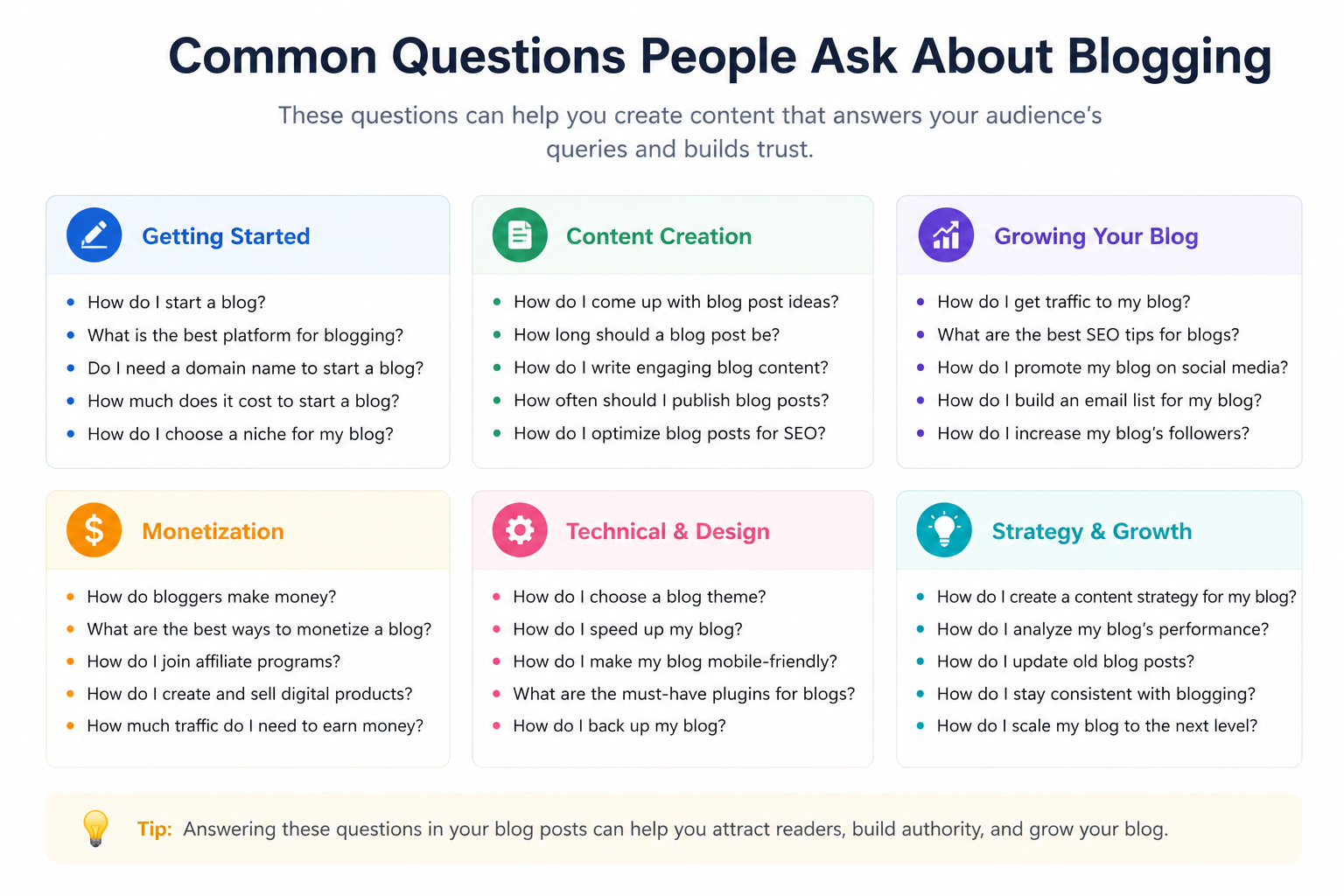
4.Discover Questions Your Audience Is Asking
Every day, people search Google to find answers to their problems. AI can quickly generate the most common questions related to your topic. These questions can become blog headings, FAQ sections, or even separate articles. Writing content around real questions helps you create more useful articles and increases the chances of appearing in Google's search results.
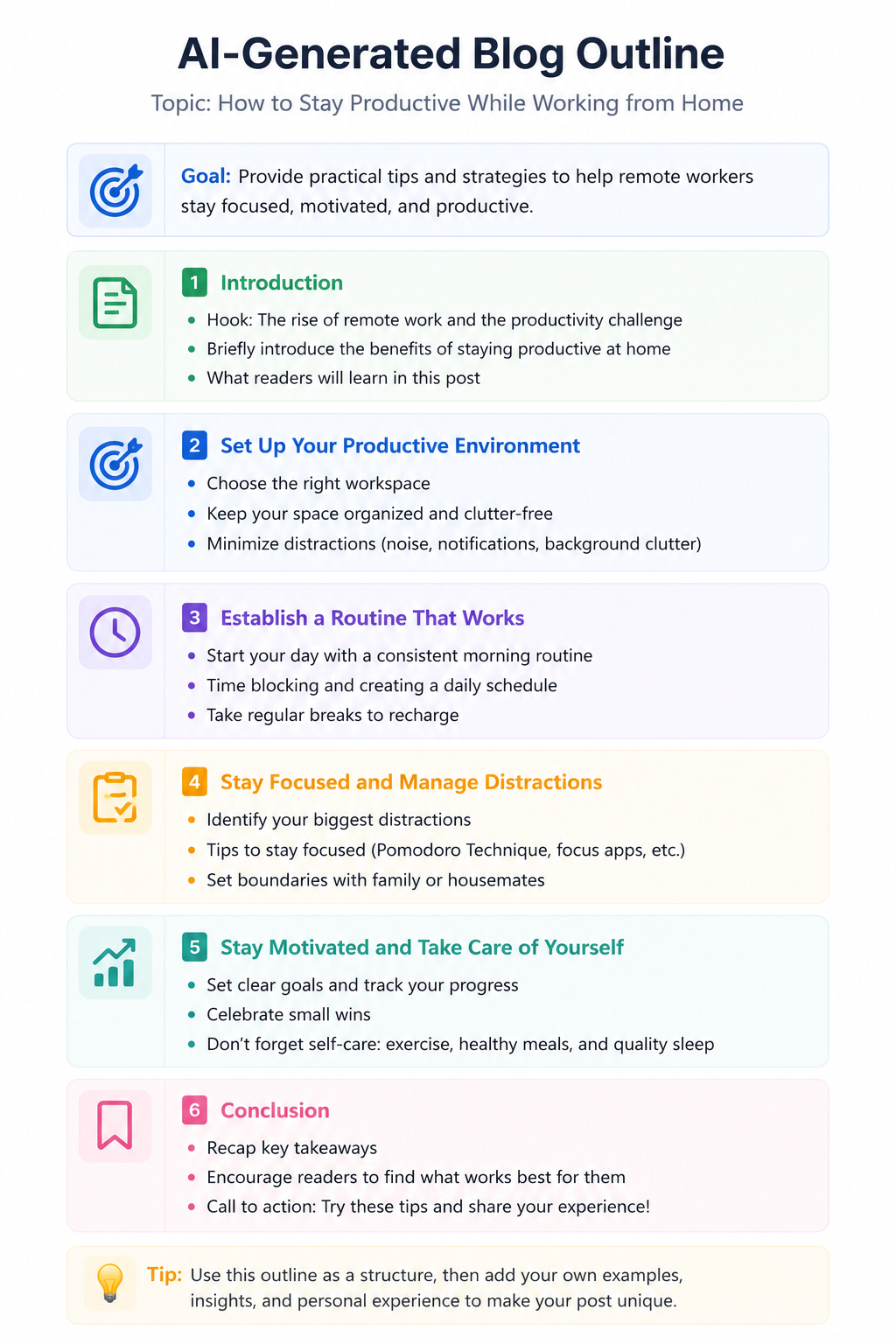
5.Create Better Article Outlines
Many bloggers know what they want to write about but struggle to organize their ideas. AI can create a clear outline with headings, subheadings, and important points to cover before you begin writing. Having a well-planned structure makes the writing process much easier and helps you create articles that are simple to read and follow.
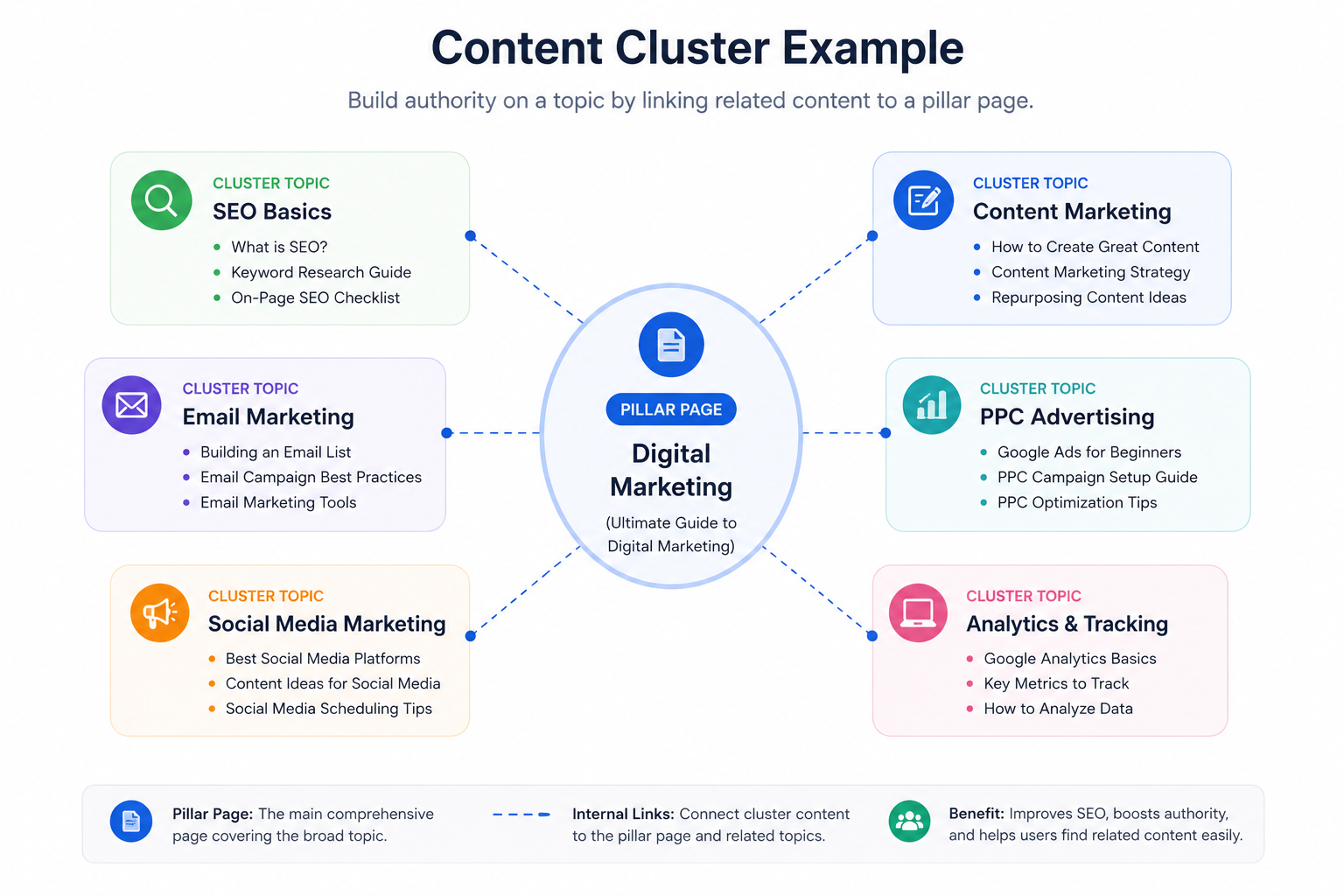
6.Build Content Clusters
A successful blog is built with many related articles instead of just one. AI can suggest supporting topics around your main keyword, helping you create a complete content cluster. For example, if your main topic is blogging, AI may recommend writing about blogging mistakes, blogging tools, keyword research, SEO guides, and ways to make money from a blog. Publishing related articles helps Google understand your expertise and can improve your rankings over time.
7.Save Time Without Sacrificing Quality
Perhaps the biggest advantage of AI is the time it saves. Research that once took several hours can now be completed in a fraction of the time. Instead of spending most of your day looking for ideas, you can focus on writing useful content, improving your articles, and helping your readers. The most successful bloggers use AI as a research assistant while adding their own knowledge, experience, and personality to every article.
If you're looking for the best AI tools to speed up keyword research and content creation, don't miss our guide on Top AI SEO Tools in 2026.

Key Takeaway
AI has made keyword research easier than ever, but it works best when combined with human knowledge. Use AI to discover ideas, organize your research, and speed up your workflow, then add your own insights and experience to create content that readers trust and enjoy.
Finding Keywords Using AI
Now that you understand how AI can help with keyword research, the next step is learning how to use it to find the right keywords for your blog.
One of the biggest advantages of AI is that it removes the guesswork from keyword research. Instead of spending hours searching for ideas, you can ask AI simple questions and quickly discover topics that people are interested in. This makes the research process much faster, especially if you are just starting your blogging journey.
Start With Your Main Topic
Begin by choosing a broad topic related to your blog. For example, if your website is about blogging, your main topic could simply be Blogging. If your niche is SEO, you might start with SEO for Beginners. You don't need to think of the perfect keyword at this stage. Just choose a topic that matches your niche.
Ask AI the Right Questions
Once you have your topic, ask AI to generate keyword ideas. The better your prompt, the better your results will be. You can ask AI to suggest long-tail keywords, beginner-friendly topics, or common questions people search for. Within a few seconds, AI can provide dozens of ideas that you can use for future blog posts.
Choose the Best Keywords
Not every keyword suggestion is worth using. Look for keywords that are closely related to your niche, solve a specific problem, and have clear search intent. Long-tail keywords are usually the best choice for beginners because they are more specific and often easier to rank for.
Verify Your Keywords
Before you start writing, always check your keyword on Google. Look at Google Autocomplete, the People Also Ask section, and Related Searches to confirm that people are searching for that topic. This simple step helps you validate AI's suggestions with real search data.
Key Takeaway
AI makes finding keywords faster and easier, but it should be used as a starting point rather than the final answer. Combine AI-generated ideas with Google research, choose keywords that genuinely help your audience, and create useful content around them. This simple approach will help you build a stronger SEO strategy and attract more organic traffic over time.
Free Keyword Research Methods
Many beginners believe they need expensive SEO tools to find good keywords. The truth is that you can discover hundreds of great keyword ideas without spending any money. Google itself provides several free features that show what people are actively searching for, and AI can help you organize those ideas into a content plan.
If you are just starting your blogging journey, these free keyword research methods are more than enough to build a strong SEO foundation.
Google Autocomplete
One of the easiest ways to find keyword ideas is by using Google Autocomplete. Simply start typing a topic into Google's search bar, and Google will automatically suggest related searches based on what people are searching for.
For example, if you type Blogging, you may see suggestions like Blogging for Beginners, Blogging Tips, or Blogging Business. These suggestions come from real searches, making them excellent ideas for future blog posts.
People Also Ask
When you search for a topic on Google, you will often notice a section called People Also Ask. This section contains questions that users frequently search for.
For example, if you search for Blogging, you may find questions such as "Is blogging still profitable in 2026?" or "How do beginner bloggers make money?" These questions are perfect for blog headings, FAQ sections, or even separate articles because they answer what readers genuinely want to know.
Related Searches
Scroll to the bottom of Google's search results page, and you will find Related Searches. These are additional keyword ideas closely connected to your main topic.
For example, searching for SEO may show suggestions like SEO for Beginners, SEO Checklist, or Free SEO Tools. These related searches can help you discover supporting topics and build content clusters around your main keyword.
AI Tools
AI tools can make keyword research much faster by generating topic ideas, long-tail keywords, and common questions within seconds. They are especially useful when you need inspiration or want to plan your content calendar.
However, treat AI as a research assistant rather than the final source of truth. Always review its suggestions and verify them using Google before creating your content.
Google Search Console
Once your blog starts getting visitors, Google Search Console becomes one of the most valuable free SEO tools. It shows which keywords are already bringing people to your website, how many times your pages appear in search results, how many clicks they receive, and where they rank on Google.
This information helps you improve existing articles and discover new keyword opportunities based on real user data.
Competitor Research
You can also learn a lot by studying other blogs in your niche. Look at the topics they cover, the questions they answer, and the articles that appear on the first page of Google.
The goal is not to copy their content. Instead, understand what works well and then create an article that is more detailed, more helpful, and easier for readers to understand.
Online Communities
Websites like Reddit, Quora, Facebook Groups, and blogging forums are full of real questions from real people. Reading these discussions can help you understand your audience's problems and discover keyword ideas that may not appear in traditional SEO tools.
When the same question keeps appearing in different communities, it is often a strong sign that people are actively looking for answers.
Key Takeaway
You do not need expensive SEO software to perform effective keyword research. By combining Google Autocomplete, People Also Ask, Related Searches, AI tools, Google Search Console, competitor research, and online communities, you can find enough keyword ideas to create valuable content for months. The most important goal is not to collect hundreds of keywords but to choose topics that solve real problems and provide helpful answers for your readers.
Understanding Search Intent
Finding the right keyword is an important part of SEO, but it is only half of the process. The other half is understanding search intent. In simple words, search intent is the reason behind a user's search. It explains what someone is hoping to find when they type a keyword into Google.
For example, a person searching "What is Blogging?" wants to learn about blogging. On the other hand, someone searching "Best Blogging Platforms" is looking to compare different options before choosing one. Although both searches are related to blogging, the purpose behind them is completely different.
Google's goal is to show the most helpful result for every search. If your content matches what users are looking for, your chances of ranking higher become much better. If it doesn't, visitors may leave your page quickly, which can affect your SEO performance.
Informational Intent
Informational intent means the user wants to learn something or find an answer to a question. These searches usually begin with words like what, how, why, or when.
For example, someone searching "How to Start a Blog" is looking for a step-by-step guide, not a product to buy. Blog posts, tutorials, and detailed guides work best for informational keywords because they help readers understand a topic.
Commercial Intent
Commercial intent means the user is planning to buy a product or service but wants to compare different options first. They are doing research before making a decision.
Searches such as "Best SEO Tools for Beginners" or "Best Blogging Platforms" fall into this category. Review articles, comparison posts, and buying guides are the best types of content for these keywords because they help readers choose the right option.
Transactional Intent
Transactional intent means the user is ready to take action. They have already completed their research and now want to buy, sign up, or download something.
Examples include "Buy Web Hosting", "Download SEO Checklist", or "Sign Up for Blogging Course". Landing pages, product pages, and sales pages are the most suitable content for transactional keywords because they help users complete their desired action.
Navigational Intent
Navigational intent occurs when users already know the website or brand they want to visit. Instead of typing the website address directly, they use Google to find it quickly.
For example, someone may search "WordPress Login", "Google Search Console", or "YouTube Studio". In these cases, users are not looking for general information. They simply want to reach a specific website or page.
Understanding search intent is one of the biggest differences between successful blogs and those that struggle to rank.
If your blog isn't getting results yet, read Why Most Beginner Bloggers Fail in 2026 (And How to Avoid It).

Key Takeaway
Before writing any blog post, ask yourself one simple question: "What does the reader really want?" If your content answers that question clearly and matches the user's search intent, readers are more likely to stay on your page, trust your content, and take action. Successful SEO is not just about choosing the right keywords—it is about creating content that gives people exactly what they are searching for.
Step-by-Step AI Keyword Research Process
Now that you understand keywords, AI tools, free research methods, and search intent, let's put everything together. The following step-by-step process will help you find the right keywords and create content that has a better chance of ranking on Google.
Step 1: Choose Your Main Topic
Start by selecting a broad topic that matches your blog niche. For example, if your website is about blogging, your main topic could be Blogging. If your niche is SEO, you could choose SEO for Beginners. Pick a topic that your audience is interested in and that you enjoy writing about.
Step 2: Use AI to Generate Keyword Ideas
Ask AI to suggest long-tail keywords, blog post ideas, and common questions related to your topic. AI can quickly give you a list of ideas that you can use as a starting point for your research.
Step 3: Verify Your Keywords
Don't rely only on AI. Search your keyword on Google and check Google Autocomplete, People Also Ask, and Related Searches. This helps you confirm that people are actually searching for that topic.
Step 4: Understand Search Intent
Look at the top-ranking pages on Google and understand what type of content is already ranking. Find out whether users are looking for information, product comparisons, or something they want to buy. Your article should match that intent.
Step 5: Create Helpful Content
Once you have selected the right keyword, write a detailed article that answers the reader's questions clearly. Focus on solving problems, use simple language, and naturally include your keyword throughout the content instead of forcing it into every paragraph.
Key Takeaway
Good keyword research is not about finding the most popular keyword. It is about finding the right keyword that matches your audience's needs. Use AI to discover ideas, verify them with Google, understand search intent, and then create helpful content that provides real value to your readers.
Real Keyword Research Example
Let's see how a beginner can use AI and Google together to find a good keyword for a blog post.
Imagine you have a blogging website and want to write a new article. Instead of choosing a topic randomly, you start with a broad keyword like Blogging.
Next, you ask AI to generate long-tail keyword ideas related to blogging. AI may suggest topics such as How to Start a Blog in 2026, Blogging Tips for Beginners, How to Make Money Blogging, and Best Blogging Tools for Beginners.
Now it's time to verify these ideas. Search your favorite keyword on Google and look at Google Autocomplete, People Also Ask, and Related Searches. If you find plenty of related suggestions and useful articles, it means people are actively searching for that topic.
Suppose you choose How to Start a Blog in 2026 as your final keyword. It is specific, beginner-friendly, and has clear informational search intent. This makes it a great topic for creating a detailed step-by-step guide.
Before you begin writing, create a simple outline with an introduction, main headings, practical tips, and frequently asked questions. A well-organized article is easier for readers to follow and has a better chance of performing well in search results.
Key Takeaway
This example shows that effective keyword research doesn't have to be complicated. Start with a broad topic, use AI to generate ideas, verify those ideas using Google, choose a keyword with clear search intent, and then create helpful content that answers your readers' questions. Following this simple process will help you build a stronger SEO strategy and grow your blog over time.
Beginner Keyword Research Mistakes
Learning keyword research takes time, and almost every new blogger makes a few mistakes in the beginning. The good news is that these mistakes are easy to avoid once you understand how keyword research works. By focusing on the right strategy from the start, you can save time and improve your chances of getting organic traffic from Google.
One common mistake is targeting highly competitive keywords. Many beginners try to rank for broad terms like Blogging, SEO, or Digital Marketing. While these keywords receive a lot of searches, they are also dominated by well-established websites. Instead, focus on long-tail keywords that are more specific and easier to rank for.
Another mistake is ignoring search intent. Choosing a good keyword is not enough if your content doesn't answer what the reader is looking for. Always create content that matches the purpose behind the search.
Some bloggers also publish articles without checking whether people are actually searching for the topic. Before writing, spend a few minutes verifying your keyword using Google and AI. This simple habit can save you from creating content that receives little or no traffic.
Finally, avoid keyword stuffing. Your keyword should appear naturally throughout the article. Write for your readers first, and let SEO support your content rather than control it.
AI Keyword Research Checklist
Before publishing your next article, ask yourself these simple questions:
If your answer is yes to all of these questions, you are on the right track.
Best AI Keyword Research Strategy
The best strategy is to combine the speed of AI with real Google search data. Use AI to generate keyword ideas, discover long-tail keywords, and plan your content. Then use Google Autocomplete, People Also Ask, Related Searches, and Google Search Console to validate those ideas. This combination helps you choose better keywords, create more helpful content, and build a strong SEO foundation for long-term blog growth.
Final Thoughts
Keyword research is one of the most valuable skills every blogger can learn. No matter how well you write, your content will struggle to get traffic if people are not searching for the topic. That is why learning how to find the right keywords should be one of your first priorities as a beginner.
The good news is that keyword research is much easier today than it was a few years ago. With the help of AI and free Google tools, you can discover content ideas, find long-tail keywords, understand search intent, and plan your articles without spending money on expensive SEO software.
Remember, successful keyword research is not about finding the keyword with the highest search volume. It is about choosing keywords that match your niche, solve real problems, and provide value to your readers. When you consistently publish helpful content around the right keywords, your blog has a much better chance of growing over time.
Keep learning, keep improving your content, and stay consistent. SEO takes time, but every well-researched article you publish is another step toward building a successful blog.
"When you consistently publish helpful content around the right keywords..."
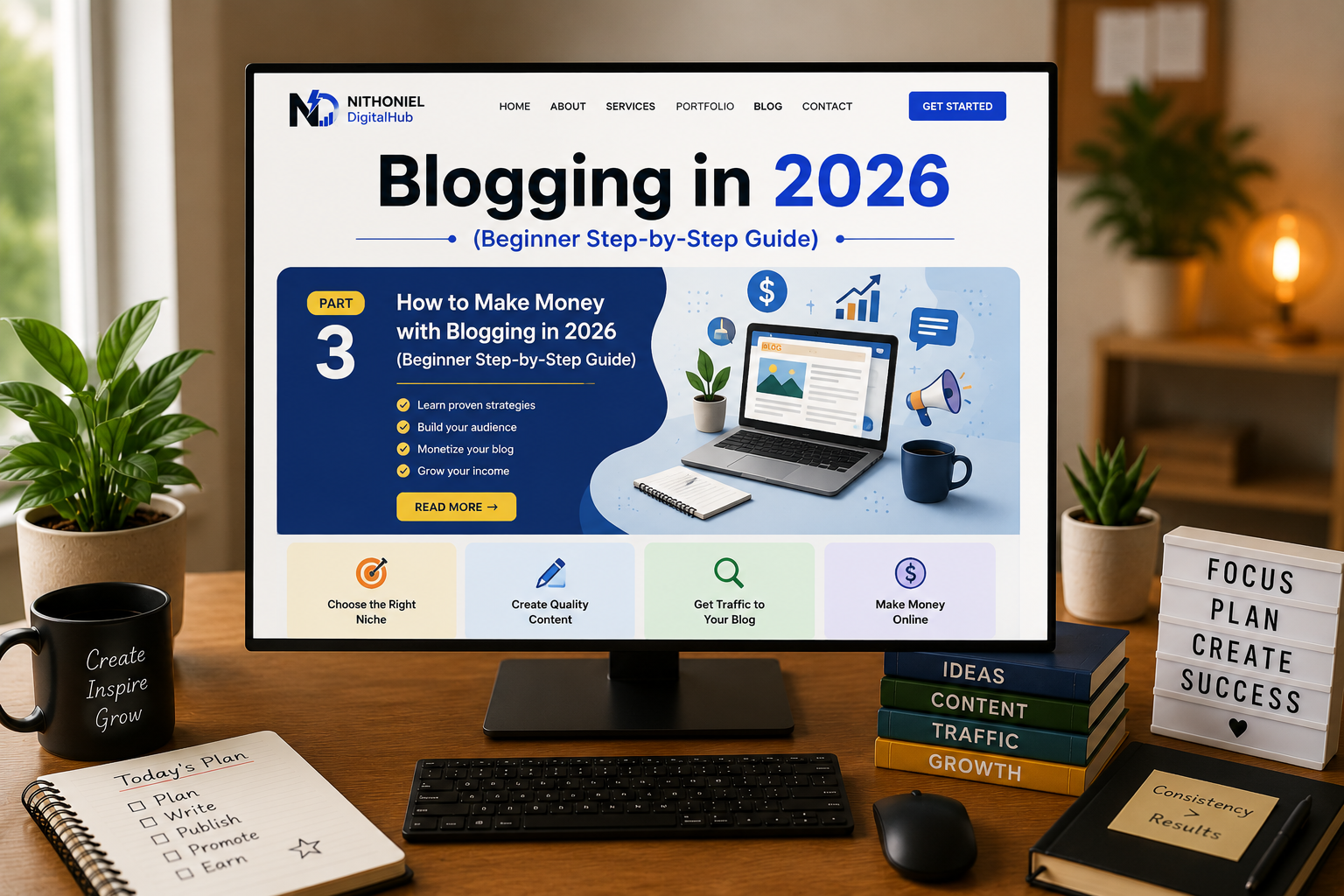
→ How To Make Money With Blogging In 2026 Beginner's Learning Guide (Part 1/2/3)
Once your blog starts getting traffic, the next goal is turning those visitors into income. Learn different monetization strategies in our complete How to Make Money with Blogging in 2026 series.
Frequently Asked Questions
What's Next?
Now that you know how to find the right keywords using AI, the next step is learning how to turn those keywords into high-quality content that ranks on Google.
In the next guide, How to Write SEO Blog Posts That Rank in 2026, you'll learn how to structure your articles, optimize them for search engines, and create content that attracts both readers and organic traffic.
Keep learning, keep building, and keep growing.