How To Write SEO Blog Posts That Rank In 2026 (Complete Beginner Guide)

Have you ever spent hours writing a blog post, only to receive little or no traffic from Google? You're not alone. Many beginner bloggers create content regularly but struggle to rank because they don't understand how SEO blog writing works.
The good news is that writing blog posts that rank on Google isn't about using complicated tricks or stuffing keywords everywhere. In 2026, successful SEO is all about creating helpful, well-structured content that answers readers' questions better than anyone else.
Whether you're starting a new blog, growing an existing website, or using AI tools to create content, learning how to write SEO-friendly blog posts is one of the most valuable skills you can develop. A single well-optimized article can bring visitors to your website for months or even years.
In this complete beginner's guide, you'll learn the entire SEO writing process—from choosing the right keyword and understanding search intent to creating engaging content, optimizing your headings, adding internal links, and publishing articles that have a better chance of ranking on Google.
By the end of this guide, you'll have a simple step-by-step system that you can use every time you write a new blog post.
What You'll Learn
In this guide, you'll discover:
Who Is This Guide For?
This guide is perfect for:
No previous SEO experience is required. Everything is explained in simple English with practical examples.
Why You Should Learn SEO Blog Writing in 2026
The internet is more competitive than ever, with millions of blog posts published every day. Simply writing good content is no longer enough. To stand out, your content needs to be helpful, well-organized, and easy for both readers and search engines to understand.
SEO blog writing helps you:
The best part is that SEO is a long-term investment. A well-written article can keep attracting visitors long after you've published it.
Remember This
Writing SEO-friendly blog posts isn't about tricking Google—it's about creating valuable content that satisfies your readers while making it easy for search engines to understand and recommend your pages.
Part 1: Build a Strong SEO Foundation
1.What Is SEO Blog Writing?
SEO blog writing is the process of creating blog posts that are easy for both people and search engines like Google to understand. The goal is to write helpful, valuable content that answers readers' questions while following SEO (Search Engine Optimization) best practices.
Unlike regular writing, SEO blog writing is planned around what people are searching for online. It includes using relevant keywords naturally, organizing content with clear headings, answering search intent, and making the article easy to read. These small improvements help search engines understand your content and increase its chances of appearing in search results.
Think of SEO blog writing as writing for two audiences:
The best SEO blog posts satisfy both audiences. They provide real value to readers while making it simple for search engines to crawl, index, and rank the content.
A Simple Example
Imagine someone searches on Google:

If your article clearly explains the complete process, uses the right headings, includes helpful examples, and answers the reader's questions, Google is more likely to consider it a valuable result.
On the other hand, if your article is poorly organized, difficult to read, or doesn't fully answer the searcher's question, it is less likely to rank well—even if it contains the same keyword.
Why SEO Blog Writing Matters
Every day, millions of blog posts compete for attention on Google. Without SEO, even excellent content can remain invisible because search engines may not fully understand or recommend it.
SEO blog writing helps you:
Instead of chasing quick results, SEO blog writing focuses on creating content that continues attracting visitors for months or even years after it's published.
Remember This
SEO blog writing is not about writing for search engines alone. It's about creating helpful, well-structured, and reader-focused content that search engines can easily understand and recommend. When you combine valuable information with smart SEO practices, your blog has a much better chance of ranking higher and attracting consistent organic traffic.
2.Why High-Quality Content Matters More Than Ever
In the early days of SEO, many websites ranked simply by repeating keywords multiple times or publishing large amounts of content. Those strategies no longer work. In 2026, search engines are much better at understanding whether a piece of content is genuinely helpful or created only to rank.
Today, Google rewards content that provides real value to readers. If your article answers questions clearly, solves problems, and offers useful information, it has a much better chance of earning higher rankings and long-term traffic.
Simply put, quality beats quantity.
Whether you publish one excellent article each week or one every month, a well-researched, reader-focused blog post is usually more valuable than publishing several low-quality articles.
What Is High-Quality Content?
High-quality content is content that helps readers achieve a specific goal. It is accurate, easy to understand, well-organized, and provides information that readers can trust.
A high-quality blog post should:
When your content genuinely helps people, readers are more likely to stay longer, share your article, and return to your website for more information.
Remember This
High-quality content is the foundation of successful SEO. Instead of trying to publish as much content as possible, focus on creating articles that genuinely help your readers. When you consistently provide useful, well-structured, and trustworthy information, you'll build authority, earn your audience's trust, and improve your chances of ranking higher on Google for years to come.
3.How Google Understands Blog Posts
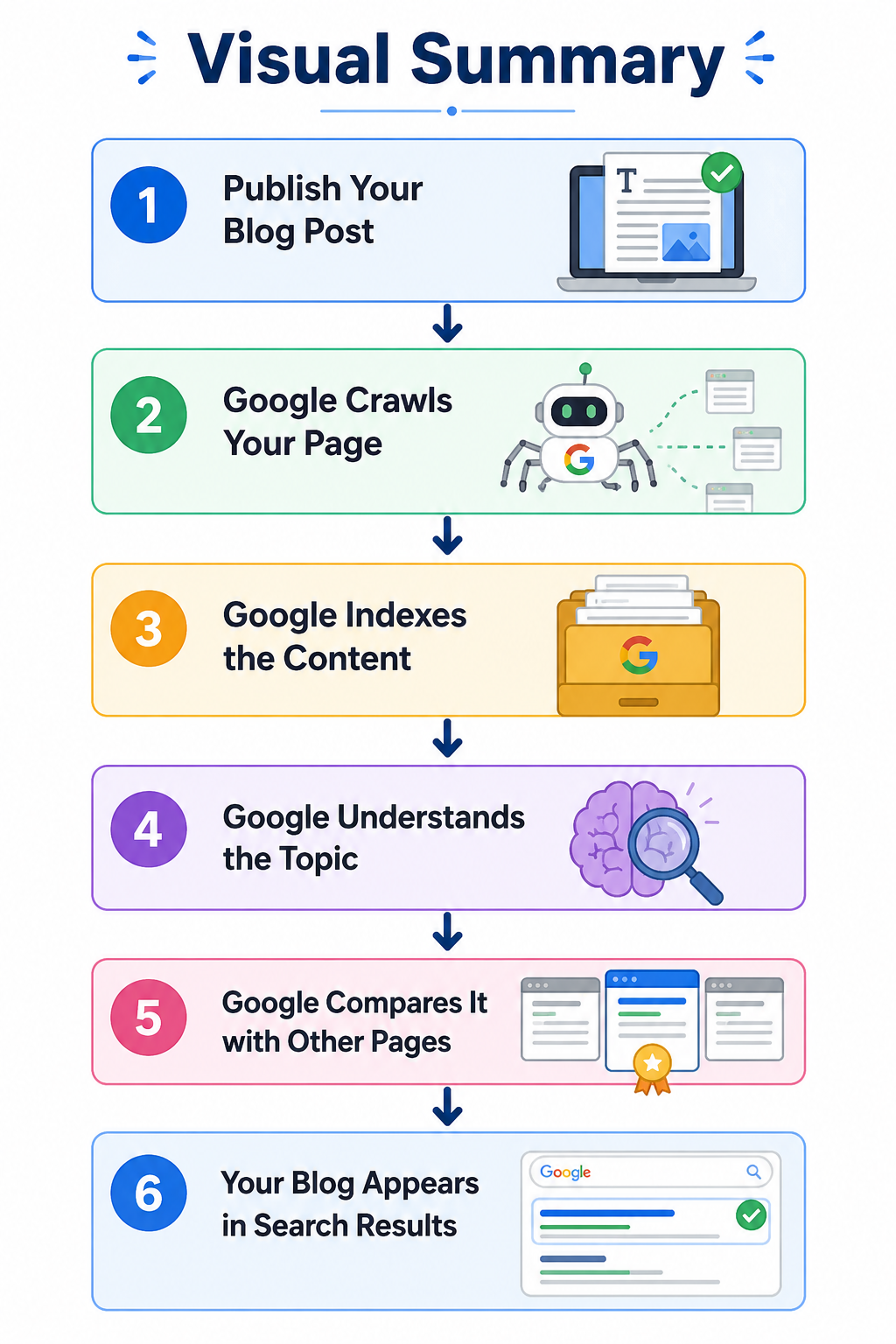
Have you ever wondered what happens after you click the Publish button on your blog post?Many new bloggers believe their article will instantly appear in Google's search results. Unfortunately, that's not how it works.
After publishing, your blog post begins a journey before it has a chance to rank on Google. During this journey, Google first needs to discover your page, understand what it is about, decide whether it deserves to be included in its search database, and finally compare it with thousands of other articles covering the same topic.
Think of it like applying for a job.
Before a company hires you, it first receives your application, reviews your qualifications, compares you with other candidates, and then decides whether you're the best fit for the position.
Google follows a very similar process with every blog post published on the internet.
The entire process can be summarized like this:
Publish → Crawl → Index → Understand → Rank
Once you understand these steps, SEO becomes much easier because you'll know exactly how Google discovers and evaluates your content.